

The financial industry emphasizes innovation and speed. However, not all companies succeed through aggressive expansion. Sometimes, principles, stability, and a long-term perspective become greater competitive advantages.
Chairman Chung Mong-yoon of Hyundai Marine & Fire Insurance embodies this management philosophy. Since becoming CEO in 1988, he has led the company to grow into South Korea's leading property insurance provider over nearly 40 years.
Today, Hyundai Marine & Fire Insurance has evolved into a financial group with assets exceeding 50 trillion won, establishing a stable business foundation centered on its core property insurance operations. As the insurance industry faces significant changes due to IFRS 17, reforms in health insurance, low birth rates, aging populations, and digital transformation, Chairman Chung's entrepreneurial spirit is increasingly noteworthy.
His leadership focuses on sustainable growth over flashy innovation, profitability and soundness over mere expansion, and long-term competitiveness over short-term results.
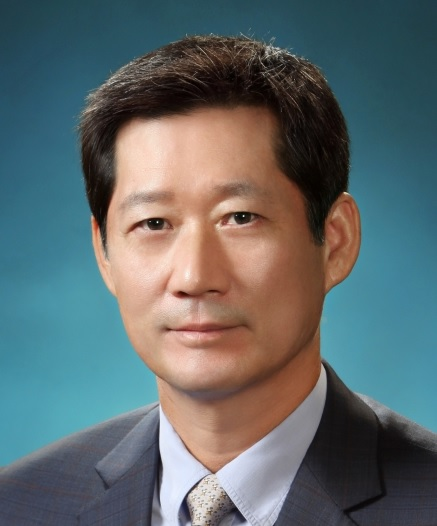
Chung Mong-yoon's Management Philosophy Preserves the Essence of Insurance
The most fitting word to describe Chairman Chung Mong-yoon is 'principle.'
He is regarded as one of the quietest leaders among the Hyundai family executives. He does not enjoy media exposure and does not adopt a style that sends strong messages to the market. Instead, he has focused on empowering professional managers and creating a system where the organization can operate independently.
Hyundai Marine & Fire Insurance's growth process exemplifies this management philosophy. Throughout the foreign exchange crisis, the global financial crisis, the low-interest-rate era, and the COVID-19 pandemic, the company has never engaged in reckless competition for size. Instead, it has concentrated on strengthening its core insurance competitiveness.
Insurance is not a manufacturing industry. It is not about producing products but about building trust. Customers do not buy insurance products; they purchase a safety net against future risks. The competitiveness of an insurance company ultimately depends on how long customers trust the company and maintain their contracts.
Chairman Chung understands this better than anyone.
Hyundai Marine & Fire Insurance has consistently maintained its competitiveness in the fields of children's insurance, long-term insurance, and auto insurance. Notably, the 'Good & Good Children's Insurance' has established itself as a leading brand in the industry. This success is the result of focusing on product development tailored to the customer lifecycle rather than short-term sales.
He has prioritized survival over growth in his management approach. He understands that the financial industry reveals its true capabilities not in prosperous times but during crises.
Chung Mong-yoon's entrepreneurial spirit is rooted in sustainable growth based on principles and soundness rather than flashy innovation.
Solid Management Shines Amid Crisis
Recently, the property insurance industry has faced complex challenges.
The loss ratio for health insurance has increased, and auto insurance profitability has deteriorated due to premium reductions and extreme weather conditions. The introduction of IFRS 17 has also significantly raised capital management burdens.
In fact, Hyundai Marine & Fire Insurance's net profit for 2025 is projected to be 561.1 billion won, a 45.6% decrease from the previous year. The profit from long-term insurance is expected to drop by 60.9% to 338.1 billion won, while auto insurance is projected to record a deficit of 90.8 billion won. The rise in loss ratios due to respiratory diseases like influenza and extreme weather has impacted these results.
However, it is premature to evaluate the company solely based on these results.
The insurance contract margin (CSM) that indicates future profitability has increased by 7.9% year-on-year to 8.9 trillion won. The solvency ratio (K-ICS) has also risen by 33.1 percentage points to 190.1% compared to a year ago. This improvement is attributed to the expansion of long-term bond purchases and enhancements in the portfolio.
This reflects the characteristics of Chung Mong-yoon's management style.
He prioritizes long-term competitiveness over short-term results.
Due to last year's poor performance, Hyundai Marine & Fire Insurance did not distribute performance bonuses. Instead, the management took responsibility first. This exemplifies the core asset of a financial company: trust.
For insurance companies, long-term soundness is more important than short-term results.
The ability to pay claims ten years from now is more crucial than today's profits.
This principle has been emphasized by Chairman Chung for decades.
He believes the essence of the insurance industry is not in underwriting risks but in managing them.
Thus, Hyundai Marine & Fire Insurance has chosen stable growth over rapid expansion.
As a result, the company has established itself as a representative entity in the domestic property insurance sector.
Embracing Innovation
Viewing Chairman Chung Mong-yoon solely as a conservative manager is only half the picture.
He is acutely aware of the need for change.
In particular, digital transformation and data-driven finance are challenges that Hyundai Marine & Fire Insurance must address moving forward.
The insurance industry is one of the sectors most affected by AI.
AI predicts customer risks and detects insurance fraud. It analyzes the likelihood of accidents and calculates premiums. In the future, AI will also handle claims processing and customer consultations.
Chairman Chung has continuously pursued the enhancement of digital capabilities to respond to these changes.
Hyundai Marine & Fire Insurance is expanding its AI-based claims adjustment system and data analysis capabilities while accelerating the development of a digital insurance platform. This is not merely a cost-cutting digital transformation but a strategic approach to enhance risk management capabilities.
This aligns with the essence of the insurance business.
AI enables more accurate risk predictions.
The insurance industry ultimately revolves around predicting the future.
The ability to forecast who is likely to have an accident, which diseases may rise, and what new risks may emerge determines competitiveness.
In the AI era, an insurance company's competitiveness hinges on how well it utilizes data.
Although Chairman Chung does not prominently showcase technological innovation, he has consistently invested to ensure Hyundai Marine & Fire Insurance keeps pace with the changing landscape.
He values principles over innovation but does not reject innovation.
Building innovation on a foundation of principles is his approach.
Adding Innovation on Top of Stability
The insurance industry has entered a phase of structural transformation.
Low birth rates are reducing new customers, while aging populations are increasing the burden of claims. AI and big tech are shaking traditional insurance business models.
In this changing environment, Hyundai Marine & Fire Insurance has clear challenges ahead.
The first is to strengthen capital soundness.
The second is to accelerate digital transformation.
The third is to discover new growth engines.
Chairman Chung has built the company on a foundation of stability.
Now, it is time to add innovation on top of that stability.
To leap from a 50 trillion won financial group to the next generation of financial groups, Hyundai Marine & Fire Insurance must actively leverage AI, data, and digital technologies.
However, one thing remains unchanged in this process.
The essence of insurance.
Maintaining customer trust and fulfilling promises.
This is the value that Chairman Chung has upheld for nearly 40 years.
His entrepreneurial spirit in finance can ultimately be summarized in one sentence.
Insurance is not about numbers; it is an industry of trust, and trust comes from principles.
:SWOT Analysis:
Strengths
It possesses a strong brand and stable customer base in the domestic property insurance sector. It has high competitiveness in long-term and auto insurance and has grown into a financial group with assets of 50 trillion won. Chairman Chung's long management experience and stable risk management capabilities are also strengths.
WeaknessesNet profit for 2025 is projected to be 561.1 billion won, a 45.6% decrease from the previous year. The transition to a deficit in auto insurance and ongoing burdens from health insurance persist, and the pace of digital transformation is considered slower than some competitors.
OpportunitiesAI-based insurance innovation, expanded data utilization, and the establishment of digital insurance platforms could present new growth opportunities. The expansion of the healthcare and senior insurance markets due to aging populations is also a positive factor.
ThreatsLow birth rates and a slowdown in the growth of the insurance market, reforms in health insurance systems, and rising loss ratios due to extreme weather are ongoing burdens. The entry of big tech into finance and intensified competition in AI also pose threats.
* This article has been translated by AI.
Copyright ⓒ Aju Press All rights reserved.