

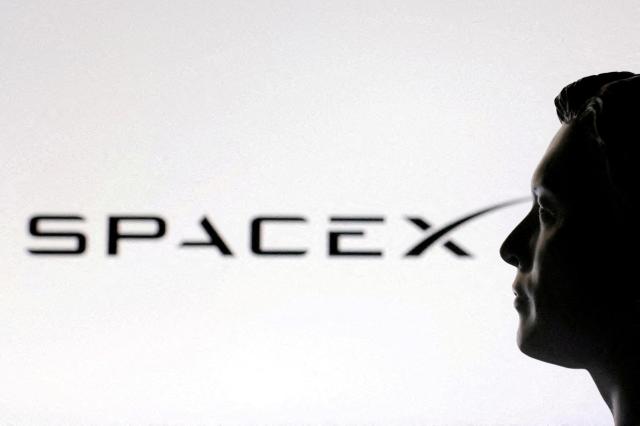
Elon Musk's aerospace company SpaceX has made a spectacular debut on the stock market with the largest initial public offering (IPO) in history. The company's entry has captured global investment interest, shaking up financial markets and shifting attention from the recent focus on AI and semiconductors. While there are debates about its high valuation, one thing is clear: if AI is currently driving the global economy, the next wave is likely to be the space industry.
Just over a decade ago, space was primarily a government-led domain. However, that landscape has dramatically changed. SpaceX has significantly reduced launch costs through reusable rockets and has ushered in the satellite internet era with Starlink. Space is no longer just a symbol of scientific advancement; it has evolved into a vast industry and investment market.
If the AI revolution was a competition centered around data and algorithms, the space race is poised to encompass a much larger competition involving communications, energy, security, and resource development. Countries are already positioning low-Earth orbit satellite networks, space communications, and resource exploration as future growth engines. The excitement surrounding SpaceX's IPO symbolizes this shift.
This development presents a significant challenge for South Korea. The country has declared its ambition to become a space power with the establishment of its aerospace agency in 2024. Notable achievements, such as the successful launch of the Nuri rocket and advancements in next-generation launch vehicles, have been made. However, since the agency's formation, there have been various issues during the organizational restructuring, raising concerns about policy continuity amid a change in administration.
Realistically, South Korea is still a latecomer in the space sector. While it has achieved a certain level of competitiveness in launch vehicle and satellite technology, it lacks the infrastructure and experience compared to advanced space nations like the United States and Europe. Therefore, for South Korea to elevate its status as a space power, it must actively expand international cooperation alongside independent development.

In this context, the news from President Lee Jae-myung's recent trip to Europe is encouraging. During his visit, he announced plans to enhance cooperation with European nations in advanced sectors such as AI, defense, and space. The inclusion of space collaboration is particularly significant, as space is an area where no single country can independently address all challenges. Developing launch vehicles, operating satellites, exploring space, and establishing space communication networks require substantial capital, technology, and long-term investment. Even the United States pursues its space strategy through collaboration with allies and private companies.
Notably, Italy and France, which were part of President Lee's itinerary, are leading aerospace nations. Expanding cooperation with these countries, which share common values of democracy and the rule of law, holds strategic significance beyond mere technological collaboration. Just as they seek cooperation with South Korea in semiconductors, defense, and batteries, South Korea can also demand collaboration in the space sector.
As the AI era begins to take shape, the world is already preparing for the next phase. If semiconductors and AI determine current national competitiveness, space may significantly influence the competitiveness of future generations.
South Korea must not miss this trend. To transition from an AI powerhouse to a space leader, a more long-term and consistent national strategy is essential. Furthermore, collaboration with countries possessing world-class space technology can guide South Korea in reducing trial and error while advancing more rapidly toward becoming a space power.
* This article has been translated by AI.
Copyright ⓒ Aju Press All rights reserved.