

South Korea is currently at the forefront of the artificial intelligence (AI) power competition. The United States, led by OpenAI, NVIDIA, and Google, dominates the AI ecosystem, while China is engaged in a national effort to catch up. AI has evolved beyond being merely a technological competition among companies; it has become a critical infrastructure that determines a nation's economic strength, security, and industrial competitiveness.
At the center of this transformation is not just AI models but also AI semiconductors, data centers, networks, cybersecurity, and talent. Ultimately, the competition in AI is not just about models but about ecosystems.
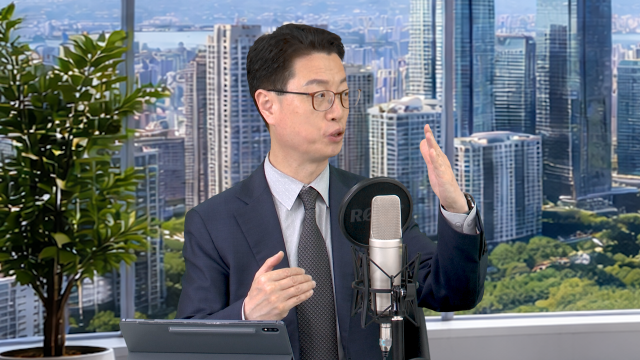
Hong Jin-bae, the head of the Institute for Information & Communications Technology Planning & Evaluation (IITP), believes South Korea has a strong chance of success in this arena. An ICT expert with nearly 30 years of experience in information and communications policy, network policy, and cybersecurity policy, Hong has been overseeing AI and ICT research and development (R&D), AI semiconductors, and talent development at IITP.
Throughout the interview, Hong emphasized, "South Korea is one of the few countries equipped with AI models, semiconductors, data, networks, and talent." He stated that the current moment is a golden opportunity for South Korea as it transitions from generative AI to agent AI and physical AI. Below is a Q&A with Hong.
"IITP as a Facilitator of Digital Innovation"
To the general public, IITP may be a somewhat unfamiliar institution. What role does it play?
"We are responsible for R&D and talent development in the AI and ICT fields. We plan and evaluate R&D projects and support their entry into the market. We also play a role in discovering and nurturing core talent in AI and ICT."
You referred to IITP as a 'facilitator of digital innovation.'
"Technology is meaningless if it ends in the lab. It must reach the market. We plan challenging research and help it reach the market."
Are there any representative examples?
"AI semiconductor NPU. In 2019, the concept of NPU was quite unfamiliar. However, we believed it would become an essential technology in the AI era. So, we proactively planned and supported it for six years."
The situation has completely changed now.
"Yes. Companies like FuriosaAI, Rebellion, DeepX, and Mobilint have entered the mass production stage and are receiving global investments. A technology that no one paid attention to at the time has now become a core pillar of the AI semiconductor industry."
"The Real AI Revolution is Just Beginning"
The trend of generative AI continues. How do you view the current flow of AI technology?
"We categorize it into AX 1.0 and AX 2.0. AX 1.0 refers to generative AI like GPT, which assists human intellectual activities."
What then is AX 2.0?
"Agent AI and physical AI. This is the stage where AI not only answers questions but also plans and executes tasks independently."
Could you explain that more simply?
"Current AI answers questions. Future AI will perform tasks, manage schedules, create documents, and collaborate with other AIs to execute projects."
What is physical AI?
"If agent AI operates in the digital space, physical AI operates in the real world. Robots are a prime example. AI will perform actual actions in manufacturing sites, logistics centers, and hospitals."
Why is this important?
"Both share a commonality: they take action. This directly impacts productivity. I believe the AX 2.0 era will bring about much greater changes than AX 1.0."
"AI Sovereignty Must Be Secured"
The global competition for AI dominance is fierce. How do you view the issue of AI sovereignty?
"AI sovereignty must be secured. AI models are not just service technologies; they reflect a country's culture, values, and mindset."
So, it goes beyond economic issues?
"Exactly. There are economic implications, but there are also mental and cultural meanings. Therefore, unique AI models are important."
Is it enough to just have the models?
"No, AI sovereignty cannot be secured with just one model. AI models, AI semiconductors, networks, and security must all be in place."
Ultimately, it’s about the ecosystem.
"That's right. We are moving into an era where it’s not just about selling one AI model but competing in AI ecosystems."
"South Korea Can Become an AI Full-Stack Nation"
How do you assess South Korea's AI competitiveness?
"I see a significant potential."
In what ways?
"We have the capability to develop AI models. We also have AI semiconductors. We possess abundant data and strong networks."
Does this include talent?
"Of course. Including talent, South Korea is one of the few countries that can become an AI full-stack nation."
Recently, Jensen Huang and Yann LeCun have made similar remarks.
"Yes, foreign experts also highly evaluate the strengths that South Korea possesses."
What is the most important factor?
"Connecting each strength. We need to integrate models, semiconductors, data, and networks into a single ecosystem."
"AI Semiconductors Are an Opportunity for Korea"
There is much talk about the importance of semiconductors in the AI competition.
"In the AI era, semiconductor competitiveness is crucial."
What areas is IITP currently supporting?
"We are supporting AI-centric semiconductors and advancing NPU technology."
Are there technologies you are preparing for after NPU?
"Technologies like CXL, DPU, and PIM."
These may be somewhat unfamiliar to the general public.
"CXL is a technology for efficiently sharing memory. DPU reduces the burden on CPUs to enhance data center efficiency."
What about PIM?
"PIM is a technology that integrates computing within memory. It allows calculations to be performed inside the memory without moving data around."
Why is this important?
"It can significantly reduce power consumption. The key in the AI era is to achieve both high performance and low power consumption simultaneously."
What future technologies are you looking at?
"Neuromorphic semiconductors, which mimic the structure of the human brain, are the next generation of semiconductors."
"AI Competition Ultimately Comes Down to Talent"
Ultimately, all technology is created by people, right?
"Absolutely. The importance of talent cannot be overstated."
What kind of talent is needed?
"Three types: top 1% core talent, individuals who can lead AX in the industry, and general talent who can effectively utilize AI."
How is IITP nurturing talent?
"We operate ten AI graduate schools and have established a graduate school for AI semiconductors."
I heard you recently started an AX graduate school.
"Yes, we selected ten universities this year to cultivate talent that will lead the AI transformation in the industry."
"Innovation Cannot Happen Without Embracing Failure"
You have emphasized a research culture that allows for failure.
"Innovation is predicated on failure."
Our society tends to be unforgiving of failure.
"That's true. However, future technologies cannot be achieved without taking risks."
Are there any examples?
"Look at the U.S. DARPA. Technologies like GPS and stealth were not guaranteed successes at first."
Yet they invested in them.
"They encouraged the very act of trying innovative ideas."
How is IITP approaching this?
"We operate an open feedback system where researchers, users, and investors evaluate together."
Connecting research to the market.
"Exactly. Technology should not end in the lab; it must lead to commercialization."
"In the AI Era, Talent Should Be π-shaped"
Lastly, what advice would you give to young people living in the AI era?
"Back to Basics."
That’s an unexpected answer.
"As AI advances, individual expertise becomes increasingly important."
What kind of talent do you see as future talent?
"I call them π-shaped talent."
What does that mean?
"It means to deeply acquire one area of expertise and one ability to utilize AI."
So, AI won’t automatically develop skills for individuals?
"Exactly. The gap between those who can effectively utilize AI and those who cannot may actually widen."
Ultimately, it’s about the need for continuous learning.
"That’s right. I study every day. In the AI era, no one can afford to stop learning."
:Hong Jin-bae:
Hong Jin-bae, head of the Institute for Information & Communications Technology Planning & Evaluation (IITP), began his public service career in the first cohort of the Ministry of Information and Communications and has spent nearly 30 years overseeing information and communications policy, network policy, and cybersecurity policy. He has served as the Director of Network Policy at the Ministry of Science and ICT and is currently responsible for AI and ICT R&D and talent development at IITP. He has contributed to the establishment of the domestic AI semiconductor ecosystem by supporting AI semiconductor NPU from its early stages and is actively engaged in nurturing future talent through AI graduate schools, AI semiconductor graduate schools, and AX graduate schools. Hong emphasizes that "the AI competition is not just about models but about ecosystems," urging South Korea to leap forward as an AI full-stack nation.
* This article has been translated by AI.
Copyright ⓒ Aju Press All rights reserved.