

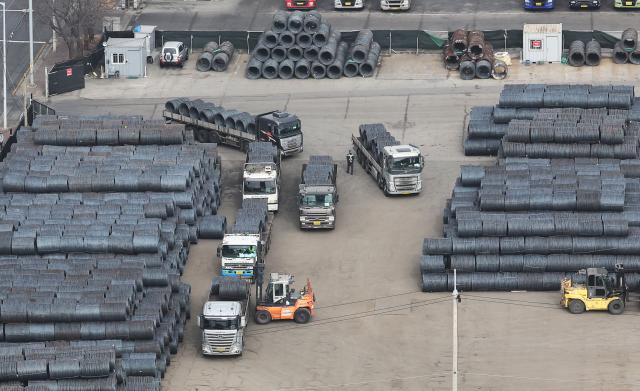
The K-Steel Law, aimed at enhancing the competitiveness of the steel industry and supporting its transition to carbon neutrality, is set to take effect on June 17. However, the absence of industrial electricity rate exemptions in the enforcement decree has raised concerns within the steel sector.
According to industry sources on June 14, the K-Steel Law was established to assist the domestic steel industry, which has faced challenges due to global oversupply, increased trade barriers, and expanding carbon trade regulations. However, the much-anticipated measure for reducing industrial electricity rates was not included.
The law and its enforcement decree outline the establishment and operation of a special committee for enhancing steel industry competitiveness, criteria and procedures for low-carbon steel certification, requirements for designating low-carbon steel special zones, designation of specialized companies for processing recycled steel, and exceptions to fair trade laws related to business restructuring. This framework aims to facilitate the transition of the steel industry to low-carbon and high-value production.
The exclusion of electricity rate reductions is attributed to concerns over trade risks and equity among industries. Lowering industrial electricity rates for specific sectors could be interpreted as subsidies under World Trade Organization (WTO) rules, making them subject to legal challenges. Additionally, the government expressed worries about fairness issues with other energy-intensive sectors, such as petrochemicals. Although lawmakers discussed including electricity rate exemptions in the K-Steel Law, these concerns ultimately led to their exclusion from the final enforcement decree.
The steel industry is a significant consumer of electricity. Transitioning from traditional blast furnace production to low-carbon processes, such as electric arc furnaces and hydrogen reduction steelmaking, necessitates increased electricity usage. However, industrial electricity rates have surged approximately 75% over three years, rising from 105.5 won per kWh in the fourth quarter of 2021 to 185.5 won per kWh by the fourth quarter of 2024.
A new electricity pricing system implemented in April, which offers lower rates during the day and higher rates in the evening, has raised questions about its effectiveness for large electricity consumers. For electric arc furnaces that operate continuously, the limited relief from electricity costs during daytime hours is seen as inadequate.
POSCO, the largest steelmaker in South Korea, is among the top 10 electricity consumers in the country, with annual electricity costs exceeding 500 billion won. Hyundai Steel, which operates electric arc furnaces, faces annual electricity expenses reaching 1 trillion won, accounting for over 10% of its production costs. Unlike major countries, South Korea lacks specific electricity support policies for the steel industry, and the K-Steel Law does not address electricity rate reductions.
An industry representative expressed disappointment, stating, "The enforcement decree was initially expected to be prepared last December, so it was somewhat anticipated that electricity rate reductions would not be included. However, seeing the final version of the K-Steel Law, I cannot hide my disappointment, especially regarding the electricity costs for electric arc furnaces. To encourage carbon-neutral investment, follow-up measures such as electricity cost support after the law's implementation are necessary."
* This article has been translated by AI.
Copyright ⓒ Aju Press All rights reserved.