

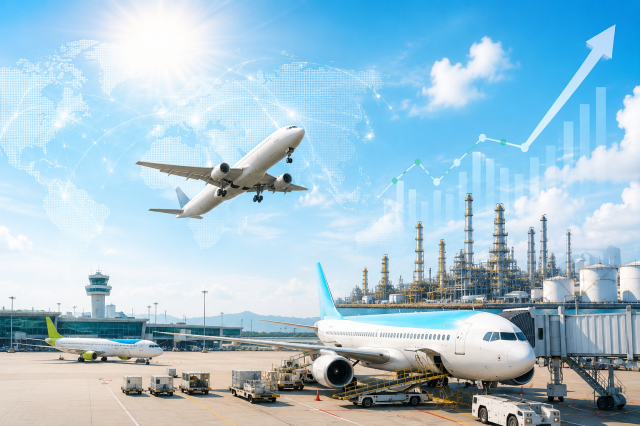
Domestic industries are breathing a sigh of relief as concerns over rising international oil prices ease following a peace agreement between the United States and Iran. The aviation sector, which has been hit hard by high oil prices, is hopeful for a reduction in cost burdens, although full normalization may take several months.
According to industry sources on June 15, the domestic aviation sector is optimistic about a turnaround as fears of a blockade in the Strait of Hormuz dissipate with the U.S.-Iran peace deal. The situation in the Middle East appears to be stabilizing, leading to assessments that the worst-case scenario has been avoided. There are expectations that the operational cost burden from soaring oil prices will be somewhat alleviated.
An industry official stated, "If oil production facilities in Middle Eastern oil-producing countries that were damaged during the conflict return to normal operations and international oil prices gradually stabilize, it will positively impact operational cost reductions and the recovery of travel sentiment, leading to improved performance."
Previously, domestic airlines had activated emergency response measures as risks in the Middle East escalated, closely monitoring oil price trends. Jeju Air and T'way Air received applications for unpaid leave from cabin crew for the first time since the COVID-19 pandemic. Jin Air postponed the hiring of about 50 cabin crew members until the second half of the year, focusing on cost-cutting measures.
While the peace agreement is viewed positively, industry experts believe it will take considerable time for the actual cost-saving effects to materialize. International jet fuel prices, which account for about 30% of airline operating costs, tend to lag in response, and existing transportation contracts and inventory levels already reflect the impact of high oil prices. Additionally, the recent stabilization of the won-dollar exchange rate at around 1,500 won continues to pose a burden on the aviation sector.
In contrast to larger airlines like Korean Air, which have sufficient capacity to respond, low-cost carriers (LCCs) may experience a slower recovery due to their sensitivity to fuel and exchange rate fluctuations. Analysts suggest that larger airlines, which have a higher proportion of distance routes, will see the benefits of reduced fuel costs reflected sooner than low-cost carriers.
Experts are focusing on the potential for demand recovery in the second half of the year. If international oil prices remain stable, inflationary pressures may ease, reviving travel sentiment. Improvements in airline profitability are expected to occur gradually starting in the fall.
Kim Kwang-ok, a professor at Korea Aerospace University, noted, "It typically takes about 3 to 6 months for the effects of oil price stabilization to be reflected in airline performance. Airlines need to enhance operational efficiency on profitable routes and develop ancillary businesses such as maintenance, repair, and overhaul (MRO) to diversify their revenue structure."
* This article has been translated by AI.
Copyright ⓒ Aju Press All rights reserved.