

"China sent everyone to the World Cup except its national team," said Bai Yansong, a prominent anchor for China Central Television, during a live broadcast of the 2018 World Cup in Russia. Although the Chinese national team failed to qualify for the tournament, Bai's remark highlights the presence of Chinese products throughout the event, including official match balls, uniforms, fan shirts, and national flags. Eight years later, this observation remains relevant.
While the Chinese team is absent from the World Cup, Chinese companies and brands are making their presence felt on the global stage.
Chinese firms are seizing the opportunity to dominate World Cup advertising as they seek to expand their global influence. Among the global sponsors of the North America World Cup are three Chinese companies: Lenovo, Hisense, and Mengniu. According to Chinese sports media outlet Sina Sports, the total sponsorship amount from Chinese companies is nearing $500 million, making them the second-largest sponsors after the United States.
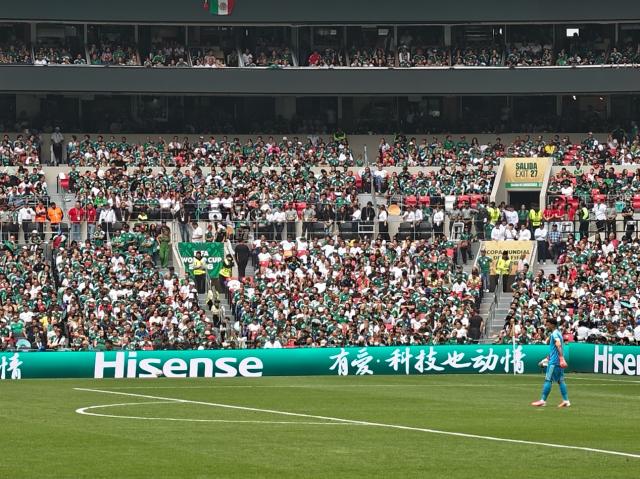
Notably, Lenovo has joined the ranks of FIFA's highest-tier sponsors as a 'Global Partner,' a designation held by only eight companies worldwide. Its collaboration with FIFA to introduce AI-based soccer analysis services is enhancing its status as a global technology leader.
Chinese TV manufacturer Hisense is also a key player in World Cup marketing. Since participating as a global sponsor in the 2018 World Cup, Hisense has showcased its technology by installing its self-developed RGB mini LED TVs at the Video Assistant Referee (VAR) center during this year's tournament.
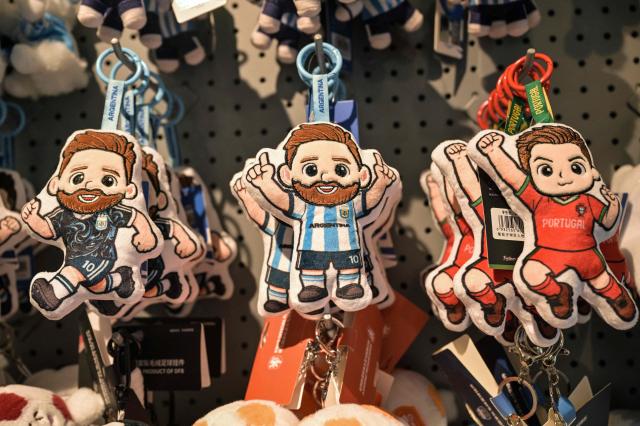
The impact of Chinese manufacturing is evident beyond the stadiums. Yiwu, known as the world's largest commodity city, has been experiencing a surge in business since last year due to the World Cup. Approximately 70% of the related products, including jerseys, souvenirs, and fan merchandise, are produced in Yiwu, attracting orders from overseas buyers.
In fact, Yiwu's sports goods exports reached 11.6 billion yuan (approximately $1.7 billion) last year, a 20.3% increase from the previous year. In the first quarter of this year, sports goods exports also rose by 12% compared to the same period last year.
Singapore's Lianhe Zaobao reported, "Chinese manufacturing has permeated the World Cup supply chain, establishing itself as a crucial pillar of the global sports industry. Yiwu has emerged once again as a hidden powerhouse of the World Cup economy this year."
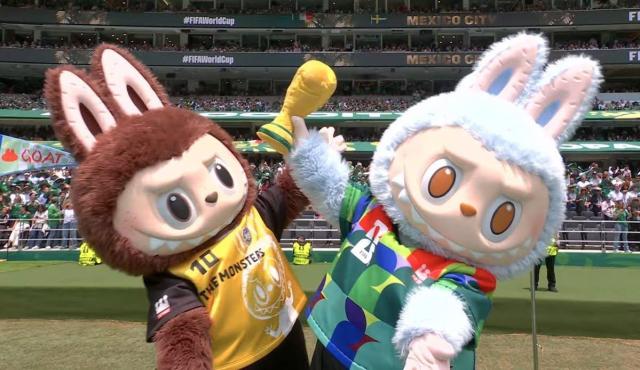
The influence of Chinese cultural content was also evident at this year's opening ceremony. LaBubu, a character from the Chinese art toy brand Pop Mart, made history by appearing as a 'special guest' at the opening ceremony. Pop Mart collaborated with FIFA to launch the LaBubu World Cup series and featured LaBubu in the official music video for the World Cup song, "Goals." Beijing Daily noted, "LaBubu's international influence is steadily expanding, establishing itself as a global intellectual property."
Chinese enthusiasm for the World Cup remains strong, with an estimated 200 million football fans in the country. According to FIFA, during the 2022 Qatar World Cup, China accounted for 49.8% of the global viewing time on digital and social platforms.
The Chinese platform Douyin (the Chinese version of TikTok) attracted over 230 million viewers during the live broadcast of the final, and the total views for all World Cup live broadcasts reached 10.6 billion. Although the Chinese national team did not participate, China has established itself as one of the world's largest football consumer markets.
In this context, Chinese companies are actively engaging in World Cup marketing by featuring global football stars as brand ambassadors. Mengniu, a Chinese dairy company, launched a brand advertisement featuring Lionel Messi, Kylian Mbappé, and Lamine Yamal in conjunction with the World Cup opening. Chinese health drink brands Wanglaoji and Dongpeng have also enlisted Erling Haaland and Mbappé as their advertising models.
Additionally, Shanghai Legoland has partnered with FIFA to create a World Cup-themed play area during the Legoland Play Festival, which runs from June 15 to August 31.
* This article has been translated by AI.
Copyright ⓒ Aju Press All rights reserved.