

The military conflict between the United States and Iran is nearing an end. Although military tensions remain, both sides appear to be prioritizing finding an exit strategy over escalating to full-scale war. International oil prices are stabilizing amid hopes that the worst-case scenario can be avoided.
Many will remember this situation as a military confrontation between the U.S. and Iran. However, from an economic perspective, the real story lies elsewhere. There is something that can outlast the war: the Hormuz Strait.
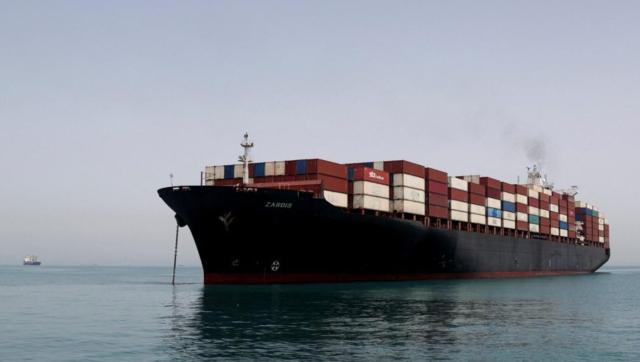
The Hormuz Strait is one of the world's most crucial energy corridors, with approximately 20% of global maritime oil traffic passing through it. Oil and natural gas produced in Saudi Arabia, Iraq, Kuwait, Qatar, and the United Arab Emirates travel through this narrow waterway to reach global markets. South Korea is no exception, as most of the crude oil it imports from the Middle East passes through this strait.
Iran is well aware that it cannot match U.S. military power. However, it possesses another weapon: the Hormuz Strait.
In fact, a complete blockade of the strait is not necessary. The mere possibility of a blockade can cause fluctuations in international oil prices, increase shipping rates, and drive up ship insurance costs. Markets reflect future risks in current prices. Prices rise not because of an actual shortage of oil, but due to concerns that a shortage may occur.
This situation has been no different. As forecasts emerged that the war could drag on, international oil prices reacted immediately. Currency exchange rates and financial markets also experienced volatility. The global economy began to incur costs even before any actual shocks occurred.
This is a characteristic of the modern economy.
Past wars were fought with guns, tanks, and fighter jets. However, 21st-century geopolitics operates through supply chains, logistics networks, and energy corridors. It is no longer necessary to capture the enemy's capital; simply disrupting the pathways of the global economy can exert significant pressure.
The Hormuz Strait symbolizes more than just a maritime route; it represents the connection between energy security and economic security.
South Korea is a global manufacturing powerhouse, having grown through exports of semiconductors, automobiles, shipbuilding, and steel. However, it is also highly dependent on energy imports. Disruptions in oil and gas supplies can impact the entire industry. As we enter the era of artificial intelligence (AI), the importance of energy is only increasing.
AI data centers and semiconductor factories consume vast amounts of electricity. In the future, national competitiveness will not solely depend on how well semiconductors are produced. The ability to provide stable electricity and secure energy supply chains will also become critical competitive factors.
Ultimately, the lesson from the current Middle Eastern situation is clear.
While wars may come to an end, the importance of energy security does not. It is difficult to discuss the future while maintaining a structure where oil prices, exchange rates, and inflation fluctuate whenever international relations are unstable.
We often refer to semiconductors as South Korea's most important strategic asset. This is not incorrect. However, semiconductor factories require electricity to operate, and electricity is produced through stable energy supplies. There can be no AI without energy, nor can there be advanced industries without energy.
This war is coming to an end. However, the bill from Hormuz for the global economy is far from settled.
What we truly need to prepare for is the aftermath of the war. More important than the immediate military conflict are energy security, supply chain stability, and the resilience of the national economy.
Even after the guns fall silent, the economy will receive its bill. And that bill will still read 'Hormuz.'
* This article has been translated by AI.
Copyright ⓒ Aju Press All rights reserved.