

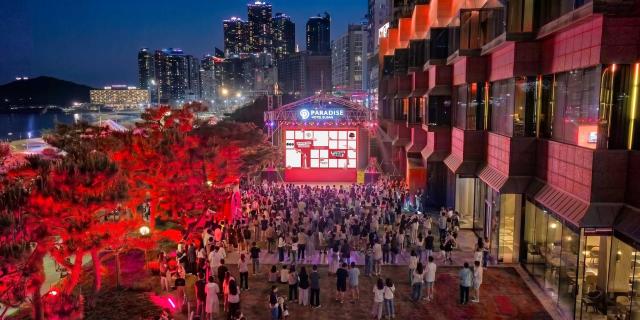
As the dazzling stage lights dimmed, thousands of global fans headed not to a large shopping mall but to Busan's traditional markets. During the week of BTS's concert, a local credit card company reported that foreign spending in Busan's traditional markets surged by 99.8% compared to the previous week, while spending at department stores and large supermarkets increased by only 3.1%. This shift indicates that international tourists are directing their spending toward local small businesses rather than large corporations.
In the past, foreign group tourists were often confined to a standardized itinerary that involved visiting duty-free shops and large malls via charter buses. Their trips typically consisted of quick stops at well-known shopping venues. However, today's K-pop fandom is different. Fans are stepping out of concert venues to stroll through narrow market alleys and enjoy local dishes at humble eateries. They are consuming the essence of everyday Korean life. This trend demonstrates that the raw, authentic experiences found in local ecosystems are more compelling than flashy skyscrapers.
This consumer behavior serves as a warning to local governments that have focused solely on creating landmarks. The outdated formula of investing hundreds of millions or even billions in new buildings and pedestrian bridges under the guise of promoting tourism must be discarded. Tourists are not drawn to Busan's old markets for extravagant attractions; rather, it is the unique cultural experiences developed over time with local residents—the irreplaceable 'human touch'—that provide a significant competitive advantage, as evidenced by the statistics.
In a reality where the crisis of population decline is reaching a critical point, this insight is crucial. The government and local authorities are promoting the expansion of 'resident populations' by increasing the number of long-term visitors as a solution to declining local populations. To revitalize cities where young people are leaving and businesses are collapsing, tourists must be encouraged to explore every corner of the neighborhood. Drawing visitors to spaces rich in unique history and narratives, like Gangneung's coffee street and Jeonju's Hanok Village, is fundamental to local revitalization.
However, the current state of local facilities is often inadequate. Foreign visitors drawn to the markets out of curiosity frequently turn away due to outdated payment systems and unclear pricing practices. Restaurants that refuse credit card payments, lack price tags, and have no foreign language menus, along with poor hygiene conditions, can quickly tarnish the positive image that K-content has worked hard to cultivate. Once disappointed, tourists are unlikely to return, and negative word-of-mouth spreads much faster than initial expectations.
More urgent than grand master plans is the need for basic improvements. Multilingual signage that is easily understood by foreigners should be expanded, and fixed pricing should be established. There is a pressing need for software support to help merchants quickly adopt global payment systems and effectively use translation apps. Furthermore, a comprehensive reform of outdated tourism promotion laws is necessary to fundamentally change the dynamics of local markets, akin to a 'new tourism movement.' Central and local governments must move beyond superficial administrative gestures, such as setting up temporary information booths, and lay a solid foundation for visitors to seamlessly integrate into the local economy.
While the excitement of the stage may fade in a few days, the daily life of the alleys remains eternal. The consumer trends observed in Busan's traditional markets clearly indicate the path that communities suffering from population decline must take. There is an urgent need for astute policy-making to connect the vast opportunities created by K-content to the robust arteries of the local economy.
* This article has been translated by AI.
Copyright ⓒ Aju Press All rights reserved.