

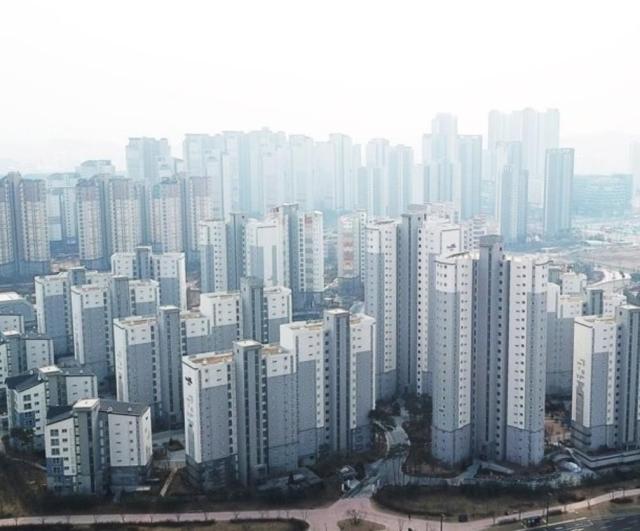
As housing prices continue to rise, particularly in the outskirts of Seoul, financial authorities are preparing to implement stricter regulations nationwide. Starting next month, the temporary suspension of the three-tiered Debt Service Ratio (DSR) for mortgage loans in non-metropolitan areas will officially end, raising the bar for obtaining loans. This comes alongside restrictions on jeonse loans for non-resident homeowners in regulated areas such as Seoul and the metropolitan region.
According to the real estate and financial sectors on June 16, apartment prices in Seoul's Seongbuk District have risen by 7.02% from the beginning of the year through May, while Gangseo District saw a 6.65% increase and Gwanak District experienced a 6.09% rise. The buying trend has spread to areas that were previously considered more affordable, contributing to ongoing price pressures across the city.
This trend is also affecting the financial markets. Authorities are closely monitoring the increase in credit loans due to a buoyant stock market, while remaining vigilant about managing mortgage loans that are directly linked to the real estate market. The expiration of the tax exemption for multiple homeowners could lead to an influx of properties into the market, potentially expanding mortgage loans again.
Market observers are paying close attention to the tightening of regulations. Financial authorities are expected to announce restrictions on jeonse loans for non-resident homeowners with properties in regulated areas next month.
As of the end of March, the total amount of jeonse loans for single homeowners from banks was 13.2 trillion won, covering 89,000 cases, with predictions that these individuals will be the primary targets of the new regulations. In the metropolitan area alone, jeonse loans amount to 3.2 trillion won (20,000 cases) in Seoul, 1 trillion won (7,000 cases) in Incheon, and 5 trillion won (33,000 cases) in Gyeonggi Province. As interest in the regulations grows among non-resident homeowners, misinformation regarding the loan regulations and countermeasures has circulated in the form of rumors.
Current proposals for jeonse loan regulations include lowering or prohibiting the guarantee ratio from public guarantee institutions. If banks tighten their lending assessments, it could become increasingly difficult to obtain jeonse loans. There are also discussions about not allowing extensions on existing loans for non-resident homeowners classified as speculators. Some speculate that regulations may emerge requiring a portion of the principal of jeonse loans to be reflected in the DSR calculation, but this has reportedly been excluded from consideration.
Additionally, the temporary three-tiered stress DSR measure applied to non-metropolitan mortgage loans is expected to end as planned, further tightening loan regulations nationwide. The three-tiered stress DSR applies stress rates of 1.5% to 3.0% based on the borrower, while the current level is set at 0.75% due to the sluggish real estate market in the provinces.
The market anticipates that the planned end of the suspension next month will enhance the consistency of loan regulation policies and strengthen household debt management. Since non-metropolitan areas have a relatively lower proportion of high-value borrowers and expensive homes, the impact on new loans or bank operations is expected to be limited.
* This article has been translated by AI.
Copyright ⓒ Aju Press All rights reserved.