

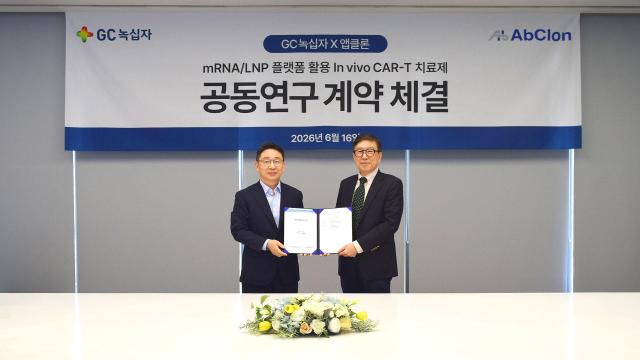
GC Green Cross and AppClone, a company specializing in cancer treatments, are collaborating on the development of a next-generation cancer therapy known as in vivo CAR-T. This initiative aims to overcome the limitations of existing chimeric antigen receptor T-cell (CAR-T) therapies and reshape the landscape of the cell therapy market.
On June 17, GC Green Cross announced that it has signed a strategic memorandum of understanding (MOU) with AppClone to jointly research and develop the in vivo CAR-T treatment.
The partnership will combine GC Green Cross's mRNA-LNP-based cell-specific expression and delivery technology, along with its GMP production capabilities, with AppClone's CAR-T technology, T-cell specific antibody assets, and clinical experience in CAR-T therapies.
Together, the companies aim to derive candidate substances targeting various indications, including hematologic cancers, accelerate non-clinical and clinical entry, and expand their global partnerships.
Currently, commercially available CAR-T therapies involve extracting a patient's T-cells, introducing genes that recognize cancer cells, and then expanding these cells for re-administration in a personalized (ex vivo) manner. However, this approach is limited by high costs and complex manufacturing processes, which restrict treatment accessibility.
The in vivo CAR-T therapy being developed by the two companies will directly deliver genetic information to T-cells in the body via messenger RNA (mRNA), allowing for cell generation. This method enables mass production and immediate administration without the need for separate cell extraction, enhancing treatment accessibility and scalability. As a result, interest from global pharmaceutical companies and biotech firms in this area is rapidly increasing.
Jung Jae-wook, head of R&D at GC Green Cross, stated, "By combining our technologies, we will overcome the limitations of existing CAR-T therapies and provide innovative treatment options."
* This article has been translated by AI.
Copyright ⓒ Aju Press All rights reserved.