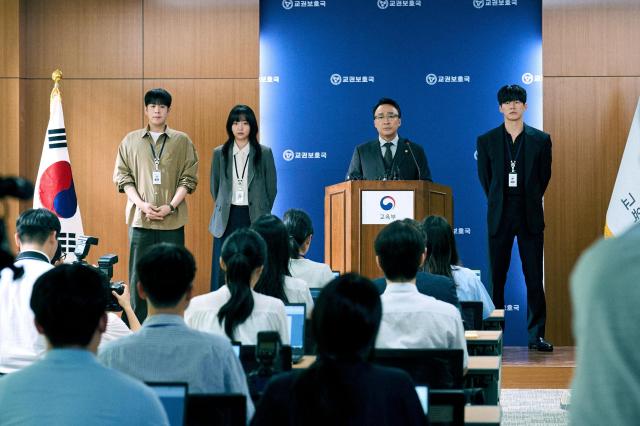
SEOUL, June 17 (AJP) - Netflix's hit K-drama "Teach You a Lesson" may depict elite inspectors restoring order in dysfunctional schools, but teachers in South Korea say the most unsettling aspect of the series is not its violence.
It is how accurately it captures their sense of abandonment.
The methods may be exaggerated. The stakes, they argue, are not.
In fact, real life is often more tragic.
Unlike television, there is rarely a dramatic resolution when schools fail. Conflicts can end in prolonged legal battles, public humiliation, mental trauma and, in some cases, death.
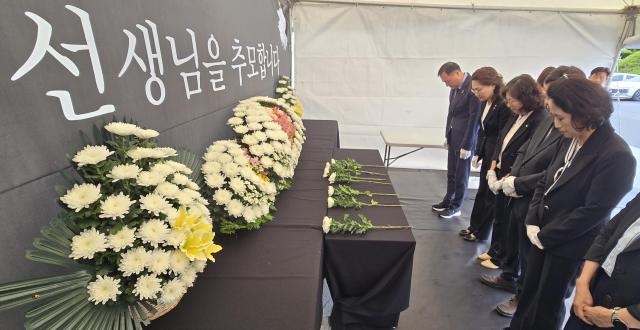
South Korea has witnessed several teacher deaths in recent years, most notably the 2023 death of a young teacher at Seoul's Seoi Elementary School that triggered nationwide protests and forced lawmakers to strengthen legal protections for educators.
Yet many teachers say little has fundamentally changed.
"The people who harass teachers and violate teachers' rights come at us with guns and knives. The least defense we have is a state-backed legal protection system."
The speaker is an elementary school teacher in Incheon with a decade of classroom experience, describing what he sees as the reality of teaching in South Korea today.
Like many teachers interviewed by AJP, he had watched every episode of "Teach You a Lesson," a series that imagines an extraordinary government agency empowered to intervene when schools descend into chaos.
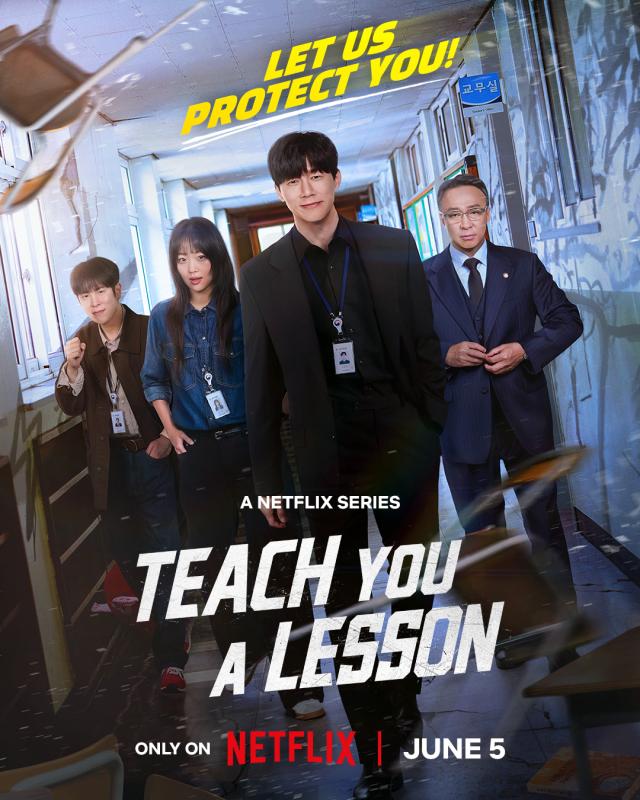
For many educators, however, the drama's popularity is less surprising than revealing.
"I would suggest that the remarkable popularity of 'Teach You a Lesson' be understood as a symptom rather than as a foundation for policy," said Eom Moon-young, a professor in the Department of Education at Seoul National University.
"The fact that a fictional Teacher Rights Protection Bureau resonates so powerfully reflects the profound sense of powerlessness many teachers now experience."
Eom said the show's success reflects frustrations that have accumulated for years.
Teachers increasingly report verbal abuse, physical threats, relentless complaints from parents and allegations of child abuse stemming from routine disciplinary actions. While South Korean society has become more attentive to children's rights over the past two decades, many educators say institutional protections for teachers have failed to keep pace.
The current debate cannot be separated from the trauma of Seoi Elementary School.
In July 2023, a young teacher at the Seoul school died by suicide after reportedly suffering severe stress related to parental complaints and student disciplinary issues, triggering nationwide outrage and mass rallies by teachers.
Lawmakers later passed a package of reforms commonly known as the "Five Teacher Protection Laws," intended to strengthen legal safeguards for educators. Yet many teachers say the burden remains unchanged.
One elementary school teacher in Sejong City said the fifth episode of the drama, which depicts a teacher driven to despair by relentless parental harassment, was the most memorable.
"The education minister in the drama says he will take responsibility for everything," he said. "What stays with me is that the real education minister does not do that. Watching it gave me comfort." "The law has to change first."
Another elementary school teacher from Daegu with 26 years of experience said the same episode felt less like fiction than a documentary.
"I was deeply moved by the episode based on the Seoi Elementary case," he said.
"It made me think they had researched reality very well. Everything that happened in that episode happens in real life. It is extremely common."
Teachers also described a steady stream of parental complaints that they say has become increasingly intrusive.
The Incheon teacher recalled one example involving a swimming lesson. A child who was afraid of water chose to remain poolside rather than enter the water. After photographs were shared with parents, one parent questioned why the child's swimsuit appeared dry.
When the teacher explained that forcing the child into the pool could have created safety risks, the parent responded:
"Then why did the child go to the swimming pool at all? Shouldn't the child experience the water?"
Teachers also reported receiving messages about children's clothing, demands to report how many spoonfuls of lunch a child consumed, requests to monitor emotions after school and repeated phone calls outside working hours.
One veteran middle school teacher in Seoul said the problem has steadily worsened. "For 28 years, things have continued to get worse," he said.
"There are more parental complaints now. Many families have only one child, and parents often become overprotective. Even when their child is wrong, they side with the child."
The fear of speaking up remains pervasive. According to a nationwide survey by the Korean Federation of Teachers' Associations, 36.6 percent of teachers reported infringements on educational activities last year.
Yet only 3.8 percent sought formal proceedings before teacher rights protection committees, while 93.3 percent never filed complaints at all. Nearly 30 percent cited fears of retaliation, including false child-abuse allegations.
Many teachers argue that even when investigations ultimately clear them of wrongdoing, the process itself can be devastating. A single allegation may trigger police investigations, child welfare inquiries, media attention and months of uncertainty.
For many educators, that may be the most important lesson hidden inside the drama.
The appeal of "Teach You a Lesson" is not that audiences are longing for vigilante justice or a return to corporal punishment. It is that teachers are searching for something far more basic: the reassurance that they will not have to fight these battles alone.
The drama may exaggerate its methods.
But for many teachers, real life is often more tragic because there is no Na Hwa-jin arriving at the end — only educators hoping that the next classroom conflict will not become another national tragedy.
Copyright ⓒ Aju Press All rights reserved.