

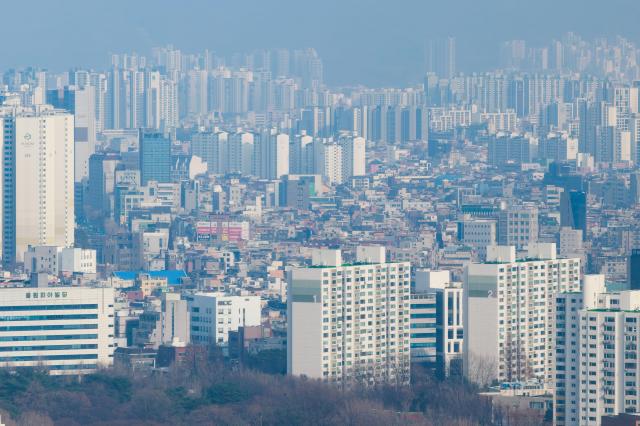
As housing prices in Seoul soar, many homebuyers are shifting their focus to Gyeonggi Province, leading to a rapid increase in property prices across the metropolitan area. The demand for rentals in Seoul remains high, causing rental prices in the northeastern districts to rise by 6% to 7% compared to the beginning of the year. Some areas in Gyeonggi are experiencing price increases comparable to those in Seoul, with both the sales and rental markets in southern Gyeonggi showing signs of instability.
According to KB Real Estate's weekly apartment market trends report for the third week of June (as of June 15), the change in Gyeonggi apartment sales prices increased by 0.17%, slightly up from the previous week's 0.16%. Notably, Hwaseong Dongtan saw a 1.52% increase, marking the highest growth rate in the country for two consecutive weeks. This week's increase is larger than last week's 0.99%, indicating that the cumulative increase in national apartment sales prices this year stands at 1.35%, with Dongtan's weekly surge matching that of the entire first half of the year.
In addition to Dongtan, several areas bordering Seoul, including Anyang Dongan (0.60%), Gwangmyeong (0.47%), Guri (0.37%), and Yongin Suji (0.36%), also showed strong performance, nearing or exceeding Seoul's sales change rate of 0.25%.
Dongtan Experiences Overheating Due to Semiconductor Industry and Regulatory Benefits
The atmosphere in Dongtan is already showing signs of overheating. A local real estate agent reported, "Recently, inquiries from buyers have surged, with over ten groups visiting a single property in a day during the weekends. There is a significant influx of actual demand, particularly from newlywed couples." Instances of buyers backing out of contracts after paying double the deposit due to soaring asking prices are also emerging.
Factors contributing to the rise in housing prices in Dongtan include improvements in the semiconductor industry involving companies like Samsung Electronics and SK Hynix, the benefits of being in a non-regulated area, and expectations for enhanced transportation networks. According to statistics from the Court Registration Information Center, among the 6,119 buyers of multi-unit buildings in Dongtan from March to May this year, 2,084, or 34.1%, were residents from outside Hwaseong.
Analysts suggest that the surge in Gyeonggi housing prices is driven by buyers being pushed out of Seoul. The Korea Real Estate Agency reported that in the first quarter of this year, residents of Seoul accounted for 15% of apartment transactions in Gyeonggi, the highest level in over three years, up from 12.6% during the same period last year. Areas closer to Seoul, such as Gwangmyeong (38.6%), Hanam (37.5%), Guri (36.4%), Namyangju (25.2%), and Bucheon (20.6%), saw higher proportions of purchases by non-local buyers.
Seoul Rental Market Sees Sharp Increases, Prompting Gyeonggi Purchases
The rental market is also experiencing significant fluctuations. According to KB Real Estate, the change in Gyeonggi rental prices increased by 0.19%, up from 0.18% the previous week. Rapid increases in rental prices are observed in Gwangmyeong (0.68%), Hanam (0.55%), Seongnam Jungwon (0.53%), and Yongin Suji (0.45%). The distribution of both sales and rental demand to Gyeonggi is contributing to growing instability in the rental market across the metropolitan area.
In Seoul, a shortage of rental listings has already become evident. In the Magok area of Gangseo District, large apartment complexes have only 1 to 3 rental listings available, highlighting an imbalance in the rental market. According to a KB Real Estate survey, as of May this year, housing prices in Gangseo District rose by 8.07%, marking one of the highest fluctuations among Seoul's 25 districts.
Rental instability is also intensifying within Seoul. Data from the Korea Real Estate Agency shows that as of June 15, the cumulative rental price increase this year was 7.10% in Seongbuk, 6.50% in Nowon, 6.29% in Seongdong, and 6.19% in Gwangjin, significantly exceeding the average increase of 0.69% across Seoul. KB Real Estate trends also indicate that this week, areas with strong rental prices in Seoul include Songpa (0.56%), Dobong (0.52%), Eunpyeong (0.52%), Gwanak (0.46%), and Gwangjin (0.39%).
"Movement Towards Smaller Units Priced Around 600 Million Won with Policy Loans; Non-Regulated Areas Continue to Attract Buyers"
Nam Hyuk-woo, a researcher at Woori Bank, stated, "In lower-priced areas of Seoul where rental listings are scarce, there is a noticeable movement among tenants to purchase smaller units priced around 600 million won that qualify for policy loans. As the price strength continues in popular regulated areas of Seoul and Gyeonggi, demand is shifting to non-regulated areas such as Deogyang District in Goyang, Uijeongbu, Namyangju, and Gwangju in Gyeonggi, where favorable price trends are spreading."
* This article has been translated by AI.
Copyright ⓒ Aju Press All rights reserved.