

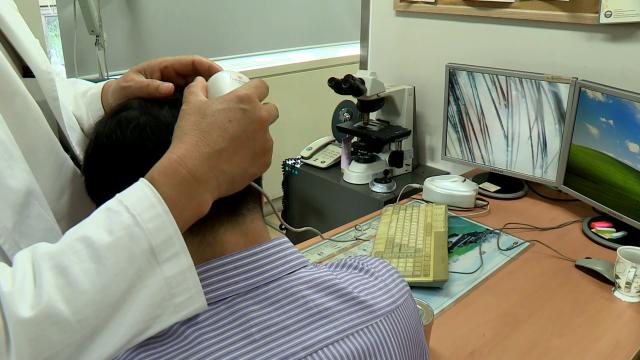
SEOUL, June 19 (AJP) -Going bald is personal matter, except in South Korea. It is quickly turning into a political and social hot potato.
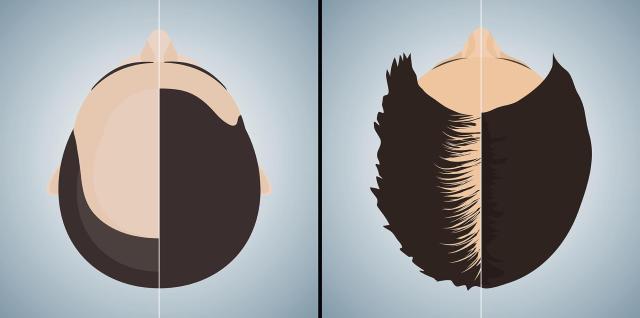
The South Korean government is weighing whether to extend National Health Insurance coverage to androgenetic alopecia, the common hereditary form of hair loss often associated locally with M-shaped hairlines.
What had been thought as one of the most extreme populist campaign promises from liberal candidate Lee Jae Myung in his first presidential bid in 2022 by claiming hair loss causes not only financial but psychological stress for young people is rapidly taking shape as his administration enters its second year in office amid waning popularity.
After taking office, Lee pushed the issue forward, telling a Ministry of Health and Welfare briefing late last year that hair loss was no longer merely a cosmetic concern but "a matter of survival" affecting quality of life and social opportunity.
The Health Ministry plans to hold a public forum in July, with around 200 members of the public invited to participate. Any proposal would ultimately require approval from the Health Insurance Policy Deliberation Committee before coverage could be expanded.
For many people outside South Korea, the idea may sound puzzling. Public insurance coverage for male-pattern baldness remains highly unusual among developed healthcare systems.
But the debate is ultimately less about hair than about what Korea considers a public disadvantage in one of the world's most competitive societies.
At its core, the country is wrestling with a broader question facing advanced economies everywhere: should universal healthcare merely prevent disease and death, or should it also protect quality of life and social opportunity?
If adopted, South Korea could become one of the first major economies to formally recognize appearance itself as a factor of social inequality.
One in Five
Hair loss in South Korea is more common than it appears, and for a looks-conscious society, the market is enormous.
A Gallup Korea survey conducted in November 2025 found that 21 percent of Korean adults said they were currently experiencing hair loss symptoms, roughly the same figure as in 2013 and 2019. Among men, the figure was 27 percent; among women, 15 percent.
Industry and medical associations estimate the total population experiencing hair loss, including those who have not sought clinical treatment, at around 10 million, or roughly one in five Koreans.
According to data obtained by a National Assembly lawmaker from the Health Insurance Review and Assessment Service, the number of patients formally diagnosed with hair loss last year totaled 237,009 — a far smaller figure than the roughly 10 million estimate above, which includes people who have not sought clinical treatment. Of those formally diagnosed, 175,493 were diagnosed with alopecia areata, an immune-related form of hair loss that already qualifies for insurance coverage.
Patients in their 20s and 30s accounted for 86,515 of all hair loss diagnoses last year, or 36.5 percent of the total. That makes them the largest demographic group — and the population the government is considering as a first priority if coverage is expanded.
The demographics are politically significant.
Hair loss disproportionately affects younger adults at a time when they are already navigating soaring housing costs, fierce job competition and delayed marriage. In South Korea, where appearance is widely acknowledged to influence hiring outcomes and social perceptions, baldness increasingly occupies a gray zone between cosmetic concern and social disadvantage.
That partly explains why a once-ridiculed campaign promise has evolved into a serious policy discussion.
What the drugs are — and how people get them
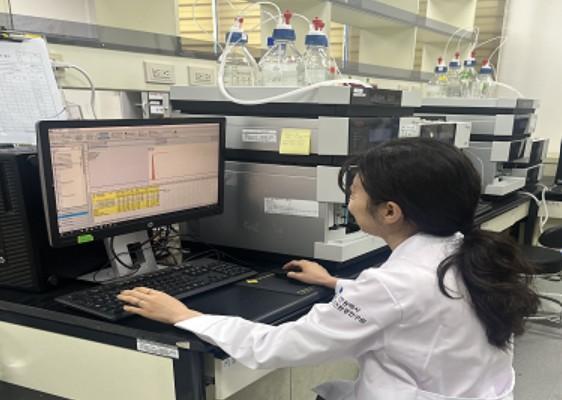
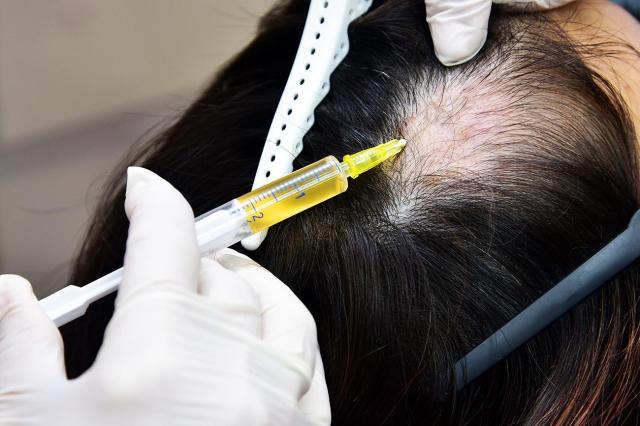
Among the best-known treatments for hair loss are finasteride and minoxidil.
Finasteride works by blocking an enzyme that converts testosterone into DHT, a hormone that causes hair follicles to shrink. It was originally developed for benign prostatic hyperplasia, a non-cancerous enlargement of the prostate, and was later approved in a lower dose for male-pattern baldness. Minoxidil is a topical treatment applied directly to the scalp.
Neither is currently covered by South Korea's National Health Insurance when prescribed for hair loss. But the price gap between insured and uninsured uses has created a gray zone.
Finasteride is also prescribed for benign prostatic hyperplasia, and when used for that condition it qualifies for insurance coverage, making it significantly cheaper than when prescribed for hair loss. The prostate version usually comes in 5mg tablets rather than the 1mg dose used for hair loss, meaning patients who obtain it this way must cut the pills themselves.
Online communities dedicated to hair loss in Korea contain numerous accounts of users seeking cheaper finasteride prescriptions through prostate-related diagnoses. Health authorities and medical groups have warned against the practice, saying prescriptions made under unrelated diagnosis codes may violate medical law.
The Korean Urological Association has flagged the trend as a public health concern, warning that long-term use without proper medical evaluation carries risks including erectile dysfunction, reduced sperm count and motility, and potential exposure hazards from pill-splitting. Finasteride powder can be harmful to pregnant women and children through skin contact.
The phenomenon also illustrates a familiar problem in healthcare economics: when a treatment is perceived as essential but excluded from insurance coverage, patients often find workarounds.
In effect, the market creates its own unofficial subsidy system.
The human dimension
Jo Ye-ji, 27, a nurse who has worked at a dermatology clinic in Seoul's Wirye area for five years, said hair loss brings in a steady stream of patients. "It's not cheap," she said.
Seo Ji-hyun, 29, an office worker from Incheon, knows the feeling well. Every morning, she said, she showers, dries her hair and tries to style it — only to feel her confidence fade when she sees the thinning.
"If my hair looks empty, I feel like I'm less of myself," she said. "But I can't wear a hat to work."
A hair transplant is financially out of reach. Medication feels complicated. Seo said she has read that finasteride can affect hormone levels, must be taken at fixed times and should not be handled by women of childbearing age.
"There are so many rules," she said. "It looked difficult."
Still, she said she plans to start treatment. The prospect of insurance coverage has given her some hope, though not without reservation.
"I'm not sure it's right to put hair loss ahead of serious diseases," she said. "There are so many critical illnesses out there. That hair loss would get coverage before them — I'm not sure that sits right."
Her ambivalence captures the national debate itself.
Few dispute that hair loss carries psychological consequences. The disagreement lies in whether that burden rises to the level of a public responsibility.
How the ministry's position shifted
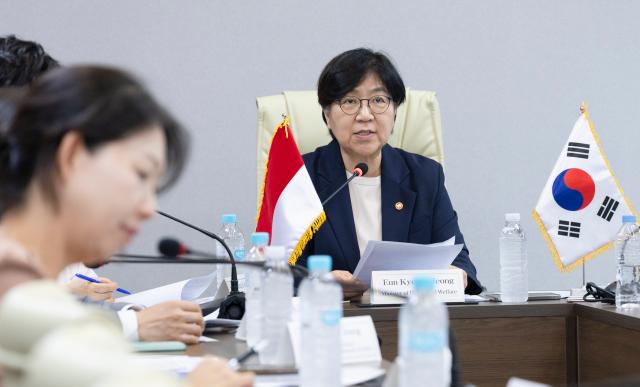
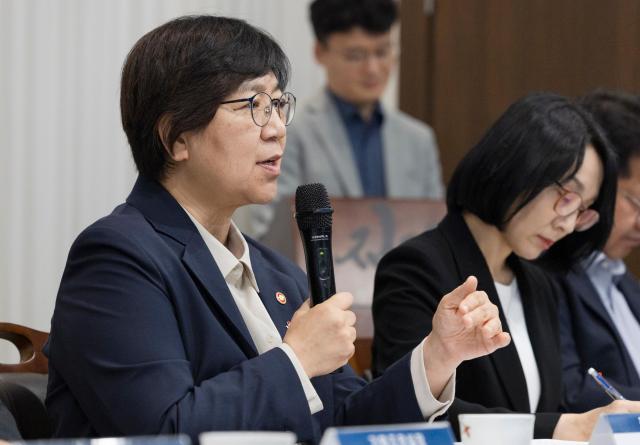
Health Minister Jung Eun-kyung initially opposed expanding coverage for common hair loss, arguing that it "does not threaten life or health" and that cosmetic concerns have traditionally fallen outside the scope of National Health Insurance benefits.
After repeated calls from President Lee, however, the ministry shifted toward reviewing the proposal.
The government is considering prioritizing people aged 20 to 34 as initial beneficiaries, citing the social and psychological consequences of hair loss for young people entering the job market.
In many countries, hair loss remains firmly categorized as a cosmetic issue. In Korea, however, the boundary is blurrier.
Numerous studies have shown that physical appearance can influence hiring decisions, salary levels and perceptions of competence. That has allowed supporters to frame hair loss not as vanity but as a form of structural disadvantage.
The Lee administration is effectively asking whether appearance-related inequality deserves the same policy attention once reserved for traditional economic inequalities.
Not everyone in that age group is convinced.
Rep. Cheon Ha-ram of the New Reform Party questioned why coverage would target only those aged 20 to 34.
"Younger generations value fiscal sustainability and policy principles more than populist benefits," he said.
In a separate but already-decided move — distinct from the androgenetic alopecia debate above — the government has taken a first step on a different form of hair loss.
Starting July 1, South Korea's National Health Insurance will begin covering Olumiant, the brand name for baricitinib, for adults with severe alopecia areata who have not responded to prior treatments including steroids or cyclosporine for at least three months.
Until now, patients taking the drug out of pocket paid around 600,000 won per month for the recommended daily dose of 4mg. Under the new coverage, that figure will drop to roughly half, according to the Ministry of Health and Welfare.
The distinction matters. Androgenetic alopecia, the subject of the current controversy, is hereditary and hormone-related, while alopecia areata is an autoimmune disease already recognized as medically necessary in severe cases.
The opposition
The pushback has been broad.
The Korean Medical Association urged the government to prioritize coverage for cancer and other serious illnesses, expressing concern over characterizing hair loss as a matter of life and death for young people.
The fiscal argument has been equally pointed.
"Beginning in 2026, the National Health Insurance system is projected to run annual deficits exceeding 4 trillion won," one opposition lawmaker said. "Resources are limited. Every billion won spent on hair loss medication is money that cannot be spent on patients suffering from rare and severe diseases."
Patient advocacy groups have joined the criticism.
Kim Sung-ju, head of the Korea Severe Disease Federation, said it was "putting the cart before the horse" to support hair-loss treatment while delaying coverage for life-threatening conditions on grounds of insufficient funds.
The controversy illustrates a dilemma confronting welfare states around the world.
As societies grow wealthier, citizens increasingly expect governments not only to save lives but also to improve well-being. Yet resources remain finite.
Every expansion of coverage creates a trade-off. Every billion won spent on hair-loss medication is a billion won unavailable for cancer treatments, rare diseases or elderly care in one of the world's fastest-aging societies.

The numbers behind those warnings are striking.
Government projections show reserve funds, which stood at a record 30.2 trillion won last year, could be depleted by 2033 as the population ages and healthcare spending rises. The National Assembly Budget Office projects the insurance fund will fall into deficit this year, with accumulated reserves exhausted by 2029.
If coverage is extended to androgenetic alopecia, the additional annual cost is estimated at between 100 billion and 700 billion won, depending on uptake. Critics argue those figures could rise substantially once millions of previously untreated patients enter the system.
Kim Jae-yeon, legal director at the Korean Medical Association, argued that the accelerated timetable reflects political calculation as much as health policy.
"This is not a policy born from objective suitability or long-term fiscal sustainability," Kim wrote. "It is an attempt to appease young voters."
The Korean Dermatological Association has proposed that if coverage is eventually extended, it should be limited to patients meeting agreed-upon severity thresholds and require diagnosis by dermatologists.
The Ministry of Health and Welfare said it would hold a public forum in July before making any decision, adding that both medical necessity and cost-effectiveness would be considered.
Korea has built one of the world's most comprehensive public healthcare systems. But universal systems are never static; they are constantly renegotiating what society collectively agrees to insure.
If hereditary hair loss qualifies because it affects confidence and opportunity, other questions inevitably follow. Would severe obesity qualify? Chronic insomnia? Fertility preservation? Other conditions that may not threaten life but profoundly shape quality of life?
The answer will determine more than who pays for finasteride.
It will reveal how South Korea defines health in the 21st century.
Copyright ⓒ Aju Press All rights reserved.
