

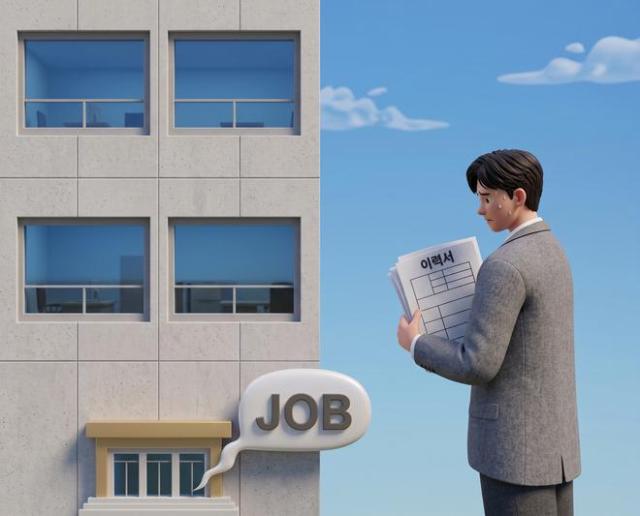
According to the National Data Agency, the employment landscape is increasingly characterized by an aging workforce, with job opportunities for older individuals rising while those for younger workers are declining. An analysis of employment trends over the past six years shows that the number of employed individuals aged 15 to 29 has dropped from approximately 3.9 million to around 3.7 million, while employment for those aged 60 and older has surged from 5.07 million to over 6.4 million.
The proposal to extend the retirement age has been put forward as a potential solution to fill income gaps for older workers, but it also raises concerns about exacerbating employment difficulties for younger generations who already face barriers to entering the job market.
Academics and research institutions are divided on the actual impact of retirement age extension on youth employment. The Korea Development Institute (KDI) has indicated that since the introduction of mandatory retirement at age 60 in 2016, the increase in employment among older workers has coincided with a decrease in new hires of younger workers, particularly in large corporations and the manufacturing sector. The increased cost of retaining older employees has led companies to reduce the hiring of young interns and new graduates.
Conversely, some argue that the relationship between retirement age extension and youth employment is not simply one of substitution. Research from the Organisation for Economic Co-operation and Development (OECD) and the Korea Labor Institute suggests that the job markets for older and younger workers can have different effects depending on industry structure and company size, and they can even be complementary.
If older workers maintain stable employment over the long term, their increased income could lead to higher overall consumption, which in turn may create new jobs across the economy, including in the service sector.
Experts point to a rigid labor market structure and wage system as contributing factors to this phenomenon. The seniority-based wage system, which automatically increases wages based on years of service, creates an environment where flexible workforce management is challenging, thereby limiting companies' capacity to hire new employees. This suggests that the root cause of intergenerational conflict is not the extension of retirement age itself, but rather the persistent structural issues in the labor market.
To ensure the effectiveness of discussions around extending the retirement age, experts recommend that reforms to the wage system and measures to favor young workers be implemented simultaneously. They suggest introducing various forms of continued employment, such as re-employment of contract workers, as well as transitioning to a job-centered wage system to alleviate the financial burden on companies.
Additionally, there are calls for institutional incentives that encourage companies to maintain a certain percentage of youth hires as a condition for retaining older employees.
Song Heon-jae, a professor of economics at the University of Seoul, stated, "As we consider extending the retirement age, we need to develop long-term solutions that benefit both workers and companies in a sustainable manner."
* This article has been translated by AI.
Copyright ⓒ Aju Press All rights reserved.