

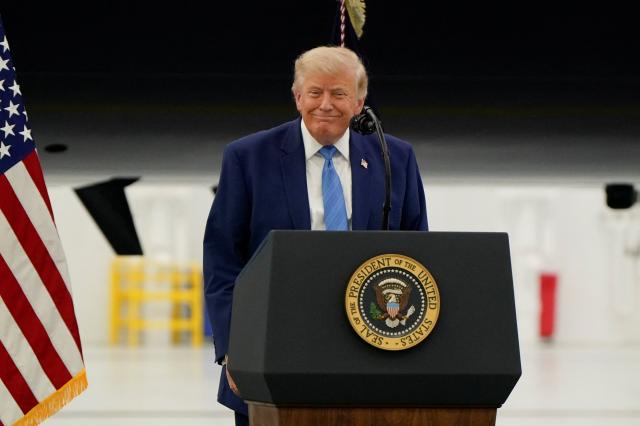
SEOUL, June 20 (AJP) - United States President Donald Trump has issued a stark ultimatum to Tehran, warning that Washington could resume military actions if a final agreement is not reached within a strict 60-day window. Speaking at Joint Base Andrews on Friday (local time), Trump pressured Iran to solidify a recent memorandum of understanding into a permanent treaty or face severe consequences. The remarks signal a high-stakes push by Washington to conclude denuclearization talks following the recent halt in direct military conflict.
For South Korea and major Asian economies, a failure to secure a permanent deal within these two months threatens to instantly trigger an energy crisis by choking off vital crude oil shipments through the Strait of Hormuz. Because Asian industrial powerhouses rely heavily on Middle Eastern oil imports, a collapse in negotiations could disrupt regional supply chains through severe maritime bottlenecks and soaring fuel costs. Economists warn that a prolonged blockade would heavily impact South Korea's export-reliant manufacturing sectors.
The current fragile truce follows a broader U.S.-Iran war that disrupted global shipping lines earlier this year. The 60-day negotiation timeline officially began on Thursday after both sides signed an interim memorandum of understanding to temporarily halt hostilities. This makes the current period of relative calm a temporary window rather than a guaranteed long-term peace resolution for the region.
During his address introducing the new Air Force One presidential aircraft, Trump made it clear that Washington is prepared to employ maximum pressure if the upcoming talks stall. If no deal is reached within 60 days beginning Thursday, "we will do things that won't make them happy," Trump said. He quickly tempered the warning by adding, "But I don't think it's going to get to that."
Trump elaborated on the economic consequences of a diplomatic failure, noting that military escalation would immediately disrupt global energy corridors. He warned that a return to hostilities would mean oil will not flow out of the Strait of Hormuz very quickly. According to Trump, individuals who own billion-dollar ships do not want missiles flying over their vessels or maritime mines scattered throughout the waters.
The urgency of the timeline is underscored by immediate diplomatic hurdles, as working-level talks scheduled in Switzerland on Friday were postponed without an official explanation. Multiple media reports indicated that Iran withdrew from the scheduled sessions in response to recent Israeli airstrikes targeting the Hezbollah militant group in Lebanon.
Trump downplayed the regional friction, highlighting his recent discussions with Israeli leaders to secure a ceasefire with Hezbollah. In a phone interview with NBC News, Trump described the development as a positive step toward broader regional stability. "It's a positive," Trump said, adding that the ceasefire was "a little icing on the cake."
The American president also expressed gratitude toward Beijing for its diplomatic stance during the underlying conflict. Trump stated that he had previously requested Chinese President Xi Jinping to refrain from intervening or engaging with Iran. The Chinese leader reportedly agreed to the request and maintained that position, a move that Trump described as a very good thing.
The U.S. State Department announced that a new round of talks between Israel and Lebanon will be held in Washington next week to further stabilize the region. The text of the memorandum of understanding states that the 60-day negotiation period can only be extended through the mutual consent of both the United States and Iran.

Copyright ⓒ Aju Press All rights reserved.
