SEOUL, August 18 (AJP) - South Korea will take back wartime control of its own troops on schedule and accelerate work on a nuclear-powered submarine, President Lee Jae Myung said Tuesday, a day after U.S. President Donald Trump ordered the allies' annual exercise scaled back.
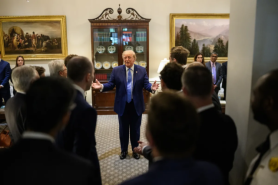
Trump said Sunday (local time) that he had instructed U.S. Defense Secretary Pete Hegseth to "substantially reduce" the drills, writing on his social media platform that it was too late to cancel them outright. He cited his relationship with North Korean leader Kim Jong-un and said South Korea had declined a request to join U.S. efforts against Iran.
The exercise, Ulchi Freedom Shield, began Monday and runs through Aug. 27, involving about 18,000 South Korean troops. The Joint Chiefs of Staff said this month that 14 field training events at battalion level or larger were planned, down from 22 last year.
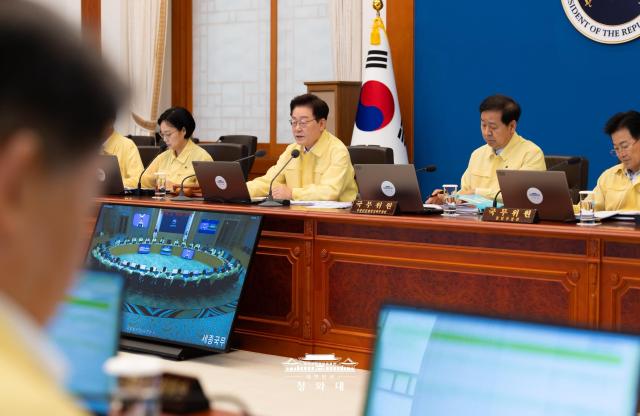
Speaking at the Ulchi cabinet meeting at the presidential office Choeng Wa Dae, Lee gave no ground on the timetable. "The return of wartime operational control within this term must be pushed ahead without disruption, in line with the government's original plan," he said.
The timing carries weight beyond the rhetoric. Wartime operational control, or OPCON, has stayed with the U.S.-led combined command since the Korean War (1950~1953), and the handover runs through a three-stage certification process.
Defense Minister Ahn Gyu-back said in June that verification of the future combined command's full operational capability would be completed at the annual Security Consultative Meeting with the United States later this year. The two governments would then recommend a target year to their presidents. Large-scale exercises are where that capability is tested.
Lee argued that the country has already outgrown its dependence. He said South Korea is rated the world's fifth-strongest military and a top-four defense industry power, and that its defense spending amounts to 1.4 times North Korea's gross domestic product.
"In terms of weapons systems and force size, it is no exaggeration to say our capacity to defend ourselves is more than sufficient," he said.
Lee then turned to the submarine program, the most concrete piece of the self-reliance agenda. He asked officials to "speed up the nuclear submarine project, which will symbolize a more constructive and solid future for the alliance."
The defense ministry released its basic development plan in May. The boat is to run on low-enriched uranium fuel with a long refueling cycle, be designed and built domestically, and reach launch in the mid-2030s and service in the late 2030s.
Fuel supply depends on Washington. The bilateral nuclear agreement bars South Korea from enriching uranium or reprocessing spent fuel without U.S. consent, and talks on that point have been running since the two leaders agreed last year to support a South Korean boat.
He also asked that preparations for a unified armed forces academy proceed without wavering, pointing to changes in how wars are fought. "Recent warfare is evolving into a hybrid form in which conventional combat, terrorism and cyberattacks work together," he said.
Before the cabinet meeting, Lee chaired a full session of the National Security Council for the exercise period and reviewed wartime transition procedures across government agencies.
"Creating a peace in which there is no need to fight matters most, but we must also prepare for the worst," he said, according to a written briefing by Kang Yu-jung, the chief presidential spokesperson.
Kang said Lee made clear that the exercise is defensive, aimed at protecting the lives and safety of South Koreans, and that the country has no intention of attacking North Korea or raising tension on the peninsula.
Pyongyang warned Friday of unspecified stern measures, calling the drills a rehearsal for war. Lee instructed officials not to run the exercise the way it has always been run, but to rebuild it around current forms of conflict.
Copyright ⓒ Aju Press All rights reserved.