
"Repeated imports do not fit the purpose of self-treatment," the ministry said, moving to quell concerns that cheaper prices abroad would spur a wave of prescription trips.
Quantities beyond six bottles or a three-month supply may also be held under relevant laws.
The Korea Customs Service will weigh travel frequency, recent inspection records and overseas payment history to identify repeat carriers, the ministry said. It also plans to clamp down on online resale of imported drugs, with its special judicial police officers pursuing violators.
Drugs brought from abroad also fall outside Korea's drug injury relief program, which under the Pharmaceutical Affairs Act covers only medicines made or approved for import in the country. The ministry urged travelers to seek prescriptions overseas only when necessary and to confirm storage conditions.
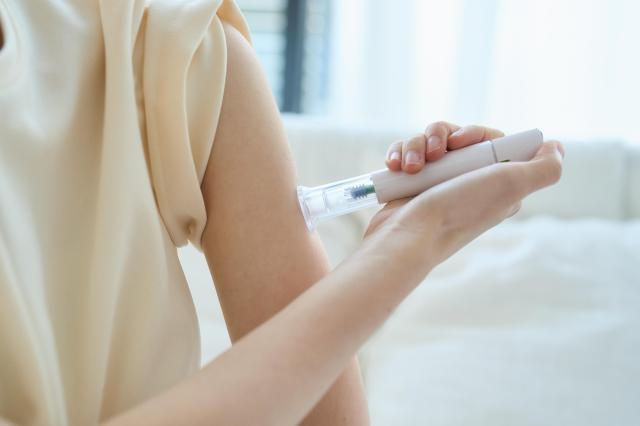
The ministry and the customs agency on Nov. 12 began allowing travelers to bring in self-treatment drugs legally bought abroad, including GLP-1 obesity injections such as Wegovy and Mounjaro.
The move reversed an October 2024 notice that had effectively shut the drugs out at the border.

Kim Dong-young
Kim Dong-young is a bilingual journalist at AJU Press (AJP), covering Korean tech, energy, and bio/pharma.
He reports from the field at events like CES and APEC, runs AJP's YouTube channels,
and is pursuing a master's at Sogang's MOT program.
Copyright ⓒ Aju Press All rights reserved.
Related News
-
 Patent Expiration of Keytruda Sparks Biosimilar Race in K-Bio
As the patent expiration of Keytruda, the world's top-selling immuno-oncology drug, approaches, competition in the biosimilar development sector is heating up. Samsung Bioepis and Celltrion have both submitted approval applications, while global competitors are also rushing to enter the market. The commercialization of Keytruda biosimilars is expected to significantly contribute to the revenue growth of these companies, drawing considerable market interest.According to industry sources, MSD's Keytruda (ingredient name: pembrolizumab) generated $31.7 billion in sales last year, accounting for 49% of MSD's total revenue of $65 billion. The U.S. patent is set to expire in December 2028, while the European patent will expire in 2031. Once the patents are lifted, a market worth approximately $46 billion will open for this single product, which is why the biosimilar industry is heavily invested in developing Keytruda alternatives.In South Korea, Samsung Bioepis and Celltrion are ramping up their commercialization efforts. Samsung Bioepis applied for product approval for its Keytruda biosimilar 'SB27' with the Ministry of Food and Drug Safety in August and with the U.S. Food and Drug Administration (FDA) last month. The company reported that it confirmed the equivalence of primary and key secondary efficacy endpoints in a global Phase 3 clinical trial involving 555 patients across 14 countries in June. At the European Society for Medical Oncology (ESMO) conference last month, it also presented results demonstrating pharmacokinetic equivalence from a Phase 1 trial involving 163 patients with non-small cell lung cancer across four countries. The FDA application covers 18 indications, including melanoma, non-small cell lung cancer, and head and neck cancer.Celltrion also submitted a product approval application for 'CT-P51' to the Ministry of Food and Drug Safety in August. In a clinical trial involving 228 patients with melanoma who underwent complete resection, pharmacokinetic equivalence with the original drug was confirmed. The company plans to sequentially apply for approvals in major markets, including the U.S., Europe, and Canada.Meanwhile, foreign companies are also moving quickly. Amgen is conducting a Phase 3 trial for 'ABP 234'. Swiss company Sandoz and German firm Formycon have shifted their strategy to utilize Phase 1 data for approval after halting their comparative Phase 3 trials. This approach is seen as a strategy to expedite their launch by taking advantage of the trend of U.S. and European regulatory agencies relaxing clinical requirements for comparative efficacy in biosimilars. Formycon's 'FYB206', developed in collaboration with India's Zydus Lifesciences, applied for FDA approval on October 13. Chinese company Biotest has also entered a clinical trial that combines Phase 1 and Phase 3 studies.However, a variable in this landscape is MSD's subcutaneous formulation 'Keytruda Qurex'. While the original Keytruda is administered intravenously, Qurex allows for a quicker administration time through subcutaneous injection. Qurex generated $830 million in sales in the third quarter, accounting for 9.7% of Keytruda's total revenue. The patent for Qurex will remain in effect until 2041.Currently, most biosimilars under development are in intravenous form. As more patients transition to subcutaneous injections before the patent expiration, the market available for biosimilars will shrink. The extent to which intravenous biosimilars can capture market share is expected to influence future competitive dynamics. Analysts suggest that the competition in the Keytruda market is shifting from a battle between the original and biosimilar drugs to a competition between intravenous and subcutaneous formulations.Jung Yoon-taek, head of the Pharmaceutical Industry Strategy Research Institute, stated, "MSD's introduction of a subcutaneous formulation using Alteogen technology is a strategy in anticipation of patent expiration. Just as Novo Nordisk focused on Wegovy instead of Saxenda, MSD is likely to concentrate more on the subcutaneous formulation that still has patent protection."Experts believe that for domestic companies to gain an edge in the global competition, speed of launch and supply chain management will be crucial. Jung emphasized, "Korean bio companies have already proven themselves as first movers in the biosimilar sector through approvals like that of 'Remsima'. Based on this, they need to proactively launch Keytruda biosimilars to establish price competitiveness and secure a global supply chain. A marketing strategy linked with local partners will also be important."* This article has been translated by AI.
-
 Korea's contradictory weight-loss policy sends mixed signals
Getty Images Bank SEOUL, November 12 (AJP) - "Losing weight has never been so easy," said Park Eun-young, a 54-year-old resident of Busan, South Korea's southern port city. She's not exaggerating. The country's first homegrown GLP-1 obesity drug has been available for two weeks, and Korean can now bring home prescribed foreign brands bought much more cheaply in neighboring countries such as Japan. The liberalization comes even as U.S. regulators require warnings across the drug class about a rare eye condition that can cause permanent vision loss. From Thursday, travelers may carry in prescribed obesity drugs such as Novo Nordisk's Wegovy and Eli Lilly's Mounjaro, the Ministry of Food and Drug Safety (MFDS) said. The medicines must be approved by the relevant country's regulator and legally prescribed and purchased. The general allowance is six containers, with larger quantities permitted within a three-month supply — equivalent to 12 or 13 single-dose weekly Mounjaro pens. Online direct purchases remain prohibited, while narcotics and psychotropic medicines are excluded from the relaxation. "We will closely monitor changes after the measure takes effect, together with the customs authorities," the ministry said. The same ministry had told customs in October 2024 to classify Wegovy, Mounjaro and Saxenda as harmful items, effectively blocking their entry through personal imports. That did not stop people from trying. Customs intercepted illegally imported obesity drugs 5,030 times in the first eight months of this year, 4.2 times the total for 2025, according to the Korea Customs Service. Park, who runs an online travel agency, said she regularly picked up the drugs during business and leisure trips to nearby Japanese cities. The practice is familiar enough to have earned a nickname: "sushi-jaro," a blend of sushi and Mounjaro. Japanese clinics moved quickly after the announcement. A cosmetic clinic in Fukuoka's Tenjin district posted a Korean-language guide offering Korean-speaking staff, online consultations and delivery to travelers' hotels. The clinic advertises four weeks of starter-dose Mounjaro for 15,800 yen ($98.91). Korean clinics pay 278,066 won ($209.12) for the same supply before adding consultation and other charges. Korean-language advertisements from other Japanese clinics spread across social media the same day. For Hanmi Pharmaceutical, the easier access adds competition just as its domestic alternative reaches patients. Its Eppe, or efpeglenatide, began reaching clinics on Oct. 29 as Korea's first homegrown GLP-1 obesity drug. The first four weeks' supply costs clinics 129,800 won, less than half Mounjaro's introductory supply price. Patients' final bills depend on the medical institution's charges. Eppe's price advantage narrows as doses rise. Its 10-milligram maintenance dose costs 299,200 won for four weeks, about 20 percent below Wegovy's highest dose. Hanmi Pharmaceutical's GLP-1 obesity drug Eppe (efpeglenatide)/ Courtesy of Hanmi Pharmaceutical Hanmi reported average weight loss of 9.75 percent at 40 weeks in an interim analysis of its Phase 3 trial. In a separate trial, the highest dose of tirzepatide, Mounjaro's active ingredient, produced average weight loss of 20.9 percent at 72 weeks. The studies differed in duration and patient populations and do not provide a direct comparison of the drugs. The new domestic entrant is navigating a market in which policymakers are simultaneously widening access and considering tighter controls. In June, the ministry proposed designating GLP-1 obesity drugs as medicines prone to misuse. Under customs rules, medicines on that list require a Korean doctor's prescription for clearance. The proposal has stalled at the presidential Regulatory Rationalization Committee, whose vice chairman has publicly questioned it. Health Minister Jeong Eun-kyeong said on Oct. 27 that the government would review placing GLP-1 drugs under a "managed benefit" system that would bring their use under greater state oversight. Wegovy and Mounjaro prescriptions reached 2.79 million from January through August, more than double the full-year total for 2025, according to Health Insurance Review and Assessment Service data. In the drugs' countries of origin, safety warnings are expanding. On Nov. 9, the U.S. Food and Drug Administration (FDA) required makers of all GLP-1 receptor agonist medicines to add warnings about a potential increased risk of non-arteritic anterior ischemic optic neuropathy (NAION). Sometimes called an "eye stroke," the rare condition can cause sudden, painless vision loss that may be permanent. The FDA's analysis of 126 clinical trials found 6.4 cases per 100,000 person-years among GLP-1 users, compared with 3.8 among patients receiving a placebo or another type of glucose-lowering medicine. The agency described a potential increased risk; it has not established how the medicines might cause the condition. "If NAION is suspected, promptly refer the patient to an ophthalmologist for evaluation," the agency said. Both drugmakers questioned the implications. Novo Nordisk said the research does not establish that GLP-1 drugs cause the condition. Lilly said the FDA notice cites no findings specific to its medicines. Getty Images Bank Korea too has stepped up vigilance. The ministry added NAION as a rare adverse reaction to semaglutide labels on Oct. 7, following the European Medicines Agency's recommendation in June 2025. On Nov. 11, the ministry issued a broader GLP-1 safety letter advising medical professionals to stop treatment and arrange immediate evaluation when NAION is suspected. It also requested information from manufacturers to assess further changes to prescribing precautions. A suspected case of vision damage following GLP-1 treatment was reported in Korea in December 2024. Beyond the emerging eye warning, the drugs raise questions about long-term treatment and follow-up. In an extension of Wegovy's STEP 1 trial, participants regained about two-thirds of their previous weight loss within a year of stopping both semaglutide treatment and the study's lifestyle intervention. The findings underscore the challenge of maintaining weight loss after treatment ends. For doctors, affordability and proper supervision need to advance together. "These are really good drugs if properly prescribed, but too many people can't use them because they're so expensive," said Shim Kyung-won, a professor of family medicine at Ewha Womans University Mokdong Hospital. "Prescriptions here (Korea) are often handed out without doctors even seeing patients, so a proper prescription from abroad, such as Japan, may actually be better." For adult weight management, Wegovy and Mounjaro are indicated for patients with a body mass index of at least 30, or at least 27 with a weight-related illness. Because the treatments are not covered by national health insurance, prescriptions do not undergo reimbursement reviews that could help enforce those thresholds. The national drug-safety screening system can issue warnings but does not itself prevent a prescription. Bariatric surgery, by contrast, has been covered since 2019 for patients with a BMI of at least 35, or at least 30 with complications. "When one doctor manages a patient, we can send someone who has been on it for over a year to an ophthalmologist or catch pancreatitis early," Shim said. "The trials were done on obese patients, but here thin people take it, and some even end up in the emergency room." AJP Takeaways - South Korea’s Ministry of Food and Drug Safety allowed travelers, from Nov. 12, 2026, to bring in up to three months’ supply of GLP-1 obesity drugs such as Wegovy and Mounjaro legally prescribed abroad. - Hanmi Pharmaceutical’s Eppe, launched Oct. 29, 2026, starts at 129,800 won. - The U.S. FDA required NAION warnings on all GLP-1 drugs on Nov. 9, 2026. - GLP-1 obesity drugs are not covered by Korea’s national health insurance, and a proposal to designate them as medicines prone to misuse is still under government review.
-
Lawmaker Lee Jun-seok's Persistence Leads to Approval of Obesity Treatments
Since November 12, the import of obesity treatments such as Wegovy and Mounjaro, purchased abroad, has been permitted in South Korea, highlighting the persistence of lawmaker Lee Jun-seok from the Reform Party. His remarks during a National Assembly audit on October 22, where he stated, "There are people who genuinely need these medications due to illness," prompted a review of regulations regarding customs treatment for those with prescriptions.According to political sources on November 13, Lee's relentless questioning has played a significant role in the approval process for these obesity treatments. Following the audit, he continued to press the issue during a meeting of the National Assembly's Special Committee on Budget and Accounts on November 9, where he urged Customs Commissioner Lee Jong-wook to expedite discussions, stating, "I will keep asking, so please continue the negotiations. It doesn't seem like such a difficult discussion, but it has taken too long."As a result of Lee's advocacy, discussions between the Ministry of Food and Drug Safety and the Customs Service have accelerated, alleviating many inconveniences for users of Wegovy and Mounjaro. Previously, even for medical purposes, individuals could not bring these medications into the country if purchased abroad, forcing them to seek expensive prescriptions upon returning home.With these issues now addressed, online discussions have humorously suggested that Lee should be recognized as the 'second saint' in the field of obesity treatments, following Professor Jang Hyung-woo from Bundang Seoul National University Hospital, an authority in the area.Lee's tenacity is also evident in his use of artificial intelligence (AI) in legislative and political activities. During his tenure as party leader, the Reform Party developed an 'AI secretary' for candidates during the June 3 local elections, providing it free of charge. This AI tool helped organize campaign schedules and offered legal advice on election laws, gaining attention for its cost-effectiveness.During the audit period, Lee utilized AI to analyze the National Market, uncovering that multi-outlet power strips were being supplied at a price five times higher than the market rate, at 198,000 won. This analysis evolved into a citizen-participation project. In a subsequent hackathon for the 'Finding 50 Trillion Won of National Funds' initiative, 1,169 participants identified a suspicious procurement discrepancy amounting to 158.7 billion won.In the political arena, Lee's approach stands out as he navigates the contentious landscape dominated by the two major parties, demonstrating the effectiveness of politics to voters. His ability to identify everyday inconveniences and translate them into regulatory improvements or tangible results is seen as a unique political asset.* This article has been translated by AI.