

South Korea's economy is on the verge of achieving 'normal growth' for the first time since the COVID-19 pandemic. With a projected growth rate of 2.6% this year, the country is expected to recover to the mid-2% range after the effects of the pandemic and the reopening phase have subsided. The 4.7% growth in 2021 was largely influenced by the base effect from the contraction in 2020, while the 2.9% growth in 2022 was significantly driven by a surge in consumer spending following the reopening. Given that last year's growth rate was only 2.0%, concerns about persistent low growth have intensified, making this year's recovery noteworthy.
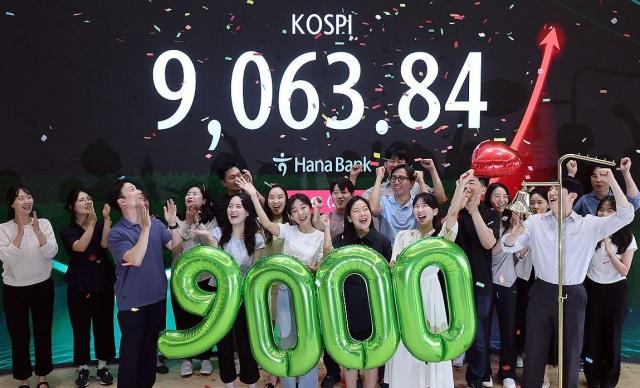
On the surface, the South Korean economy appears more vibrant than ever. Riding the wave of a semiconductor supercycle, exports surpassed $800 billion in both April and May, and the KOSPI index broke the 9,000 mark on June 18. The current account surplus for the first quarter also reached a record $73.3 billion, the highest ever for a single quarter.
Private consumption and investment are gradually improving. The Capital Market Research Institute forecasts a growth rate of 2.9% for the South Korean economy this year, higher than the 2.6% projected by the Bank of Korea and the OECD, attributing this to strong export performance in semiconductors leading to increased capital investment and consumer recovery. Equipment investment is expected to rise by 4.9%, while private consumption is projected to increase by 2.5%, suggesting a return to pre-pandemic levels after years of stagnation. Analysts believe that the economy is beginning to emerge from the recession and high-interest rate shocks that have persisted since 2020.
However, a closer examination reveals a different picture. Cracks in the economy are becoming more pronounced. While the semiconductor industry is experiencing unprecedented growth, sectors such as petrochemicals and construction are facing delays in recovery due to cost pressures and supply chain uncertainties. The automotive industry is also struggling with supply chain disruptions and logistical challenges. Even within the manufacturing sector, the economic sentiment varies significantly by industry.
The labor market shows stark contrasts as well. While exports and the stock market are thriving, job opportunities for young people remain scarce. In May, the number of employed individuals decreased by 30,000 compared to the previous year, marking the first decline in 17 months. Notably, the number of regular workers, a key segment of the workforce, fell to 16.74 million, down 7,000 from the same month last year, marking the first decline since December 1999. Although industries such as artificial intelligence and semiconductors report labor shortages, the youth unemployment crisis persists.
The gap between the asset market and the real economy is also widening. Fueled by the semiconductor boom and foreign capital inflows, the KOSPI index has surpassed 8,000, with market capitalization nearing 600 trillion won. However, the positive effects of the stock market on consumer spending and domestic recovery are not as strong as they once were. According to the Bank of Korea, a 10,000 won increase in stock prices only translates to a 130 won (1.3%) increase in consumption, significantly lower than the 3-4% seen in the U.S. and Europe.
There is a noticeable trend where capital gains from stock investments are flowing into the real estate market rather than consumer spending. It is estimated that about 70% of capital gains from stocks among non-homeowners are directed towards real estate investments.
While asset holders benefit from the stock market's rise, small business owners and self-employed individuals continue to face a challenging economic environment. The traditional cycle of export booms translating into domestic consumption has weakened, leading to a phenomenon known as 'K-shaped polarization,' where the benefits of growth are concentrated in specific industries and among asset holders.
Warnings have emerged that if this growth trend does not extend across the economy, it may result in only a temporary 'flash growth.' Historically, South Korea has experienced periods of growth reliant on specific industries, only to revert to structural low-growth phases. If the growth driven by semiconductors does not transition to domestic consumption, services, and non-semiconductor manufacturing, sustaining high growth rates will be difficult.
Ultimately, the next one to two years are expected to be pivotal in determining the direction of the South Korean economy. The OECD, in its recent economic report on South Korea, stated, "Rapid population aging and a decline in labor supply are significant headwinds for the long-term growth outlook of the South Korean economy," and emphasized the need for structural reforms to sustain economic growth and enhance competitiveness.
* This article has been translated by AI.
Copyright ⓒ Aju Press All rights reserved.