

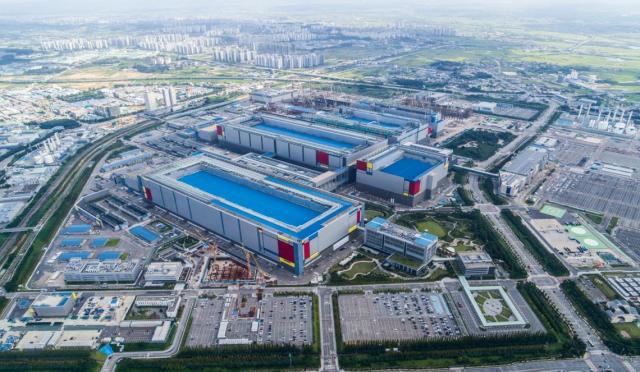
Samsung Electronics is gearing up to expand its supply of High Bandwidth Memory (HBM) in the second half of the year. As demand for artificial intelligence (AI) servers continues to rise, leading to a memory supply shortage, the company is shifting its HBM supply strategy from a focus on NVIDIA to include major AI semiconductor clients such as AMD, Broadcom, and Google.
According to industry sources on June 21, Samsung recently concluded a global strategy meeting for its Device Solutions (DS) division, where it focused on expanding HBM supply and long-term supply contract strategies for the second half of the year. The meeting reportedly addressed plans for increasing HBM3E supply and the production and allocation strategies for next-generation products HBM4 and HBM4E.
Samsung is prioritizing supply expansion and customer diversification for its HBM business in the latter half of this year. HBM, which stacks multiple DRAM chips vertically to enhance data processing speeds, has emerged as a key growth driver in the global memory market, particularly for AI accelerators and high-performance computing (HPC) servers.
A significant point of interest is the expansion of supply to NVIDIA. As a dominant player in the AI GPU market, NVIDIA effectively leads HBM demand. If Samsung can broaden its position within NVIDIA's supply chain, it would symbolize a recovery of its HBM competitiveness.
However, Samsung appears to be pursuing a strategy that does not rely solely on NVIDIA. AMD is a key customer, integrating HBM into its AI accelerator MI series. Broadcom serves as a crucial partner for big tech companies like Google, designing custom AI chips that directly drive HBM demand. Google is also expanding its own AI semiconductor ecosystem, including Tensor Processing Units (TPUs), making it a potential customer for Samsung.
Industry experts believe Samsung will coordinate the timing, specifications, pricing, and long-term volume contracts for HBM3E and HBM4 with these clients. As the AI semiconductor market evolves from a GPU-centric model to include custom semiconductors and proprietary AI accelerators, the structure of HBM customers is becoming increasingly complex. Long-term supply contracts are gaining importance as they provide stability for customers while enhancing demand visibility and investment security for Samsung.
HBM4 and HBM4E are also central to Samsung's strategy for the second half of the year. Following the production and shipment of HBM4, Samsung is set to begin sample shipments of the next-generation HBM4E, accelerating its competition in the HBM market. Beyond HBM4, comprehensive competitiveness will hinge not only on memory performance but also on base die, packaging, thermal management, and foundry capabilities.
This is a critical moment for Samsung, which, while a leader in the DRAM market, has seen SK Hynix take the lead in the HBM market by leveraging its supply to NVIDIA. If Samsung successfully expands its HBM supply and diversifies its customer base in the second half of the year, it could restore its reputation as the top memory provider and lay the groundwork for a counteroffensive in the AI semiconductor market.
The synergy with its foundry services is also a point of interest. As the performance of base die becomes increasingly important for products beyond HBM4, the integration of memory and logic technologies is expected to grow. Samsung, as a comprehensive semiconductor company with both memory and foundry capabilities, has the advantage of presenting strategies that combine memory supply, packaging, and foundry collaboration as demand for customized AI chips increases.
An industry insider noted, "As demand for AI servers grows, HBM is no longer just an issue for a single customer but a market that must cater to multiple AI semiconductor clients simultaneously. Samsung aims to regain its leadership through expanded HBM supply and customer diversification in the second half of the year."
* This article has been translated by AI.
Copyright ⓒ Aju Press All rights reserved.