

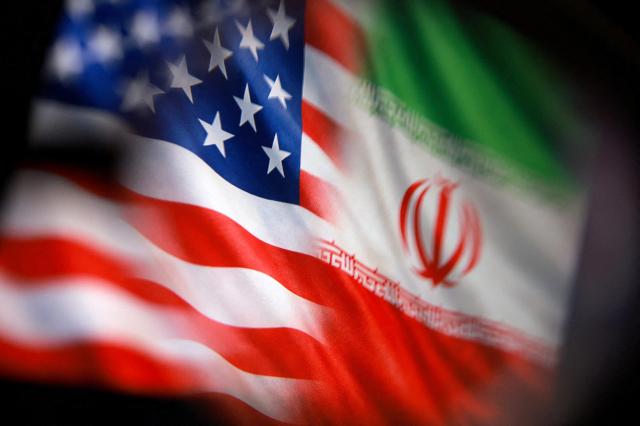
Despite the United States intensifying economic sanctions against Iran, Russia, and North Korea, an analysis suggests that these targeted nations are effectively developing strategies to evade the sanctions, diminishing their impact.
The Wall Street Journal reported on June 20 that while the U.S. is ramping up its economic warfare, countries like Iran, Russia, and North Korea are refining their methods to circumvent these sanctions, leading to a reduction in the effectiveness of U.S. pressure.
According to the U.S. Treasury Department, the annual number of new sanctions designations has increased from 880 in 2017 to over 3,000 expected by 2024. Sanctions typically isolate targeted countries, companies, or individuals from the U.S. financial system and exert pressure on third parties that engage in transactions with them.
However, these sanctions do not immediately lead to changes in the behavior of the targeted nations. North Korea continues to advance its nuclear program and is estimated to have generated over $6 billion in recent years through activities such as cryptocurrency theft. The Journal noted that these funds support an increase in electric vehicles and a construction boom in Pyongyang.
Iran has faced more than 1,000 sanctions from the U.S. in the past 18 months but continues to export oil, primarily to China. It is estimated that Iran will earn $43 billion from oil exports in 2024. The Journal reported that the Trump administration had to resort to physical pressure, including port blockades, to curb Iran's oil exports and bring it to the negotiating table.
Russia, despite facing stringent sanctions following the Ukraine war, is managing to sustain itself through energy exports and trade routes via neighboring countries. Unreported trade through Armenia, Azerbaijan, and Kazakhstan has become a conduit for military supplies and consumer goods like iPhones and Mercedes vehicles.
There are also inherent flaws in the sanctions design. Some sales of Russian energy to Europe have been permitted, and due to rising oil prices from the Iran conflict, the Trump administration eased some sanctions on Russian oil starting in March of this year. Economic analysts suggest that this move allowed Russia to generate an additional $2.4 billion in revenue in May alone.
China's financial system and the yuan play a crucial role in sanctions evasion. U.S. officials report that Iran, Russia, and North Korea are establishing shell companies and intermediaries in China, the United Arab Emirates, and Turkey to buy and sell essential goods.
However, the West has been cautious about imposing direct sanctions on China due to concerns over trade disruptions and diplomatic conflicts. The U.S.-China Economic and Security Review Commission reported in November that no Chinese banks have been sanctioned by the U.S. for facilitating payments related to Russia.
Another limitation is that the burden of sanctions often falls more heavily on ordinary citizens than on the regimes themselves. The military junta in Myanmar remains in power, and the Cuban government continues to endure under sanctions. Venezuela's Nicolás Maduro regime has also withstood sanctions for a decade.
The Trump administration has acknowledged the need to reassess the sanctions framework. Treasury Secretary Scott Bancen stated last month, "We are reviewing outdated and obsolete sanctions targets," adding, "Sanctions should not last long enough to produce unintended consequences that outweigh their intended effects."
Experts on sanctions argue that the core issue lies not in the sanctions themselves but in their enforcement. Avi Vishnevetsky, a senior researcher at the Center for the Study of Terrorism Financing, remarked on the Iran sanctions, saying, "The sanctions themselves were not weak; rather, it was their enforcement that was insufficient."
* This article has been translated by AI.
Copyright ⓒ Aju Press All rights reserved.