

On May 12, a report was received by the 119 situation room about a patient in their 50s who collapsed and lost consciousness while at work. The ambulance team quickly transported the patient, who was showing signs of altered consciousness, to a nearby primary hospital (regional emergency medical center). Initial medical assessments indicated a diagnosis of 'stroke,' necessitating urgent treatment at a higher-level hospital. Notably, the ambulance team did not leave after handing over the patient; they waited at the emergency room entrance until the medical staff made a decision. Once essential emergency procedures, including a CT scan and intubation, were completed at the primary hospital, the ambulance promptly transported the patient to a secondary hospital for final treatment. This case exemplifies how quick on-site judgment and proactive support from the ambulance team saved a precious life without any medical gaps.
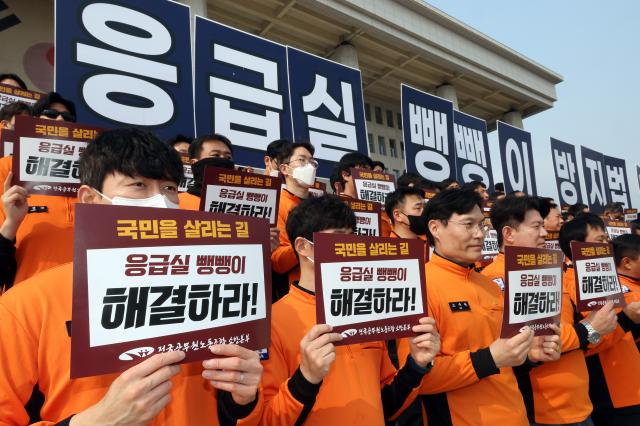
This commitment to preserving critical time stems from a collaborative effort by government agencies to revise regional-specific manuals. The Ministry of Health and Welfare and the Fire Agency announced on June 21 that during the 'Emergency Patient Transport System Innovation Pilot Project' conducted from March to May in Gwangju, Jeonbuk, and Jeonnam, there were no cases of emergency room refusals during that period.
The pilot project aimed to maximize the use of limited medical resources in the region to prevent chronic delays in emergency room transport, commonly referred to as 'emergency room delays.' In the pilot areas, ambulance teams, regional emergency management centers, and emergency medical institutions established a thorough process for sharing patient information and confirming acceptance. If a condition arose that could not be managed locally, the system was designed to immediately coordinate with the regional situation room to arrange for transport to hospitals nationwide or to integrate transport and transfer hospitals.
The success of the initiative can be attributed not only to the dedicated inter-hospital support provided by the ambulance teams (which handled a total of 45 cases) but also to the introduction of smart systems tailored to regional characteristics. In Jeonbuk, the '119 Smart Ambulance System' was actively utilized, reducing the average time for ambulance personnel to select a hospital by 3 minutes and 15 seconds compared to the same period last year, bringing it down to an average of 8 minutes and 40 seconds.
In Gwangju, a 'Final Landing Team' was established to make real-time information available among six on-call medical institutions in the area, successfully addressing 27 complex transport cases. The regional situation room also saw a significant increase in the number of hospital selection support cases, rising from an average of 5 per month last year to an average of 41 during the pilot project, serving as a robust secondary safety net.
The time spent on-site by ambulance teams, which is critical for patient survival, also showed a meaningful decrease. For severe patients, Gwangju reduced response delays by 1 minute and 24 seconds, while Jeonbuk cut delays by about 24 seconds compared to the same period last year. The distribution of patients based on hospital functions has also become more distinct, with regional emergency medical centers increasingly accommodating severe patients while local emergency medical institutions focus on less severe cases.
Building on the success of this pilot project, the Ministry of Health and Welfare and the Fire Agency plan to expand the detailed transport guidelines to all regions nationwide by September. Additionally, they aim to strengthen the emergency room patient acceptance infrastructure by increasing the number of regional emergency medical centers from the current 44 to over 60, and significantly expanding the coverage of essential medical liability insurance for emergency medical personnel to include neonatal and emergency fields.
Jeong Eun-kyung, Minister of Health and Welfare, stated, “This pilot project is significant as it allowed ambulance teams, emergency management centers, medical institutions, and regional situation rooms to collaboratively assess and confirm the feasibility of transport systems tailored to local conditions. The Fire Agency will work closely with city and provincial fire departments, local health authorities, and regional emergency medical institutions to revise transport guidelines by region and ensure that emergency patients are swiftly transported to appropriate hospitals.”
This commitment to preserving critical time stems from a collaborative effort by government agencies to revise regional-specific manuals. The Ministry of Health and Welfare and the Fire Agency announced on June 21 that during the 'Emergency Patient Transport System Innovation Pilot Project' conducted from March to May in Gwangju, Jeonbuk, and Jeonnam, there were no cases of emergency room refusals during that period.
The pilot project aimed to maximize the use of limited medical resources in the region to prevent chronic delays in emergency room transport, commonly referred to as 'emergency room delays.' In the pilot areas, ambulance teams, regional emergency management centers, and emergency medical institutions established a thorough process for sharing patient information and confirming acceptance. If a condition arose that could not be managed locally, the system was designed to immediately coordinate with the regional situation room to arrange for transport to hospitals nationwide or to integrate transport and transfer hospitals.
The success of the initiative can be attributed not only to the dedicated inter-hospital support provided by the ambulance teams (which handled a total of 45 cases) but also to the introduction of smart systems tailored to regional characteristics. In Jeonbuk, the '119 Smart Ambulance System' was actively utilized, reducing the average time for ambulance personnel to select a hospital by 3 minutes and 15 seconds compared to the same period last year, bringing it down to an average of 8 minutes and 40 seconds.
In Gwangju, a 'Final Landing Team' was established to make real-time information available among six on-call medical institutions in the area, successfully addressing 27 complex transport cases. The regional situation room also saw a significant increase in the number of hospital selection support cases, rising from an average of 5 per month last year to an average of 41 during the pilot project, serving as a robust secondary safety net.
The time spent on-site by ambulance teams, which is critical for patient survival, also showed a meaningful decrease. For severe patients, Gwangju reduced response delays by 1 minute and 24 seconds, while Jeonbuk cut delays by about 24 seconds compared to the same period last year. The distribution of patients based on hospital functions has also become more distinct, with regional emergency medical centers increasingly accommodating severe patients while local emergency medical institutions focus on less severe cases.
Building on the success of this pilot project, the Ministry of Health and Welfare and the Fire Agency plan to expand the detailed transport guidelines to all regions nationwide by September. Additionally, they aim to strengthen the emergency room patient acceptance infrastructure by increasing the number of regional emergency medical centers from the current 44 to over 60, and significantly expanding the coverage of essential medical liability insurance for emergency medical personnel to include neonatal and emergency fields.
Jeong Eun-kyung, Minister of Health and Welfare, stated, “This pilot project is significant as it allowed ambulance teams, emergency management centers, medical institutions, and regional situation rooms to collaboratively assess and confirm the feasibility of transport systems tailored to local conditions. The Fire Agency will work closely with city and provincial fire departments, local health authorities, and regional emergency medical institutions to revise transport guidelines by region and ensure that emergency patients are swiftly transported to appropriate hospitals.”
* This article has been translated by AI.
Copyright ⓒ Aju Press All rights reserved.