

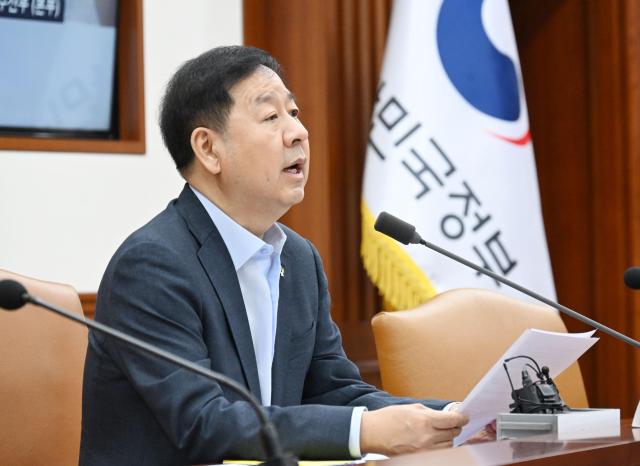
Koo Yoon-cheol, Deputy Prime Minister and Minister of Finance, stated at a State Council meeting on June 23, "We will do our utmost to ease the burden on citizens caused by rising prices, slowing employment, and fluctuations in exchange rates and interest rates."
Following the signing of a memorandum of understanding (MOU) between the United States and Iran on June 17, subsequent negotiations began on June 21. However, uncertainties regarding the implementation of the MOU have kept international oil prices fluctuating around the high $70 per barrel range.
To stabilize prices and supply of essential items such as food, the government will implement allocation tariffs. The reduction of fuel taxes on liquefied petroleum gas (LPG) and butane will be extended until the end of next month, and the diesel price subsidy will remain in effect until September. Additionally, the allocation tariff rates for liquefied natural gas (LNG), LPG, and crude oil for LPG production will be lowered to 0% in the second half of this year. However, the maximum price system for petroleum products will be determined based on international oil price trends.
The government will also expand allocation tariffs on three types of imported fruits, including bananas, and ten types of food raw materials, including processed eggs. New allocation tariffs will be applied to nine types of food and feed raw materials. These measures are expected to remain in place until the end of the year. Furthermore, the government plans to increase stockpiling and supply while enhancing management to respond to extreme heat and heavy rain.
To address high interest rates and exchange rates, the government is actively monitoring market conditions. It also plans to implement structural improvements to fundamentally reduce volatility in the financial and foreign exchange markets. This includes a gradual transition of offshore non-deliverable forward (NDF) transactions to physical delivery transactions.
Finally, the government intends to sequentially develop employment measures, including a 'Youth Job Recovery Plan.' It will expedite the execution of existing youth New Deal projects and increase the number of successful initiatives. Additionally, the government will analyze employment conditions in struggling sectors such as manufacturing, construction, and agriculture to devise tailored solutions.
* This article has been translated by AI.
Copyright ⓒ Aju Press All rights reserved.