

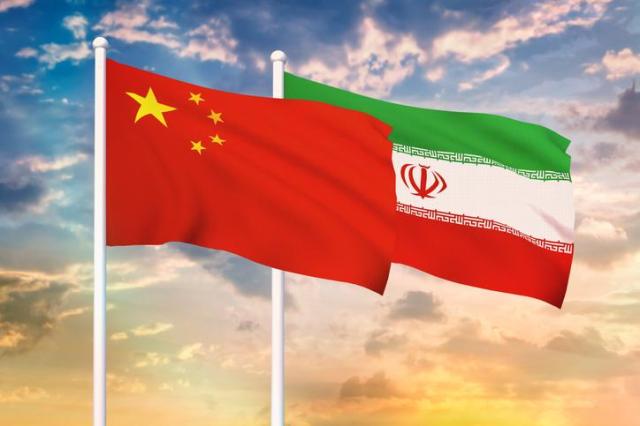
While the United States and Iran engaged in conflict, China quietly maneuvered behind the scenes. On June 16, Wang Yi, head of the Central Foreign Affairs Commission of the Communist Party of China (also serving as Foreign Minister), congratulated Pakistani Deputy Prime Minister and Foreign Minister Ishaq Dar over the phone for facilitating the signing of a preliminary memorandum of understanding (MOU) between the U.S. and Iran. He made a significant remark: "China has persuaded both Iran and the U.S. in its own way." This statement marks the first public acknowledgment of China's role as a 'hidden mediator' in the peace negotiations.
Bill Emmott, former editor of The Economist, recently wrote that the biggest losers of this war are the U.S. and Israel, while Iran has "lost less badly than others." He concluded that China has quietly and effectively gained the most from this situation, suggesting that regardless of whether peace is achieved, the Middle East will increasingly lean towards China.
China's actions began early in the conflict. About a month and a half after the outbreak of the Iran war, in mid-April, Chinese President Xi Jinping presented a four-point plan for peace and stability in the Middle East to Khalid bin Mohammed Al Nahyan, Crown Prince of Abu Dhabi, during his visit to China. The plan includes: 1) Upholding principles of peaceful coexistence and enhancing regional security; 2) Respecting national sovereignty and rejecting interference in internal affairs; 3) Adhering to international law and supporting a UN-centered international system; 4) Seeking sustainable peace and stability through a comprehensive approach to development and security.
This initiative is part of Xi's four global initiatives promoted in the 2020s, which, while appearing to advocate universal peace, carry sharp strategic implications. The phrase 'rejecting interference in internal affairs' targets U.S. sanctions and military interventions in Iran, while 'supporting a UN-centered international system' serves as a counter to U.S.-led unilateral actions. Essentially, it presents a multilateral diplomatic solution directly opposing the Trump administration's approach.
Wang Yi echoed this sentiment, stating, "The international community should provide more support for negotiations between Iran and the U.S., and multilateral organizations like the UN Security Council should play a larger role." This indicates China's official request for a seat at the table in Middle Eastern security discussions, which have been dominated by the U.S.
The U.S. has suffered significant setbacks due to the Iran war. Its initial goals of neutralizing Iran's nuclear capabilities and regime change have largely failed, instead confirming Iran's strong position in the Strait of Hormuz. Despite substantial military expenditures, the U.S.'s international standing has plummeted.
In contrast, China has managed to secure both energy and diplomatic gains during the conflict. With a low dependency on Middle Eastern oil due to substantial imports of Russian crude and a high share of renewable energy, China has been less affected by the surge in oil prices during the Iran war. While the U.S. has made diplomatic missteps, China has enhanced its status as a mediator. As Iran's largest oil buyer and trading partner, China possesses significant leverage over Iran and maintains high-level communication channels with the U.S.
China's diplomatic lineage in the Middle East is noteworthy. The normalization of relations between Saudi Arabia and Iran in 2023 marked a significant milestone, followed by the Beijing Declaration for Palestinian reconciliation in 2024. The current role in the U.S.-Iran conflict represents a third landmark. Wang Yi emphasized, "From the beginning, we supported Pakistan and highlighted its role as a trustworthy mediator," indicating that China's international backing facilitated Pakistan's successful mediation between the U.S. and Iran.
Looking ahead, the most significant variable is Iran's reconstruction. The preliminary MOU aims to reintegrate Iran's economy into the international community, mentioning a reconstruction fund of $300 billion. While the feasibility remains uncertain, if sanctions are effectively lifted, Iran could emerge as an attractive investment destination due to its abundant oil resources and demand for industrial modernization.
Considering the close ties between Iran and China, along with China's technological and financial capabilities, Emmott suggests that Chinese companies are likely to be the primary participants in reconstruction projects. If China leads Iran's reconstruction, the economic ties between the two nations will deepen, allowing China to assume a de facto mediating role in monitoring Iran's nuclear program resumption. This approach contrasts sharply with the U.S.'s military pressure tactics.
Wang Yi also addressed this point, stating, "We must not revert to the past or resort to force again," which serves as a veiled critique of U.S. coercive diplomacy and a declaration of China's approach that relies on economic interdependence as a foundation for peace.
While the Middle East cannot completely ignore the West, there is a growing belief that it will increasingly look to China in the coming years. The U.S. still maintains a significant military presence, but its political credibility and diplomatic influence have clearly weakened as a result of this war. Conversely, China has solidified its position as the most trusted external actor in the Middle East without engaging in direct conflict.
However, limitations remain. The U.S. continues to possess overwhelming military power in the region, and Israel is unlikely to align itself with a China-led security framework. Gulf states are also likely to pursue strategic autonomy while maintaining relations with the U.S. Nevertheless, it is clear that the dynamics of Middle Eastern diplomacy have shifted. The era of the U.S. as the sole mediator is coming to an end.
Ultimately, the future hinges not on the MOU itself but on how Israel and Iran choose to act moving forward. The country best positioned to manage these actions quietly and effectively may now be China, rather than the U.S.
* This article has been translated by AI.
Copyright ⓒ Aju Press All rights reserved.