

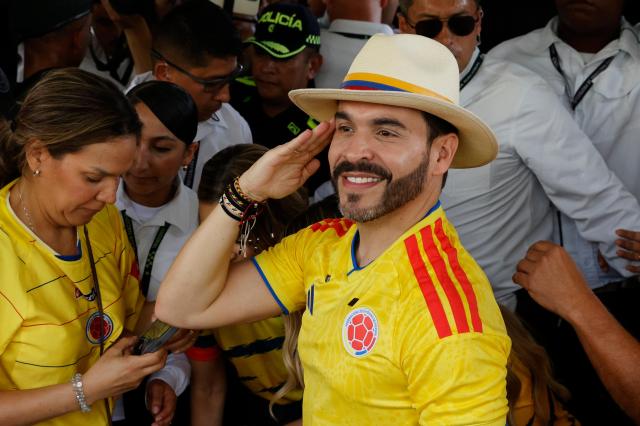
A wave of right-wing populism, driven by concerns over security and economic stagnation, is sweeping across Latin America.
The Wall Street Journal reported on June 22 that the election victory of Abelardo de la Espriella in Colombia exemplifies how Latin America is gravitating closer to the political style and policy priorities of former U.S. President Donald Trump.
According to the report, new leaders from the Andes to Central America are coming to power by promoting free-market economic policies and tough security strategies.
In Colombia, President-elect Abelardo de la Espriella has pledged to wage an all-out war against drug cartels. In Bolivia, President Rodrigo Paz has ended two decades of leftist governance and is pursuing pro-market policies, including reducing fuel subsidies, easing foreign exchange regulations, and restoring relations with the United States.
In Chile, President José Antonio Kast has prioritized blocking illegal immigration and cracking down on criminal organizations, while Ecuador's President Daniel Noboa has deployed the military in operations against drug gangs. He has also classified transnational criminal organizations as terrorist groups and is expanding intelligence and security cooperation with the U.S. In Peru, right-wing candidate Keiko Fujimori has emerged with a strong security agenda, proposing military oversight in prisons and anonymous judges for organized crime trials. Fujimori also aims to reduce economic dependence on China and enhance cooperation with the U.S. and other right-leaning governments in the region.
A similar trend is evident in Central America. Honduras' President Nasry 'Tito' Asfura is working to reduce ties with China and restore diplomatic relations with Taiwan. Costa Rica's President Laura Fernández Delgado is strengthening cooperation with the U.S. to combat illegal immigration and organized crime.
The Wall Street Journal attributes the rise of right-wing populism to the spread of organized crime and economic downturns. As the influence of drug cartels and transnational criminal organizations grows and the cost of living remains high, voters are increasingly supporting politicians who promise to restore law and order.
This shift in the political landscape is seen as a boon for the Trump administration, as it could secure partners in Latin America willing to collaborate on strong immigration enforcement and drug eradication efforts.
Indeed, President Trump has established close ties with right-wing leaders in Latin America. He recently posted on Truth Social urging de la Espriella to "build a strong relationship with the United States." Trump has also maintained friendly relations with Argentina's President Javier Milei and El Salvador's President Nayib Bukele.
However, not all of Latin America is shifting to the right. The region's largest countries, Brazil and Mexico, are still led by leftist governments. Nevertheless, if Flávio Bolsonaro, the son of former President Jair Bolsonaro, defeats President Luiz Inácio Lula da Silva in the upcoming October 4 Brazilian election, the rightward shift in Latin America could accelerate further.
* This article has been translated by AI.
Copyright ⓒ Aju Press All rights reserved.