

AI is transforming hospitals. Diagnoses that once relied on a physician's experience are evolving through precise AI analysis, while patient medical records are becoming valuable assets for new healthcare innovations. The focus of treatment is rapidly shifting from reactive care to preventive and personalized health management.
At the center of this change is healthcare data. Jeong Eun-kyeong, Minister of Health and Welfare, has clearly outlined her commitment to fostering medical AI and the digital health industry as key drivers of national growth since taking office.
She has held policy meetings with medical AI companies to hear directly about regulatory challenges and concerns from the field. Her vision includes establishing a data utilization ecosystem based on a health information highway, a national integrated bio big data system, and hospitals centered around healthcare data. Additionally, she is working on legislation to create a legal framework for AI in healthcare through the Digital Healthcare Act.
The question is clear.
Can South Korea truly become the world's leading AI healthcare nation?
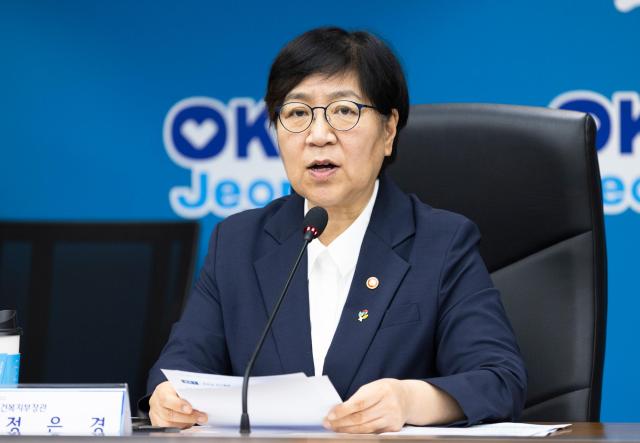
The focus of healthcare is shifting from hospitals to data.
The starting point of the healthcare revolution is not AI.
It is data.
AI can only predict diseases, enhance diagnostic accuracy, and suggest personalized treatments when sufficient healthcare data is available.
Minister Jeong emphasizes this transformation more than anyone else.
During a policy meeting with medical AI and digital health companies, she expressed her intention to improve regulations surrounding the use of healthcare data and foster an industrial ecosystem. The government is expanding the foundation for AI utilization through initiatives like the health information highway (medical MyData), national integrated bio big data, and support for data-centric hospitals.
Ultimately, the competitiveness of healthcare in the AI era depends not on the size of hospitals but on how safely data can be utilized.
Minister Jeong views the medical AI industry not merely as a healthcare technology but as a strategic national industry.
AI image analysis, digital therapeutic devices, personal health management services, and AI drug development are already emerging as central components of the global healthcare industry.
At a recent meeting hosted by the Ministry of Health and Welfare, representatives from 15 companies in the medical AI, digital health, and healthcare data sectors attended. The companies proposed improvements to the standards for utilizing medical MyData, safe cloud-based data sharing, and standardization of healthcare data, which the government plans to incorporate into regulatory reforms.
This shift indicates that the government is evolving from a regulatory role to one that creates growth strategies in collaboration with the industry.
The core of the AI healthcare revolution lies not in hospitals but in the industrial ecosystem.
Digital Healthcare Act as the starting point for the healthcare revolution
AI in healthcare cannot succeed on technology alone.
It requires a supportive legal framework.
Minister Jeong is prioritizing the enactment of the Digital Healthcare Act as a key task.
This legislation aims to establish a legal foundation for the use of healthcare data, digital therapeutic devices, and AI-based healthcare services. The Ministry is continuing legislative discussions through public hearings after gathering input from various stakeholders.
Just as healthcare laws shaped the medical system during the industrial revolution, the Digital Healthcare Act is poised to create a new order in healthcare in the AI era.
The biggest misconception surrounding AI in healthcare is the belief that AI will replace doctors.
However, the reality is different.
AI analyzes vast amounts of medical images, identifies risk signals, and supports physicians' judgments.
In particular, AI can reduce the workload of medical staff and enhance diagnostic accuracy in emergency care, rare diseases, and chronic disease management.
The government is also working to reduce gaps in essential medical services and regional healthcare through the establishment of an AI-based healthcare system. Key tasks under discussion include AI-based collaborative care, emergency medical systems, and expansion of medical infrastructure.
AI is not a technology that replaces doctors but one that enables better healthcare.
Welfare evolves with AI integration
The role of the Ministry of Health and Welfare extends beyond healthcare.
It also encompasses welfare responsibilities.
AI is bringing about new changes in the welfare sector as well.
A new era is emerging where AI detects anomalies in elderly individuals living alone, supports welfare consultations, and provides care services tailored to individual circumstances.
In South Korea's aging society, AI can serve as a crucial means to supplement the shortage of caregiving personnel.
Minister Jeong does not view healthcare and welfare as separate entities.
The core direction of AI welfare is to connect the health and quality of life of citizens through a unified data-driven service.
The conditions for becoming an AI healthcare nation are trust.
Healthcare data is among the most sensitive personal information.
While utilization is important, safety is paramount.
Minister Jeong emphasized, "Given that healthcare data is a representative sensitive information, it is crucial to ensure safety while utilizing it." This means that achieving both data utilization and personal information protection is essential for the sustainable growth of the AI healthcare industry.
The success of the AI healthcare revolution hinges not on technology but on the trust of the people.
When safely protected data is utilized securely, a healthcare revolution becomes possible.
Can South Korea become the world's leading digital health nation?
South Korea boasts a world-class healthcare insurance system, medical institutions, and ICT infrastructure.
When combined with AI and healthcare data, new opportunities arise.
The integration of semiconductors, biotechnology, and AI in the healthcare industry is likely to become a new growth engine for South Korea.
The ecosystem for medical AI, the Digital Healthcare Act, and policies for utilizing healthcare data promoted by Minister Jeong are ultimately the cornerstones for making South Korea a leading nation in AI healthcare.
Now, the key is the speed of institutional innovation rather than the speed of technological development.
Conclusion
Minister Jeong's AI policies aim for a healthcare revolution beyond mere digitization.
Fostering the medical AI industry, expanding the use of healthcare data, enacting the Digital Healthcare Act, and building a national integrated bio big data system all point toward a single goal: creating a country where citizens live longer and healthier lives through AI.
AI makes healthcare more accurate, and data personalizes it.
South Korea already has an excellent healthcare system.
With the addition of AI, there is ample potential to leap from being a healthcare advanced nation to a leader in AI healthcare.
Jeong Eun-kyeong, Minister of Health and Welfare, is a public health expert who previously served as the head of the Korea Disease Control and Prevention Agency, leading the response to infectious diseases. Since her appointment as Minister, she has focused on fostering medical AI and the digital health industry, expanding the use of healthcare data, and enacting the Digital Healthcare Act as core tasks.
Recently, she held policy meetings with medical AI and digital health companies to discuss regulatory improvements and data utilization strategies, concentrating her policy efforts on building an AI healthcare ecosystem based on the health information highway and national integrated bio big data.
* This article has been translated by AI.
Copyright ⓒ Aju Press All rights reserved.