

◆ Growing 'Weather Risks' with Increased Solar Power
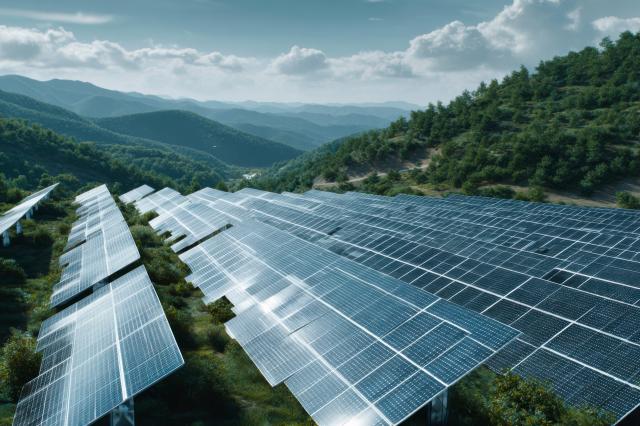
According to Korea Electric Power Corporation's monthly power statistics released on June 25, solar power generation in April reached 4.1 million megawatt-hours, accounting for 9.24% of the total electricity generated. This marks an 87% increase compared to July 2021, when solar generation was first recorded at 2.19 million megawatt-hours.
As the share of solar power grows, the operation of the power grid is also evolving. Unlike nuclear or liquefied natural gas (LNG) generation, solar output varies based on sunlight and cloud cover.
The scenario that concerns power authorities the most is when extreme heat coincides with overcast weather. As temperatures rise, the demand for cooling devices surges, but increased cloud cover, particularly in southern regions, can lead to a significant drop in solar output. This results in a situation where demand rises while supply capacity diminishes, necessitating support from other power sources.
Notably, the rapid fluctuations in solar output due to cloud movement present a key challenge for grid management. Grid operators must quickly compensate for sudden drops in solar generation with other power sources or reserve resources. Consequently, as the share of solar power increases, the importance of ensuring 'grid flexibility'—the ability to adjust real-time supply capacity—grows.
Grid flexibility refers to the capacity to maintain a stable balance between supply and demand, even when electricity demand and renewable generation fluctuate sharply. Ultimately, the ability to maintain this balance amid simultaneous changes in demand and renewable generation is crucial for energy security.
◆ Global Challenge of Flexibility: International Responses
The operational burdens associated with expanding renewable energy are a common issue worldwide. In Germany, as the shares of solar and wind power have increased, the country has prepared for scenarios like 'Dunkelflaute,' where both sunlight and wind are scarce, by utilizing cross-border power grid connections and natural gas generation to maintain grid stability. Recently, there has also been a trend toward expanding energy storage systems (ESS).
California in the United States has also implemented measures in response. Since 2013, the rapid expansion of solar power has led to a phenomenon known as the 'duck curve,' where solar generation spikes during the day and drops sharply at sunset. To absorb this output variability, California has expanded large-scale ESS and demand response (DR) programs.
The International Energy Agency (IEA) has identified the need for 'flexibility' in power systems as a key challenge in its annual report, 'Electricity 2026.' It notes that as the share of variable renewable energy like solar and wind increases, simply adding more generation capacity is insufficient for stable electricity supply.
The IEA recommends securing various flexibility resources, including ESS, demand response, and transmission network connections. The goal is to develop a system that can respond to weather changes by combining multiple solutions rather than relying on a single technology.
◆ Climate Change Increases Uncertainty: Challenges for Domestic Power Grid
The uncertainty in power supply and demand due to climate change is growing. The Korea Meteorological Administration has forecasted that this summer will be hotter than average due to high sea surface temperatures in the North Indian Ocean and North Pacific, likely exacerbating solar variability.
As a result, experts argue that the domestic power market must simultaneously enhance grid stability through investments in infrastructure expansion and operational capabilities. This includes developing advanced technologies to improve generation forecasting accuracy and expanding transmission networks to respond swiftly to weather changes while securing flexibility resources.
An industry insider emphasized, "In the past, managing peak demand during summer afternoons was the key to power supply. However, moving forward, controlling and compensating for the variability of renewable energy output will be crucial for ensuring stable electricity supply."
* This article has been translated by AI.
Copyright ⓒ Aju Press All rights reserved.