The measures mark the first phase of the government's gradual rollback of emergency economic responses introduced during the Middle East conflict, as easing oil prices allow policymakers to shift their focus from crisis management to stabilizing household finances.
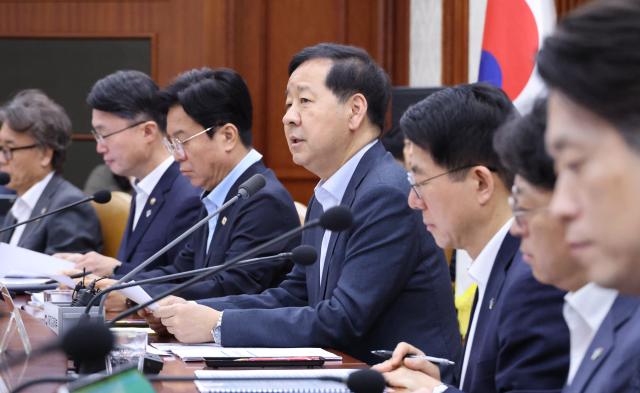
Deputy Prime Minister and Finance Minister Koo Yun-cheol announced the package while chairing an emergency economic headquarters meeting, a ministerial economic policy meeting and a special task force on consumer prices at the Government Complex Seoul.
"The external uncertainty has gradually eased since the memorandum of understanding ending the Middle East conflict," Koo said, noting that international crude prices have fallen and the average retail diesel price in South Korea has dropped below 2,000 won per liter for the first time in two months.
He cautioned, however, that uncertainty surrounding follow-up negotiations remains, while households continue to grapple with high inflation, elevated exchange rates, high interest rates and slowing employment.
"The government will devote all available efforts to stabilizing and restoring the people's livelihoods while preparing in earnest for post-war economic normalization and a new leap forward," Koo said. "We will closely monitor developments in the Middle East and the domestic economy while gradually adjusting the emergency response measures currently in place."
Korea's producer prices spiked 8.5 percent from a year-ago period in May, the fastest annual increase since the pandemic peak in 2022, while annual inflation rose 3.1 percent on year in May. The Bank of Korea has forecast inflation would stay around 3 percent for "a considerable period."
The government said the seventh oil price ceiling, scheduled to be announced later Friday, will be set lower than the current level to reflect the decline in international crude prices. The ceiling will remain in place until retail fuel prices stabilize.
To ease food inflation, the government will launch its largest-ever discount campaign on agricultural, livestock and fisheries products during July and August.
Fresh egg imports will be expanded more than sixfold, with an additional 200 million eggs to be imported to stabilize prices. The government will also dispatch a special delegation to Norway next month to directly import 2,000 tons of Norwegian mackerel for low-price sales, while purchasing domestically produced fish originally intended for export and supplying them to consumers at half price.
To ease energy costs, electricity and natural gas tariffs will remain frozen through the second half of the year, while the levy on LPG butane sales will be temporarily waived through year-end.
Households receiving energy vouchers for kerosene or LPG heating will receive an additional 147,000 won, which can be used between October 2026 and May 2027, on top of their existing benefits.
The package also expands support for vulnerable groups and small businesses. Toll discounts on expressways will be extended to more people with disabilities and national merit recipients, while the government's lending program for small businesses hit by high fuel prices will double to 3 trillion won from 1.5 trillion won. Additional cashback incentives will also be offered to certified low-price retailers.
Separately, the government adopted a Basic Plan for Employment Stability in Industrial Transition to prepare for labor market disruptions stemming from artificial intelligence and the green transition.
The plan calls for an early warning system to monitor employment changes by industry and region, while areas facing severe disruption, including coal-fired power plant closures, will be designated as "Just Transition Special Zones" eligible for enhanced government support.
The government will also expand vocational training in AI and green technologies for both incumbent workers and job seekers. As part of the initiative, it plans to train 1,000 AI specialists in the second half of this year through intensive advanced technology programs linked to employment and startup opportunities.
Koo said the government would soon unveil additional measures to support small and medium-sized enterprises affected by the strong won-dollar exchange rate, while continuing structural reforms to help the economy adapt to the accelerating AI and green transformation.

Copyright ⓒ Aju Press All rights reserved.