

South Korea stands at a significant turning point in its civilization. In the past, the role of the Prime Minister was primarily to coordinate administration, engage with the National Assembly, and manage the cabinet. However, in today's world, that is no longer sufficient. As artificial intelligence transforms industries, semiconductors become a matter of national security, and physical AI reshapes manufacturing and regional futures, the role of the Prime Minister must evolve.
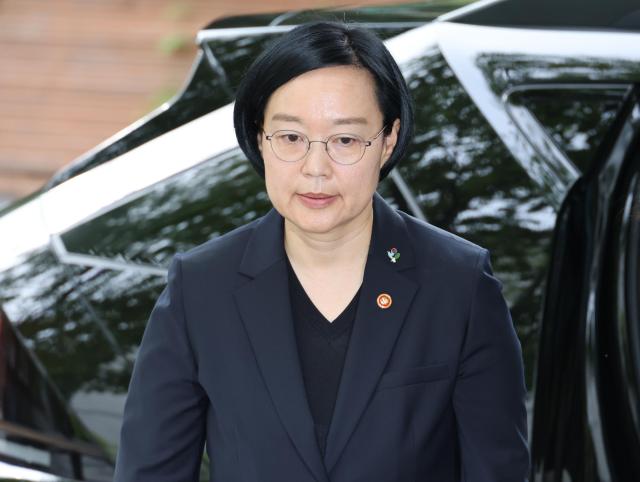
The Prime Minister should not merely be a political coordinator but the chief strategist for the nation's future. From this perspective, Han Seong-sook, the Prime Minister nominee, is a candidate worthy of serious consideration by the National Assembly.
Han Seong-sook is not a product of traditional political circles. She has not served as a party leader, nor is she a veteran lawmaker or a long-time bureaucrat. Yet, this very fact could be both a weakness and a strength in today's era.
South Korea is already facing challenges that cannot be resolved through politics alone. Issues such as low growth, regional decline, youth unemployment, the AI transition, semiconductor competition, the ecosystem for small and medium-sized enterprises, platform regulation, and manufacturing innovation cannot be addressed solely through parliamentary discussions. Leadership that understands the field, technology, market dynamics, and the realities of working people is essential.
Han's life can be summed up as one dedicated to work. After graduating from Sookmyung Women's University with a degree in English literature, she aspired to be a journalist. Her career did not begin with a glamorous start at a major media outlet; she began as a reporter for a computer magazine.
However, that initial experience was crucial. At a time when computers and the internet were still unfamiliar, she sensed that technology would change the world. Journalists are typically the first to detect changes in society. Han developed a keen sense of reality as an aspiring journalist and an IT reporter.
She later joined the founding team of the internet company Empas during the early days of the Korean portal industry. The internet was still an unfinished world, and search engines were not yet an everyday necessity. In that era, search and portals represented the gateway to a new civilization.
Han worked at that gateway. While others sought stable jobs, she ventured into the field of change, where she learned the essence of search, services, user experience, and platforms.
Subsequently, she played a key role at NHN and Naver, contributing significantly to the company's growth into a leading platform in South Korea through her work in search quality, service planning, mobile transition, commerce, webtoons, and easy payment systems. Notably, she became Naver's first female CEO, a significant achievement in a male-dominated corporate culture.
It remains challenging for women to reach the CEO position in South Korea's corporate culture. The internet industry is fast-paced, fiercely competitive, and unforgiving of failure. Surviving, growing, and becoming a leader in such an environment is a testament to her capabilities.
Han is often referred to as a "woman married to her work." This expression does not imply a judgment of her personal life but signifies that her public life has been driven by work rather than power or fame. She has consistently proven herself through results rather than rhetoric.
Starting as a journalist, entering the IT industry, becoming a platform executive, serving as a minister responsible for small and medium-sized enterprises, and now standing as a Prime Minister nominee, her journey reflects a significant chapter in South Korea's industrial history.
Of course, the scrutiny of a Prime Minister nominee must be rigorous. The confirmation hearing is not merely a formality but a vital democratic process. Issues of morality, financial matters, public service capabilities, historical awareness, and national philosophy must be thoroughly examined. Any misstatements or inadequate responses from the nominee cannot be overlooked, as the Prime Minister represents the face of the government.
Particularly, there must be a clear understanding of security, history, public welfare, and the rule of law. However, the verification process should not aim to disqualify but rather to reveal the nominee's abilities and limitations to the public. The National Assembly must assess whether this individual is suitable for South Korea's future challenges beyond partisan attacks and defenses.
Han's greatest strength lies in her pragmatism. One of the core principles of the Lee Jae-myung administration is pragmatism. Pragmatism does not mean abandoning ideology; it reflects a commitment to improving citizens' lives and enhancing national competitiveness through actionable measures. In this regard, Han embodies the essence of pragmatism.
She prioritizes the functionality of services over slogans on her desk. If users face inconveniences, they must be addressed; if the market changes, responses are necessary; and if technology evolves, organizations must adapt. Governance, after all, is a vast public platform serving the citizens.
The future of South Korea hinges on AI semiconductors. Having established itself as a powerhouse in memory semiconductors, South Korea must now create a vast ecosystem encompassing AI semiconductors, system semiconductors, high-bandwidth memory, advanced packaging, data centers, cloud computing, robotics, autonomous driving, and smart factories.
South Korea must not only be a country that produces semiconductors in abundance but also one that possesses both computational power and industrial application capabilities in the AI era. The goal is clear: South Korea must establish itself as one of the top three nations in AI semiconductors. This is not merely a slogan but a survival strategy.
In this context, physical AI emerges. While generative AI exists within screens, physical AI represents intelligence that walks into the real world. Robots work in factories, autonomous equipment transforms logistics, smart agriculture changes food production, and AI influences industries such as shipbuilding, automotive, construction, healthcare, and defense.
In the era of physical AI, semiconductors, manufacturing, data, robotics, software, and hardware converge. South Korea is a nation with a manufacturing DNA. It is home to Samsung Electronics, SK Hynix, Hyundai Motor, LG, Naver, Kakao, and numerous small and medium-sized enterprises and startups. Uniting these entities under a national strategy should be a core task for the new Prime Minister.
Let’s objectively assess Han Seong-sook's strengths and weaknesses. Her strengths are evident: first, she has extensive experience in the IT industry; second, she understands the trends in search, platforms, mobile, commerce, and digital services; third, she has experience managing organizations as a corporate executive; fourth, she has public service experience as the Minister of Small and Medium Enterprises; and fifth, she symbolizes breaking through the glass ceiling as a female leader in South Korean society. These strengths are significant in the era of AI transition.
However, she also has weaknesses. She lacks experience as a lawmaker and has limited experience in party politics and negotiations. She is not a long-time expert in diplomacy, security, or unification. The political acumen, responsiveness to the National Assembly, and the ability to communicate effectively in times of crisis required of a Prime Minister must be further validated. Nonetheless, these do not necessarily disqualify her.
The Prime Minister does not govern alone. The role involves collaboration with the presidential office, ministers, the National Assembly, party leaders, advisors, policy teams, and expert groups. Any lack of political sensitivity can be mitigated through a supportive cabinet and advisory system. What is crucial is that the nominee acknowledges her shortcomings and is willing to quickly learn the language of politics and administration.
The opportunities are substantial. South Korea is currently experiencing a significant leap in the AI industry. The reshaping of global supply chains presents both challenges and opportunities. Amid the technological rivalry between the U.S. and China, South Korea can create new growth engines by connecting sectors such as semiconductors, batteries, automobiles, shipbuilding, biotechnology, and content. Particularly, AI semiconductors and physical AI should not be limited to the capital region.
They must be linked to regional industries. Physical AI in Jeollabuk-do, industrial infrastructure in Saemangeum, semiconductor belts in Chungcheong, manufacturing in Yeongnam, energy and agricultural life in Honam, and biotechnology and data centers in Gangwon must be integrated. The Prime Minister should serve as the coordinator of this national connection.
However, threats are also significant. Extreme political polarization, ethical controversies during the confirmation process, concerns about conflicts of interest due to her background in platform companies, tensions between AI regulation and industrial promotion, the U.S.-China technological rivalry, and domestic economic slowdown all pose challenges.
Particularly, her background as a former Naver executive is both an asset and a point of scrutiny. She must clarify her principles regarding platform monopolies, personal data, algorithm transparency, news distribution, and the coexistence of small businesses. The Prime Minister's role is not to represent the interests of a specific company but to balance the public interest of the entire nation.
Thus, what Han needs is a greater sense of public responsibility. A successful business leader understands efficiency, but a Prime Minister must go beyond that. She must care for the vulnerable, revitalize regions, mediate conflicts, and protect future generations.
While a corporate CEO is accountable for profits and growth, the Prime Minister is responsible for the lives of all citizens. For Han Seong-sook to be recognized as Prime Minister, she must demonstrate a vision that transcends her success at Naver and views South Korea as a unified community.
The National Assembly must also mature. The confirmation hearing should not end with merely pressuring the nominee. Questions must be precise, and inquiries must be fair. The nominee should also be humble, acknowledging mistakes and committing to improvement. The Prime Minister's position is not for a perfect individual. However, it should be occupied by someone who recognizes their limitations, is willing to learn for the nation, and is accountable to the public.
Expectations for Han Seong-sook are clear. She must contribute to establishing South Korea as one of the top three nations in AI semiconductors. As Prime Minister in the era of physical AI, she should connect manufacturing with AI, semiconductors with software, large enterprises with small and medium-sized ventures, and the capital region with local areas. She must practically advance the digital government while promoting regulatory innovation and fair competition. Her experience in platform companies should be transformed into wisdom for operating a public platform nation.
Criticism regarding her lack of political experience is valid. However, the Prime Minister South Korea needs now may not solely be someone with extensive political experience. Governance does not operate on politics alone; it requires knowledge of the economy, technology, and the languages of businesses, youth, and markets.
In this regard, Han Seong-sook represents a new type of Prime Minister candidate that the times demand. What remains is how humbly and confidently she can demonstrate her vision and responsibilities before the National Assembly and the public.
The issue of Han Seong-sook's confirmation is not a matter of victory or defeat for the ruling or opposition parties. It is a question of what kind of Prime Minister South Korea needs. Should it be a past-oriented Prime Minister, or a future-oriented one? A managerial Prime Minister, or an industrial strategy Prime Minister? A politically savvy Prime Minister, or an AI transition Prime Minister? Of course, the Prime Minister must possess elements of all these roles.
However, as AI semiconductors and physical AI become central to national survival, South Korea must experiment with a Prime Minister who understands the language of technology and industry.
If Han Seong-sook becomes Prime Minister, she must remember that it was not a glamorous political career that brought her to this position, but the power of work. Starting as a journalist, entering the internet industry, becoming a CEO of a platform company, and serving in public office to reach the position of Prime Minister nominee, the essence of her long journey has been work and results.
Now, that work must focus not on a single company but on South Korea as a whole. It must serve not just one service but the citizens. It must not be limited to one industry but encompass the future of the nation.
The National Assembly should conduct a thorough verification process but must not close the door to the future. The nominee should respond humbly but should not hide her strengths. South Korea stands at the boundary between outdated norms and new civilizations. If Han Seong-sook can open the path to becoming a leading nation in AI semiconductors, physical AI, and digital industries as Prime Minister, it will not just be a personal success but a new experiment for South Korea.
The conclusion is cautious yet clear. Han Seong-sook has weaknesses, but they are areas that can be addressed. In contrast, her strengths are precisely what South Korea urgently needs. A Prime Minister candidate with a sense of the field, technology, business, platforms, small and medium-sized enterprises, and the AI transition is rare. The National Assembly must look beyond partisan perspectives and focus on the future of the nation. Han Seong-sook must also demonstrate leadership that transcends her limitations, emphasizing public responsibility and unity.
South Korea must aim to be one of the top three nations in AI semiconductors. It must become a leading country in the era of physical AI. In this journey, the Prime Minister must be a coordinator, a facilitator, and a national architect for future industries.
The question remains whether Han Seong-sook, a woman married to her work, is ready to marry the future of South Korea. The National Assembly and the public must ask this question rigorously and judge fairly. If she can demonstrate the vision and humility necessary to take on this responsibility, South Korea has ample reason to give her the opportunity to work.
* This article has been translated by AI.
Copyright ⓒ Aju Press All rights reserved.