

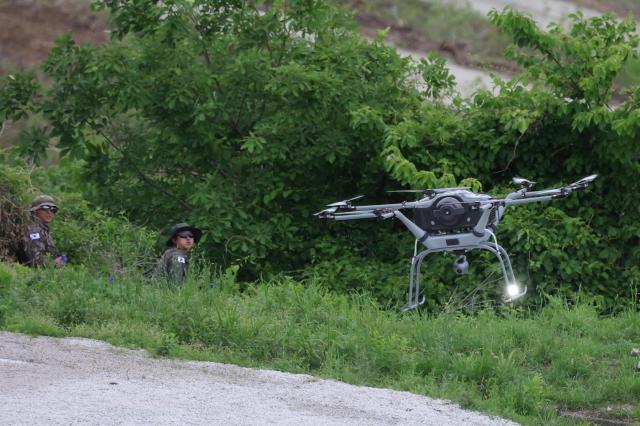
The system, named K-LUCAS — short for K-Low-cost Uncrewed Combat Attack System — is a key part of a new drone and counter-drone development policy drawn up in response to lessons from the wars in Ukraine and the Middle East.
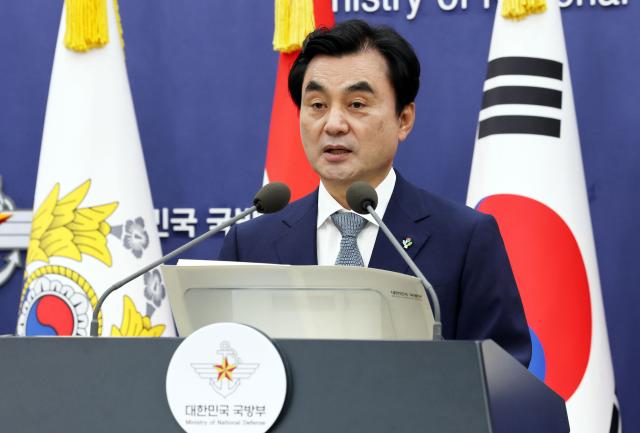
“Every service member will be equipped with the ability to operate a drone like a second personal weapon,” Defense Minister Ahn Gyu-back said, adding that the policy aims to integrate drones more deeply into battlefield operations.
Under the broader plan, the military will acquire more than 20,000 low-cost, expendable drones, including short-range reconnaissance systems and small one-way attack drones.
It will also develop next-generation capabilities such as AI-powered drone swarms and train 500,000 service members to operate drones, with the goal of making them a standard combat tool across the armed forces.
The military plans to purchase about 60,000 domestically produced drones for training. The ministry said the program would also help expand demand for local manufacturers and strengthen South Korea’s drone industry.
The military will also strengthen its counter-drone capabilities.
In the near term, it will deploy counter-drone systems near the front line and introduce proven commercial equipment into field units next year.
Over the longer term, it plans to develop lasers, high-power microwave weapons and low-cost interceptor drones.
The ministry will also create a faster procurement system to test and field civilian technologies. Separately, it will introduce a military certification system based on the U.S. Blue UAS model to ensure commercial drones meet security and reliability standards.
The move reflects a shift away from operating drones through a separate command toward integrating them into the individual services.
Jeong Kyung-woon, a research fellow at the Korean Association of Military Studies, said maintaining a separate operational command dedicated to drones was inefficient, arguing that drones should instead be incorporated into existing units according to their missions.
“Drones should be a universal capability that strengthens the roles of existing units,” Jeong said. “The military does not create a rifle command simply because every unit needs rifles.”
The command was established in September 2023 after North Korean drones entered South Korean airspace in December 2022, exposing weaknesses in the military’s response. It had operated as a separate organization focused primarily on drone operations rather than integrating them into each service.
Under the new structure, the Army, Navy, Air Force and Marine Corps will develop and operate drones and tactics suited to their respective missions, integrating them into surveillance, reconnaissance and strike operations.

Copyright ⓒ Aju Press All rights reserved.
