

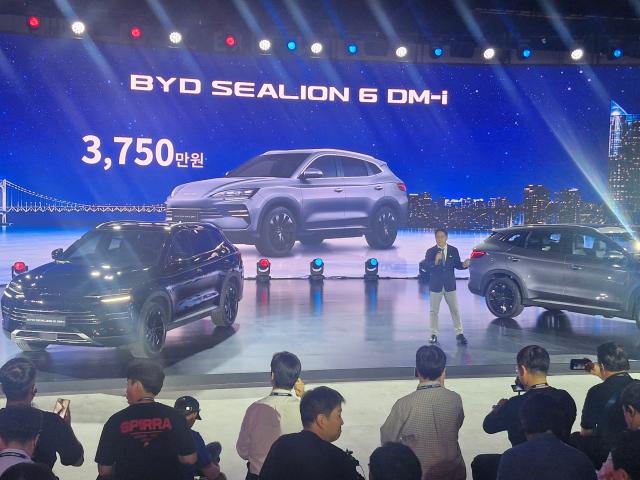
The Sea Lion 6 DM-i made its debut at the 2026 Busan Mobility Show, showcasing a mid-size sport utility vehicle (SUV) design.
The vehicle features BYD's dual-mode intelligent 'DM-i' plug-in hybrid technology. Unlike traditional hybrid vehicles that rely on internal combustion engines with electric motors for efficiency, the DM-i prioritizes electric vehicle performance and quiet operation, using the engine primarily to enhance efficiency.
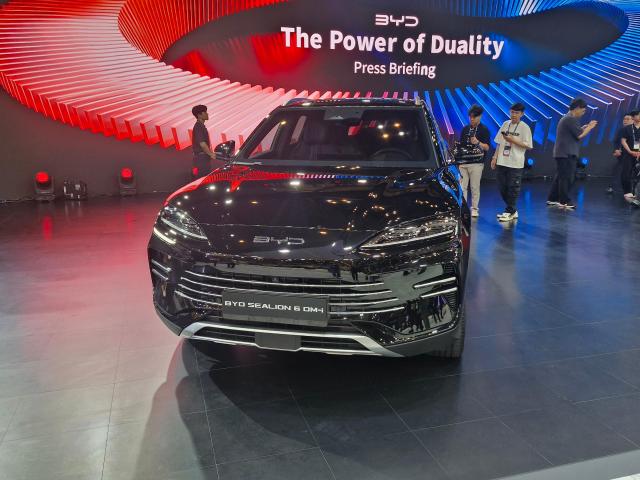
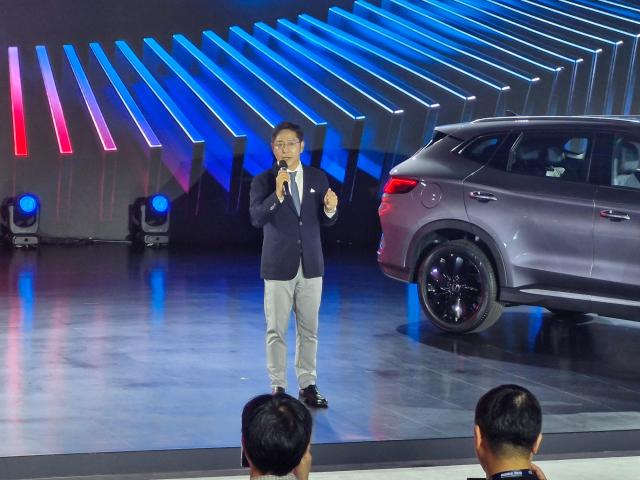
Join-cheol Jo, CEO of BYD Korea, described the vehicle as one that allows users to drive like an electric car during the week and travel long distances like a traditional internal combustion engine vehicle on weekends.
The electric hybrid system (EHS) employs an electronically controlled e-CVT structure to minimize shifting shocks and drive losses. It automatically switches between various driving modes, including electric motor only, series hybrid, parallel hybrid, and engine only, depending on driving conditions.
The newly adapted 1.5-liter gasoline turbo engine, compliant with domestic certification standards, delivers a maximum output of 96 kW (130 horsepower) and a peak torque of 220 Nm. The electric motor, utilizing hairpin winding technology and a liquid cooling system, provides a maximum output of 150 kW (204 horsepower) and a peak torque of 300 Nm. Like its electric counterparts, the Sea Lion 6 DM-i supports Vehicle to Load (V2L) functionality, allowing for external power usage of up to 3.3 kW.
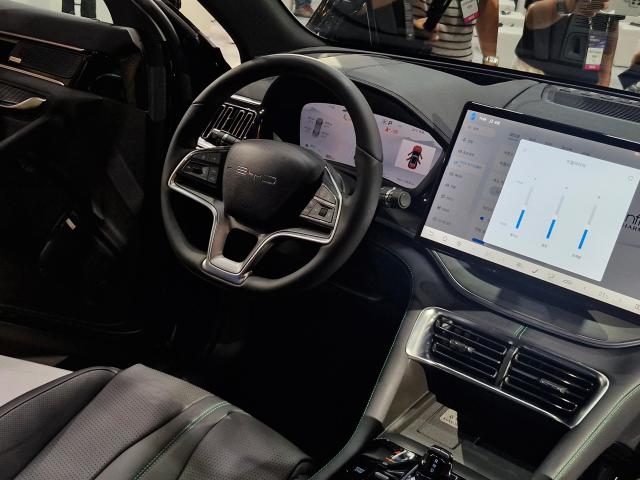
The interior is designed to maximize space utilization based on an electrified platform. It features a large 15.6-inch display, a panoramic glass roof, and a 3D surround view monitor, catering to the preferences of South Korean consumers.
The front seats are equipped with power adjustment, ventilation, and heating functions, while the rear seats also include heating and reclining features. The panoramic glass roof, measuring 1.085 square meters, enhances the sense of openness, and the trunk offers a standard capacity of 425 liters, expandable to 1,440 liters with the rear seats folded.
The Sea Lion 6 DM-i is a key model in BYD's SUV lineup, which has sold over 1.1 million units globally. Since introducing the world's first mass-produced PHEV in 2008, BYD has sold more than 8 million hybrid vehicles, accumulating over 30 billion kilometers in total driving distance. The domestic selling price is set at approximately 37.5 million won.
* This article has been translated by AI.
Copyright ⓒ Aju Press All rights reserved.