

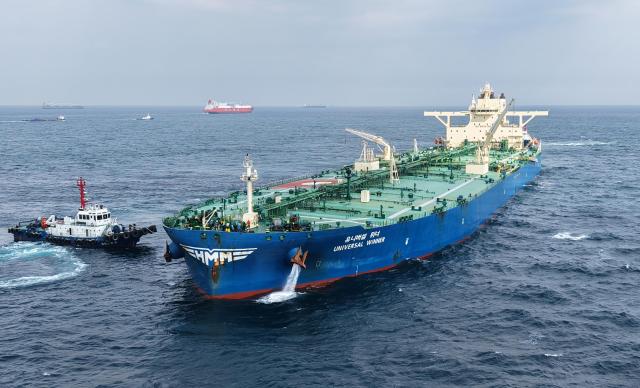
SEOUL, June 26 (AJP) - Eight more South Korean-operated vessels stranded inside the Strait of Hormuz have safely passed through the strategic waterway following the ceasefire between the United States and Iran, leaving five left behind, according to South Korea's Ministry of Oceans and Fisheries Friday.
The ministry said the eight ships, carrying a total of 37 South Korean crew members, have resumed normal operations after transiting the strait. One of the vessels is bound for South Korea.
The latest departures reduce the number of South Korean-operated ships still inside the Strait of Hormuz to five. They include the HMM Namu, which has been undergoing repairs at Dubai Port after being struck in an attack early last month.
A total of 21 of the 26 South Korean-operated vessels that had been stranded in the strait since the outbreak of the Middle East conflict in late February have now cleared the passage, according to the ministry.
There are currently 47 South Korean nationals remaining in the area, including 30 serving aboard foreign-flagged vessels.
"The government provided diplomatic support through the Ministry of Foreign Affairs to facilitate the safe passage of our vessels, while also offering real-time monitoring and navigational information during their transit," the ministry said in a statement.
The movement of commercial vessels through the Strait of Hormuz has gradually resumed since Washington and Tehran agreed to end hostilities, allowing South Korean ships to leave the area one by one.
Security concerns remain, however. According to foreign media reports, a Singapore-flagged cargo ship transiting the Omani shipping lane in the strait came under a drone attack believed to have been carried out by Iran on Wednesday local time.
The incident prompted the International Maritime Organization to temporarily suspend plans related to the evacuation of ships and seafarers in the area.
Most South Korean-operated vessels have reportedly transited the strait via the Iranian shipping lane after coordination with Iranian authorities.
Officials and diplomatic sources say the relatively high transit rate of South Korean vessels reflects sustained diplomatic engagement with Tehran, as well as South Korea's protest over the attack on the HMM Namu.
Although Iran has not publicly acknowledged responsibility for the strike, Seoul conducted its own investigation and has repeatedly sought an explanation from Tehran.
Experts say the relatively high transit rate of South Korean vessels also reflects Seoul's continued diplomatic engagement with Tehran throughout the conflict.
Unlike many countries, Seoul kept its embassy in Iran fully operational and maintained communication with Iranian officials at multiple levels.
Foreign Minister Cho Hyun held four phone calls with his Iranian counterpart, Abbas Araghchi, and dispatched a special envoy for more than two weeks to help secure the safe passage of South Korean vessels, according to government officials.

Copyright ⓒ Aju Press All rights reserved.
