

Bloomberg reported that Starbucks Korea's recent history education is insufficient to overcome the backlash from its 'Tank Day' marketing controversy. The company needs to demonstrate authenticity by collaborating with organizations like the 5·18 Foundation.
In a column published on June 25, Bloomberg columnist Juliana Liu stated, "If Starbucks Korea believes that a single mandatory history lesson can resolve the damage caused by its marketing failure, it needs to reconsider." Liu emphasized that the backlash from last month's Tank Day incident, which was criticized for mocking victims of brutal military repression, was not caused by frontline employees.
She pointed out that requiring not only responsible managers but also thousands of baristas and service staff to undergo mandatory training may appear more as a superficial response than a genuine effort.
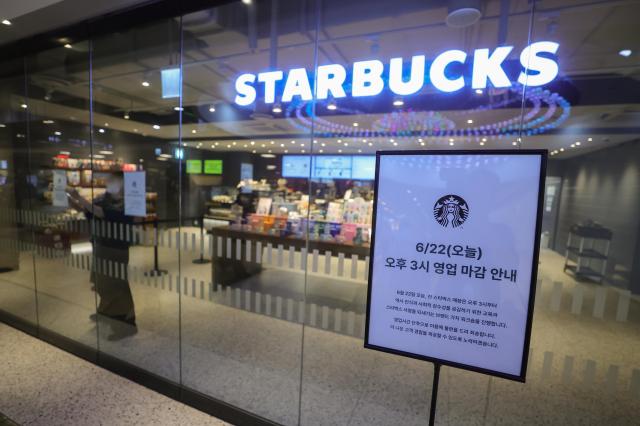
Previously, Starbucks Korea closed all its stores early at 3 p.m. on June 22 and conducted history education related to the Tank Day marketing issue. This marked the first time the company had closed its doors early since opening its first store in Korea in 1999.
Liu noted that Starbucks Korea's approach is reminiscent of actions taken by the U.S. Starbucks in 2018 during a racial discrimination controversy, when the company closed more than half of its stores for racial bias training after police were called on two Black customers who had not placed an order.
While Liu acknowledged that the U.S. Starbucks' response was appropriate, she criticized Starbucks Korea's handling of the situation as inadequate. She warned that the current response risks alienating customers who find it difficult to accept, potentially leading to long-term sales declines in Korea, Starbucks' third-largest market after the U.S. and China. She cited the example of global beer giant AB InBev, which faced significant sales losses after a boycott from conservative consumers following its hiring of transgender influencer Dylan Mulvaney for Bud Light.
Liu suggested that the marketing team's mistakes could have been mitigated by limiting training workshops to those directly involved in decision-making.
Furthermore, she stated, "To rebuild its relationship with consumers, Starbucks Korea must show a thorough understanding of the consequences of its actions and demonstrate cultural sensitivity. One constructive approach would be to collaborate with trusted civil society organizations like the 5·18 Foundation based in Gwangju."
Michael Breen, CEO of the global PR consulting firm Insight Communications in Seoul, echoed Liu's sentiments, stating that if Starbucks Korea takes such actions, it would demonstrate a genuine understanding of its mistakes.
Liu concluded, "This incident was not merely a lack of historical awareness among employees; it was a matter of poor judgment. Starbucks Korea's reputation can only be restored when its management proves it has learned the right lessons."
* This article has been translated by AI.
Copyright ⓒ Aju Press All rights reserved.