

<Education & Perspective> examines the issues in primary, secondary, and higher education amidst the decline of public education, decreasing school-age population, and fluctuating college admission systems. It also seeks sustainable alternatives while providing a critical yet compassionate view of our society.
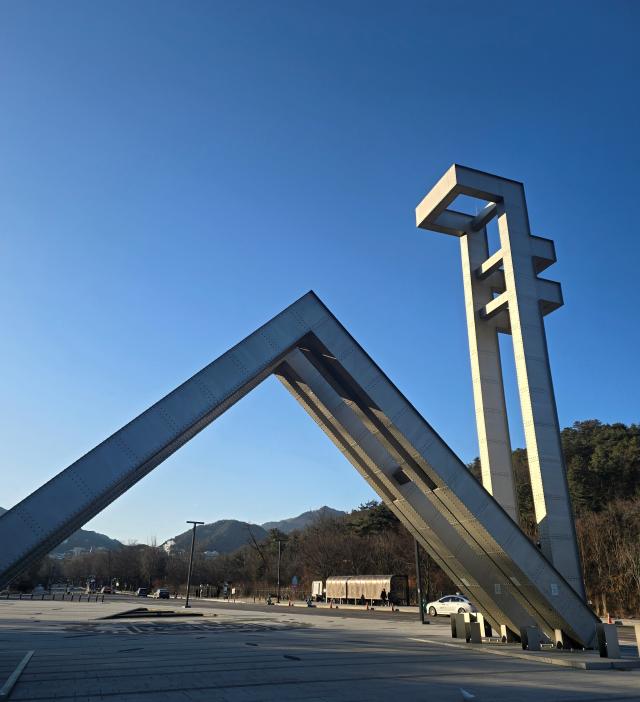
Currently, the policy has shifted to a 'selection and concentration' approach, prioritizing three regional national universities for initial support. However, when faced with practical realities, the discussion changes. This policy is fraught with a critical flaw, as it is trapped in idealistic rhetoric that overlooks the essence of higher education and financial limitations. Frankly speaking, what we need now is not ten replica comprehensive universities resembling Seoul National University, but rather ten specialized universities akin to KAIST, equipped with solid technological competitiveness. This has been suggested multiple times by experts concerned about the future of higher education.
The challenges of the 'Creating 10 Seoul National Universities' initiative have already been reported through various media and academic channels. Nevertheless, given its significance as a major higher education policy of the Lee Jae-myung administration, it is worth revisiting. The most significant flaw of this initiative lies in the astronomical limits of financial procurement. According to the Ministry of Education, the average educational cost per student at Seoul National University is around 63 million won, while the average for the nine regional national universities is less than half that, at approximately 25.3 million won. To completely elevate regional national universities to the level of Seoul National University, annual additional funding of at least 2.4 trillion won would be necessary, far exceeding the limited national higher education budget. Ultimately, spreading resources thinly could lead to a situation where no university achieves top-tier status, resulting in a 'race to the bottom' and a 'budget-sharing trap.'
A more significant issue is the inherent weight of the model represented by Seoul National University as a 'national university corporation' and 'comprehensive university.' Seoul National University encompasses a vast array of disciplines, including humanities, social sciences, natural sciences, engineering, medicine, and arts. While it embodies the noble value of balanced academic development, it is nearly miraculous for resource-strapped regional universities to establish a comprehensive ecosystem of basic and applied sciences at the level of Seoul National University in a short time. A university that performs adequately across all fields cannot serve as a weapon to prevent regional decline. The reason businesses and young people do not remain in these areas is not simply due to the absence of a 'comprehensive university label,' but rather the lack of specialized departments and advanced job opportunities.
In contrast, the so-called 'Creating 10 KAISTs' initiative is based on clear selection and concentration. The KAIST model is a specialized university focused on advanced science and technology, particularly in engineering and natural sciences. By pursuing the 'Creating 10 KAISTs' approach, the structure is lighter and more agile compared to comprehensive universities, allowing for concentrated investment in future industries such as artificial intelligence (AI), semiconductors, biotechnology, and aerospace.
The impact of establishing specialized engineering universities in regional areas has already been proven. KAIST in Daejeon, along with GIST in Gwangju, DGIST in Daegu, and UNIST in Ulsan, has led to the advancement of local economies with research capabilities that rival those of universities in Seoul. Instead of attempting to transform all regional national universities into a 'department store' version of Seoul National University, it would be far more efficient to reorganize them into 'KAIST-style technology ecosystem hubs' tailored to the specialized industries of each region. For instance, the Yeongnam region could focus on manufacturing and robotics, while the Honam region could specialize in renewable energy and AI.
The world is now in an era where one innovative engineer, like Jensen Huang of NVIDIA, can sustain a nation more than 100 lawyers or humanities scholars. Only universities that seize the lead in advanced technology can attract businesses and retain young people.
The alternative is 'selection and concentration.' We cannot afford to waste time on superficial 'label standardization' by building ten department stores. It is essential to abandon impractical idealism and pivot the policy towards 'Creating 10 KAISTs' that will transform regions into the heart of advanced technology. The purpose of education is not to replicate past prestige but to ensure future survival.
* This article has been translated by AI.
Copyright ⓒ Aju Press All rights reserved.