

A strong market is not built overnight. It requires a system that allows investors to trade with confidence, an environment that facilitates easy access for foreign investors, and infrastructure that supports the establishment of new regulations. Only then can market competitiveness be achieved.
The Korea Securities Depository (KSD) has established a stable infrastructure that has contributed to the K-stock market's current boom. Celebrating its 52nd anniversary this year, KSD is the only central depository institution in South Korea. As the K-stock market experiences a renaissance, KSD is being called upon to evolve from a simple settlement agency to a market infrastructure institution, addressing improvements in the foreign investment environment, shortening the settlement cycle (T+1), and adapting to token securities (STO) and digital assets.
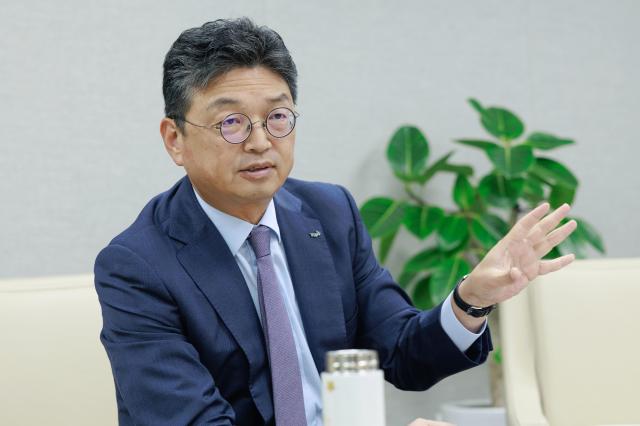
KSD has also seen a change in leadership, with Yoon Soo, a veteran financial bureaucrat, taking the helm. In an interview with Aju Economy on June 26, Yoon stated, "KSD is not just an institution that holds and settles securities; it is a foundation that enables the market to operate stably. As the market grows, the importance of infrastructure, which investors may not directly perceive, becomes even more significant."
He emphasized, "Infrastructure may go unnoticed when everything is functioning well, but if it falters, the entire market's trust can collapse. KSD's most important role is to create a foundation that allows market participants to trade with confidence."
On June 24, the inclusion of the Korean stock market in the Morgan Stanley Capital International (MSCI) developed markets index was once again unsuccessful, disappointing domestic investors who had hoped for a positive outcome.
Yoon stressed, "It is more important to enhance the market accessibility that foreign investors experience." He noted that market accessibility is a key factor in MSCI evaluations, stating, "Reducing the inconveniences that foreign investors face when entering the Korean market ultimately leads to greater market competitiveness."
In line with this, KSD is continuously improving the foreign investment environment. It has simplified account opening procedures by introducing an omnibus account for global asset management firms and is supporting the verification process for legal entity identifiers (LEI) for foreign corporations to enhance investment convenience.
Yoon acknowledged, "While significant improvements have been made in regulations, it will take time for the market to feel these changes. We will continue to enhance market accessibility so that foreign investors can invest in the Korean market more conveniently."
Shortening the settlement cycle (T+1) is one of the key tasks in recent capital market infrastructure reforms. Yoon views this not merely as moving the settlement date one day earlier but as a comprehensive overhaul of the market operating system.
He explained, "While transactions can be completed in one day, settlements require the entire market to function cohesively. All systems, including those of securities firms, the Korea Exchange, KSD, and even foreign depositories, must be securely interconnected."
Settlements are an area where even a single error can undermine market trust. As trading volumes increase and trading hours expand, the stability of back-end systems becomes even more crucial.
Yoon pointed out, "The U.S. first established systems for automatic trade matching before implementing T+1. We must also prioritize creating a foundation for stable market operations through automation and standardization."
The digital transformation of capital markets is another critical challenge that KSD must prepare for. KSD is currently working on building a platform to support the establishment of the token securities (STO) system.
Yoon stated, "Token securities are not about creating new products but about establishing a foundation for the market to operate stably. A reliable system from issuance to distribution is essential for market growth."
In addition to platform development, KSD will also take on roles such as verifying issuance eligibility and managing total volumes to maintain market order. He added, "As new financial services emerge, the supporting market infrastructure will become increasingly important. KSD plans to continuously enhance its infrastructure to adapt to changes in the digital financial environment."
The scale of domestic investors' investments in U.S. stocks has reached approximately $200 billion (about 300 trillion won). Yoon remarked, "We are now in an era where 300 trillion won of national wealth is held abroad," indicating that KSD's role is expanding beyond domestic boundaries.
He asserted, "We cannot simply entrust national wealth to foreign custodians. KSD's important role is to ensure safe custody and settlement, as well as to protect investors' rights in dividends and voting rights."
As the market environment rapidly changes with the U.S. shortening its settlement cycle (T+1) and expanding trading hours, KSD plans to strengthen its local response capabilities. He stated, "We will continuously enhance our infrastructure to adapt to changes in the foreign investment environment, including strengthening our local response system in New York, focusing on providing a safer foundation for managing national assets."
Throughout the interview, Yoon repeatedly emphasized the importance of 'market trust.' He explained that improving market accessibility, shortening the settlement cycle, and building a token securities platform are all processes aimed at creating a market where investors can trust and participate.
He concluded, "While good companies and ample liquidity are important, for the market to be properly valued, it must be supported by a system that investors can trust. KSD will fulfill its role as an infrastructure institution that underpins the entire capital market, even if it is not always visible."
He added, "The market environment will continue to change, but KSD's mission is clear: to create an environment where market participants can trade with confidence and to focus on building a globally competitive market infrastructure."
* This article has been translated by AI.
Copyright ⓒ Aju Press All rights reserved.