

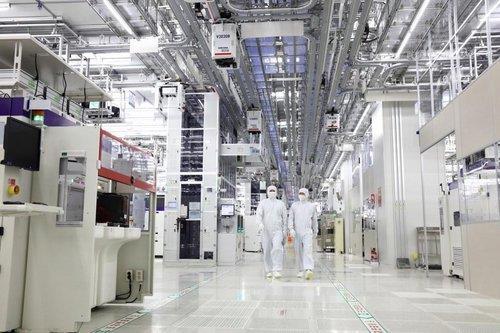
On June 29, Lee Jae-yong, chairman of Samsung Electronics, outlined the company's regional investment strategy during the "Korea's Great Leap: Three Mega Projects National Report Meeting" held at the Blue House. He stated, "We are planning to consider Gwangju as a candidate site due to its expected incentives in securing power, water, workforce, and various infrastructures."
Samsung plans to invest 30 trillion won in developing semiconductor clusters, including the Pyeongtaek campus and the Yongin national industrial complex. By adding Gwangju as a potential site, the company aims to expand its semiconductor production network from the metropolitan area to the southwestern region.
The Chungcheong area has been designated as the hub for HBM and semiconductor backend processes. Lee noted, "HBM, essential for AI model training and inference, requires cutting-edge technology for stacking semiconductor chips and demands main fab-level processes. We will focus our investments in HBM fabs in Chungcheong, including Cheonan and Onyang, alongside existing backend fabs."
Samsung's vision extends beyond semiconductors. Lee announced that investments related to physical AI and robotics will be concentrated in Gumi, a region with an established mobile and electronics manufacturing base, making it advantageous for combining robotics and manufacturing AI.
Ulsan will serve as the central hub for batteries and energy storage systems (BESS). Samsung SDI plans to continue investing in next-generation solid-state batteries and BESS centered in Ulsan. As the number of AI data centers and advanced manufacturing facilities increases, stable power storage and supply become crucial, elevating batteries and ESS to strategic infrastructure status.
Busan will be developed into a cutting-edge substrate production base. The package substrates handled by Samsung Electro-Mechanics are becoming increasingly important due to the growing demand for AI semiconductors and high-performance server chips. Incheon Songdo will expand its biotechnology business centered around Samsung Biologics, while Geoje in South Gyeongsang Province will enhance its next-generation shipbuilding industry led by Samsung Heavy Industries.
This announcement signifies a reallocation of industrial structures by region. Gwangju is positioned as a semiconductor production candidate, Chungcheong for HBM and backend processes, Gumi for robotics and AI data centers, Ulsan for batteries and ESS, Busan for package substrates, Songdo for biotechnology, and Geoje for shipbuilding. The goal is to establish a nationwide manufacturing ecosystem centered around semiconductors in the AI era.
Semiconductor production sites must meet requirements for power, water, workforce, infrastructure, and incentives. HBM and advanced packaging necessitate main fab-level processes and quality stability. Government support in taxation, permits, power networks, and water supply is expected to influence the pace of Samsung's regional investments.
An industry insider remarked, "Samsung's investment direction is not merely about building another semiconductor factory; it is about redistributing industrial roles nationwide in line with the AI era. If Gwangju's semiconductors, Chungcheong's HBM, Gumi's robotics, Ulsan's batteries, and Songdo's biotechnology align, the metropolitan-centered advanced industrial structure can expand nationwide."
* This article has been translated by AI.
Copyright ⓒ Aju Press All rights reserved.