

The European Union and China have agreed to accelerate negotiations aimed at achieving tangible results by October to resolve escalating trade tensions. As Europe intensifies its scrutiny of China's overproduction and trade imbalances, both sides have expressed a commitment to finding common ground through dialogue.
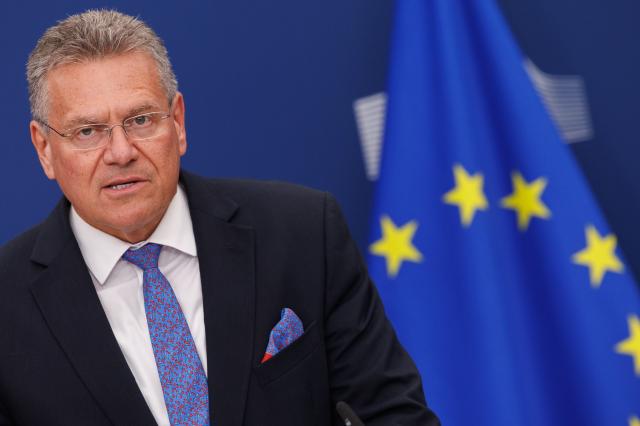
On June 30, Bloomberg and Reuters reported that EU Trade Commissioner Maros Sefcovic spoke to reporters after the first EU-China trade and investment mechanism meeting in Brussels with Chinese Commerce Minister Wang Wentao. He stated, "We cannot solve every issue or resolve everything amicably, but there is sufficient time to achieve substantial results by October."
The EU's focus on addressing trade imbalances and market access issues with China reflects its determination to find solutions by the October deadline. China has invited Sefcovic to Beijing for a follow-up ministerial meeting in October.
Sefcovic emphasized the need for cooperation to tackle key issues affecting EU-China economic relations, stating, "The EU supports open trade, but we must continue to work to protect our industrial base and create a fair competitive environment globally." He also pointed out that the current trade imbalance between the EU and China is unsustainable, asserting that maintaining the status quo is not a viable option.
The EU's trade deficit with China has shown little improvement, with a deficit of €360 billion last year, a 15% increase from the previous year, and a 10% widening of the deficit in the first four months of this year compared to the same period last year.
Following the meeting, the EU and China issued a joint statement, marking the first such announcement since 2019.
According to China's state-run Xinhua News Agency, the two sides agreed to focus on four key areas for further discussions: trade and investment balance, export controls, intellectual property rights, and World Trade Organization (WTO) reforms. They also plan to hold another ministerial meeting this fall.
The discussions will include strengthening cooperation on export controls for critical minerals, including rare earths, market access, trade data exchange, and establishing a joint management system for trade friction.
This meeting took place as the EU ramps up pressure on China regarding unfair trade practices and overproduction issues.
Starting July 1, the EU plans to raise tariffs on imported steel targeting China and reduce the quota for duty-free imports by about half. The EU is also working on developing an "overproduction tool" that would allow it to impose import quotas or additional tariffs in response to low-priced imports from China. There are indications that additional tariffs may also be considered for plug-in hybrid electric vehicles (PHEVs) following those already imposed on pure electric vehicles from China.
However, the EU faces a dilemma. Increasing trade barriers against China could provoke retaliatory measures, negatively impacting European companies' access to the Chinese market. Consequently, the EU is emphasizing negotiation over sanctions while increasing pressure.
China has reacted against the EU's dual approach of dialogue and pressure. The state-run Global Times criticized the EU on June 30, stating, "Europe appears to engage in dialogue with China on the surface while simultaneously introducing new protectionist measures behind the scenes," likening it to a U.S.-style negotiation tactic aimed at escalating tensions to extract concessions. The publication argued that the EU's trade imbalance stems not from China but from internal issues related to investment, innovation, and productivity within Europe.
Additionally, the social media account "Yuyuantantian" affiliated with China Central Television warned on June 27 that if the EU treats negotiations as merely a formality, China is prepared for further deterioration of economic and trade relations with the EU, potentially leading to a stalemate.
* This article has been translated by AI.
Copyright ⓒ Aju Press All rights reserved.