

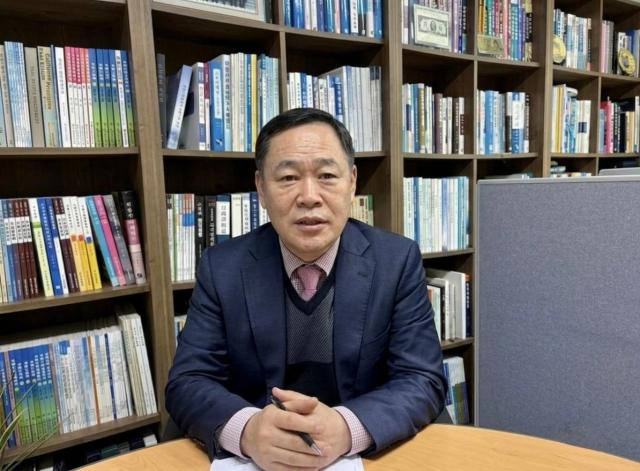
As the government prepares for a real estate tax reform in July, Professor Seo Jin-hyung of Kwangwoon University advocates for lowering transaction taxes while strengthening property taxes. He emphasized that any increase in property taxes should focus on luxury homes and that changes to the long-term holding tax exemption should consider the trust of current homeowners.
In an interview on June 30 at Kwangwoon University in Nowon-gu, Seoul, Professor Seo stated, "The July tax reform is likely to focus more on acquisition and property taxes rather than capital gains tax. However, property taxes should be strengthened primarily for high-value homes." He warned that expanding the tax burden to lower-priced homes could exacerbate market polarization by increasing listings from buyers with unstable incomes or those who are heavily indebted.
Professor Seo identified the excessive reliance on transaction taxes as the main issue with the current real estate tax system. He remarked, "In South Korea, the proportion of transaction taxes is excessively high. In the long term, we need to increase property taxes and reduce transaction taxes to shift real estate from being an asset focused on ownership to one centered on usage."
He added, "It is important to create a market where transactions can occur smoothly by lowering acquisition and capital gains tax burdens. High transaction tax burdens can lock properties in, weakening the market's price adjustment function."
However, he believes that any increase in property taxes should be limited to high-value homes. Professor Seo noted, "If the burden of property taxes is passed on to rents, it could lead to rising prices for both jeonse (long-term lease) and monthly rent. Given that the majority of rental housing in South Korea is supplied by the private sector, a contraction in private supply could intensify instability in the rental market."
Regarding the proposed changes to the long-term holding tax exemption, he stressed the need to protect existing homeowners. Discussions within the government and beyond suggest reducing or abolishing the holding period exemption while strengthening the residency period exemption.
Professor Seo commented, "While encouraging actual residence is desirable, retroactively applying changes to those who purchased homes with the expectation of the long-term holding exemption could undermine policy trust. It would be better to apply changes to newly acquired homes."
He also stated, "Not all non-resident homeowners should be viewed as speculative investors. We need to consider exceptions for various reasons, such as children's education or job relocations."
He expressed concern about the potential for a slowdown in transactions following the end of the capital gains tax exemption. Professor Seo explained, "It is natural for sellers to delay sales when faced with increased capital gains taxes. This transaction cliff could likely lead to rising prices for existing homes."
He identified loan regulations as the most impactful policy on the market. Professor Seo stated, "Among the policies that suppress real estate demand, loan regulations are the most effective. However, excessive loan restrictions can limit opportunities for first-time homebuyers and genuine demanders to secure their own homes."
Looking ahead to the second half of the year, he predicts a likely upward trend in housing prices. Professor Seo noted, "Due to increased liquidity in the market and rising construction costs, housing prices are likely to trend upward for the time being. The demand that has shifted to the outskirts of Seoul due to loan regulations may eventually drive up prices in core areas as well."
* This article has been translated by AI.
Copyright ⓒ Aju Press All rights reserved.