

As the commercialization of autonomous taxis signals a restructuring of the mobility industry, experts are advocating for a proactive redesign of the taxi licensing system.
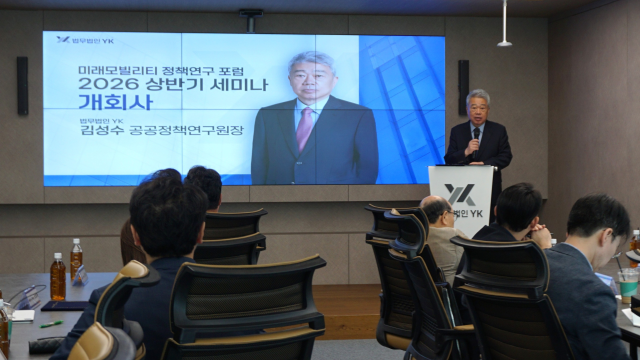
The Future Mobility Policy Research Forum held its '2026 Mid-Year Seminar' on June 30 at YK Law Firm's conference room in Seoul, where these critical issues were thoroughly discussed.
The seminar aimed to analyze demand forecasts related to the introduction of autonomous taxis and to explore potential reforms in the licensing system. Attendees included Kang Kyung-hoon, managing partner at YK Law Firm, Kim Sung-soo, head of the Public Policy Research Institute, and various officials from the Ministry of Land, Infrastructure and Transport and the taxi industry, who engaged in discussions about the impending structural changes in the mobility market.
In his opening remarks, Kim Sung-soo stated, "The introduction of autonomous taxis is not merely an addition to transportation options; it intertwines various societal issues, including fares, dispatch systems, licensing, and the lives of workers." He emphasized the importance of proactively setting directions rather than waiting for problems to arise. In his congratulatory address, Kang urged a balanced consideration of the need for technological innovation alongside the protection of existing taxi licenses and support for worker transitions during the introduction of autonomous taxis.
Professor Kim Dong-young from Chung-Ang University and the Korea Development Institute (KDI) presented on market changes resulting from the introduction of robo-taxis, examining both demand and supply perspectives. He highlighted differing views on whether robo-taxis would create new demand or merely redistribute market share among existing transportation options, potentially leading to a contraction of the overall market due to population decline. He also discussed various regulatory frameworks for the parallel operation of existing taxi licenses and robo-taxi licenses, system transitions, and the entry of new players.
Following the presentations, a designated discussion led by Professor Lee Yong-jae from Chung-Ang University addressed practical issues. Panelists included Dr. Ahn Gi-jeong from the Seoul Institute, Gil Byeong-woo, a former secretary for land and transport at the presidential office, Park Jeong-hyeok, head of the Autonomous Driving Policy Division at the Ministry of Land, Infrastructure and Transport, and Dr. Lee Chang-hoon from the Autonomous Driving Technology Development Innovation Project Group (KADIF).
The panelists noted that classifying robo-taxis as either traditional taxis, public transportation, or a third type of mobility service could affect fare regulations, overall management, and liability for accidents and services.
They also raised fundamental policy questions regarding what should be protected through the licensing system, including the scope of protection for existing license assets and support for taxi workers during the transition, while discussing the future direction of regulatory frameworks.
A representative from the Future Mobility Policy Research Forum stated, "This seminar was an opportunity to assess the policy risks the industry faces amid the significant environmental changes brought by the introduction of autonomous taxis. We will continue to create platforms for ongoing discussions to address practical challenges in the future mobility sector."
Established in December 2022, the Future Mobility Policy Research Forum is a research group focused on discussing institutional, policy, and legal challenges related to future mobility, including autonomous driving.
* This article has been translated by AI.
Copyright ⓒ Aju Press All rights reserved.