

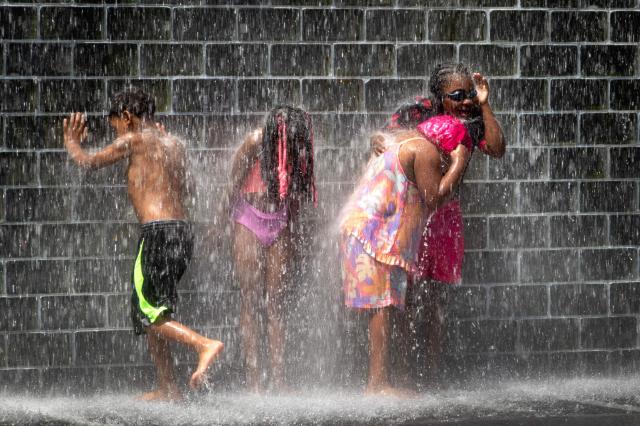
As the United States prepares to celebrate its 250th Independence Day on July 4, a record heat wave is expected to hit the central and eastern regions of the country, according to a report by USA Today on June 29.
The report indicates that a massive heat dome is forming over the Midwest and East Coast, affecting approximately two-thirds of the U.S. population with extreme heat.
Chicago, a major city in the Midwest, is on high alert due to the heat. The city experienced a tragic heat wave in 1995 that resulted in the deaths of 700 residents, as reported by local outlet WTTW News. The National Weather Service has issued heat advisories for Chicago and nearby Cook County suburbs, predicting daytime highs of 35 degrees Celsius, with the heat index reaching between 38 and 41 degrees. Fortunately, rain is expected over the weekend. Chicago Mayor Brandon Johnson warned that "this heat can be very dangerous," urging residents to stay indoors with air conditioning when possible, and to close blinds and slightly open windows if they lack AC. The city has activated 26 cooling centers for residents.
In New York City, the largest city in the U.S., temperatures are forecasted to reach as high as 38 degrees Celsius on July 4, with the heat index potentially hitting 43 degrees. Dan Depodwin, a meteorologist with AccuWeather, told the New York Post, "While it’s summer and hot, the heat coinciding with the outdoor activities of Independence Day stands out. It’s important to stay hydrated, but I recommend staying indoors as much as possible." He noted that temperatures in Central Park exceeding 38 degrees would be the first occurrence since 2012.
Cities in the Midwest and East, including Kansas City and Atlanta, are also implementing heat safety measures as World Cup matches are scheduled. According to the Associated Press, some venues are preparing shade structures, cooling stations, and water supplies to combat the heat. Medical personnel will be on standby at outdoor viewing areas, including the FIFA Fan Festival. On July 4, Atlanta will host a round of 16 match featuring Paraguay, while Kansas City will host a group stage match between Colombia and Ghana on July 3.
The Atlanta Journal-Constitution quoted Roxanna Chicas, a nursing professor at Emory University, expressing concern for the health of fans enjoying the festivities outside the stadiums rather than those inside with air conditioning. The newspaper advised that those unfamiliar with the local summer heat should take precautions, emphasizing the importance of staying hydrated with water or electrolyte drinks.
The heat wave has also led to the closure of summer classes at the University of Wisconsin-Madison. As of June 30, 23 buildings were closed due to a failure in the campus's chilled water supply system, which reduced cooling capacity. Cooling is being prioritized for essential areas such as patient care, research, and in-person classes, according to local WISN TV.
* This article has been translated by AI.
Copyright ⓒ Aju Press All rights reserved.