

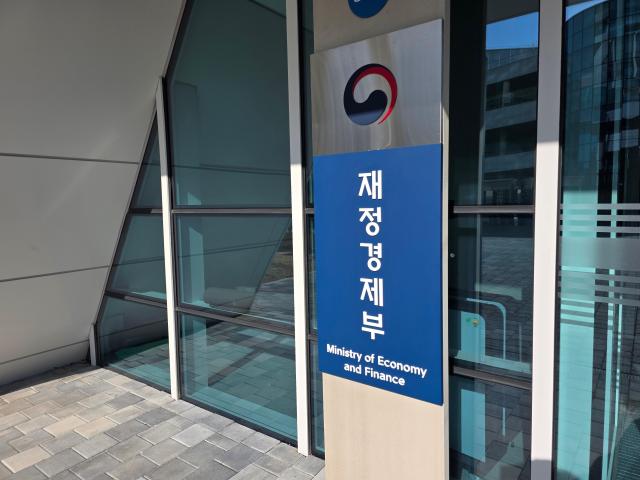
Ministry of Finance and Economy in Sejong Government Complex. [Photo by Kim Yu-jin]
The South Korean government has designated 29 new leading companies to stabilize the supply chain in response to global supply chain risks. The Ministry of Finance and Economy announced on July 1 that these companies were selected as part of the '2026 First Half Supply Chain Stabilization Leading Companies' initiative.
Leading companies in supply chain stabilization are key private enterprises that lead efforts to enhance domestic industrial competitiveness and respond to global supply chain uncertainties. Starting in the second half of 2024, the government plans to select leading companies twice a year and provide various support, including policy financing.
This year, the selection focused on companies that contribute to expanding domestic and international production bases, particularly in light of the increased importance of economic security items and services following the recent conflict in the Middle East.
Since April, the government has been accepting applications and, through evaluations by relevant ministries, has selected a total of 29 companies across key sectors such as critical minerals, secondary batteries, and logistics. With this addition, the total number of designated leading companies has risen to 216.
The selected companies include 57 large enterprises, 62 mid-sized companies, 95 small businesses, one public institution, and one cooperative. These companies will be prioritized for support from the Supply Chain Stabilization Fund, which includes expanded loan limits and preferential interest rates.
Since its launch in September 2024, the Supply Chain Stabilization Fund has provided a total of 13.4 trillion won to leading companies and others by the end of May this year.
Additionally, starting this year, the government has begun operating the 'Supply Chain Coexistence Financing Program.' This program offers preferential interest rates of up to 2.4 percentage points to large leading companies participating in coexistence agreements and their small and mid-sized partners, aiming to strengthen the competitiveness of the supply chain ecosystem.
Lee Seung-wook, Director of Economic Supply Chain Planning at the Ministry of Finance and Economy, stated, "In light of the increasing uncertainties in the global supply chain, we will continue to identify and support key companies in supply chain stabilization and work closely with them. We will also enhance efforts to mitigate domestic and international supply chain shocks and improve supply chain structures."
Leading companies in supply chain stabilization are key private enterprises that lead efforts to enhance domestic industrial competitiveness and respond to global supply chain uncertainties. Starting in the second half of 2024, the government plans to select leading companies twice a year and provide various support, including policy financing.
This year, the selection focused on companies that contribute to expanding domestic and international production bases, particularly in light of the increased importance of economic security items and services following the recent conflict in the Middle East.
Since April, the government has been accepting applications and, through evaluations by relevant ministries, has selected a total of 29 companies across key sectors such as critical minerals, secondary batteries, and logistics. With this addition, the total number of designated leading companies has risen to 216.
The selected companies include 57 large enterprises, 62 mid-sized companies, 95 small businesses, one public institution, and one cooperative. These companies will be prioritized for support from the Supply Chain Stabilization Fund, which includes expanded loan limits and preferential interest rates.
Since its launch in September 2024, the Supply Chain Stabilization Fund has provided a total of 13.4 trillion won to leading companies and others by the end of May this year.
Additionally, starting this year, the government has begun operating the 'Supply Chain Coexistence Financing Program.' This program offers preferential interest rates of up to 2.4 percentage points to large leading companies participating in coexistence agreements and their small and mid-sized partners, aiming to strengthen the competitiveness of the supply chain ecosystem.
Lee Seung-wook, Director of Economic Supply Chain Planning at the Ministry of Finance and Economy, stated, "In light of the increasing uncertainties in the global supply chain, we will continue to identify and support key companies in supply chain stabilization and work closely with them. We will also enhance efforts to mitigate domestic and international supply chain shocks and improve supply chain structures."
* This article has been translated by AI.
Copyright ⓒ Aju Press All rights reserved.