

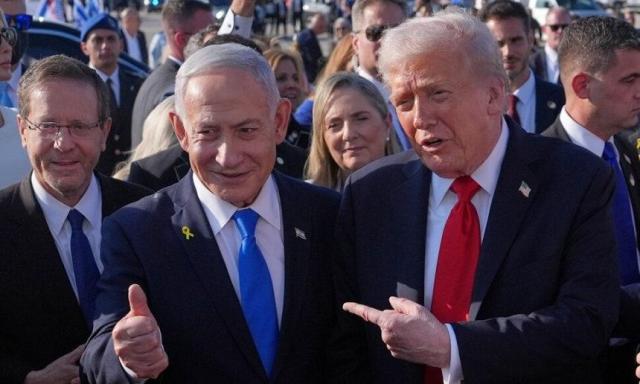
According to Indian media outlet News18, Netanyahu stated on June 30, "I want to stop receiving support from the U.S.; it is like welfare, and I do not want it." He added, "Israel's economy is no longer small; we can generate our own resources."
U.S. financial and military support has long been considered a cornerstone of Israel's security. Netanyahu's remarks are interpreted as a political message aimed at reducing dependence on the U.S.
He did not rule out military options against Iran, stating, "We have entered Iran twice to prevent destruction, and if necessary, there will be a third time." This indicates his intention to maintain pressure on Iran even as the U.S. discusses the implementation of a memorandum of understanding (MOU) with Iran.
Regarding Lebanon, Netanyahu's stance appears to diverge from U.S. mediation efforts. During a visit to Israeli troops stationed in southern Lebanon, he declared, "We will not leave southern Lebanon until the threat from Hezbollah is eliminated." He emphasized, "As long as armed Hezbollah remains here threatening us, we will also remain here."
Israel and Lebanon recently agreed to a basic framework under U.S. mediation. This agreement involves the Lebanese army taking control of certain areas previously held by Hezbollah, paving the way for a phased withdrawal of Israeli forces. However, Netanyahu has linked any withdrawal to the removal of the Hezbollah threat.
He has ordered the complete destruction of Hezbollah's infrastructure and claimed that recent conflicts have significantly reduced Hezbollah's missile and rocket capabilities.
Netanyahu's statements could complicate the Trump administration's efforts to ease tensions in the Middle East. The U.S. aims to manage the implementation of the MOU with Iran, the basic agreement with Lebanon, and stabilization in the Strait of Hormuz. In contrast, Israel maintains that it will not cease military pressure as long as threats from Iran and Hezbollah persist.
While the U.S.-Israel alliance is unlikely to be shaken, Netanyahu's simultaneous calls for reduced U.S. support and continued troop presence in Lebanon indicate a divergence in strategic priorities between the two nations.
* This article has been translated by AI.
Copyright ⓒ Aju Press All rights reserved.