

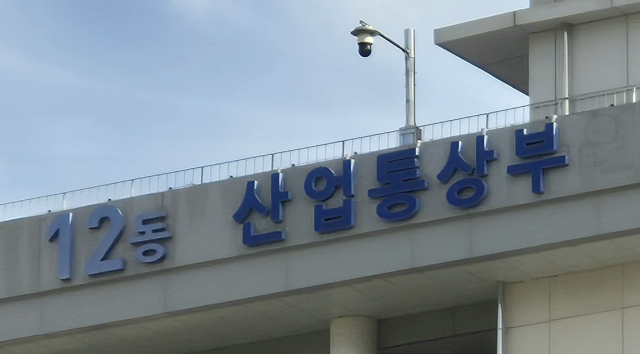
Starting July 2, the Ministry of Trade, Industry and Energy announced the launch of two new tracks under the K-Tech Pass: a qualitative evaluation track and a link to the government’s scholar recruitment program. The K-Tech Pass provides comprehensive support, including a top-tier visa (for exceptional talent), education, housing, and tax benefits for outstanding foreign professionals in advanced industries.
The top-tier visa can be issued online within two weeks without the need to visit a consulate. It includes preferential entry and exit privileges and allows holders to apply for permanent residency after three years. Spouses are granted work authorization under the F-2 visa, and parents and domestic helpers can accompany them under the F-1 visa.
To support settlement, the program offers a 50% reduction in income tax for up to ten years, admission to foreign schools for children outside the quota, access to domestic-level jeonse loans and guarantees, and services in finance and telecommunications.
Previously, eligibility was limited to foreigners who had employment contracts with domestic advanced companies and met stringent criteria, including holding a master's or doctoral degree from one of the world’s top 100 engineering schools and having experience at a top 500 global company or research institution. Additionally, applicants had to earn at least three times the national gross income (GNI) per capita.
However, concerns were raised that these quantitative criteria did not accurately reflect the actual hiring needs of companies, as the capabilities of advanced industry professionals cannot always be assessed solely based on education or salary. Specific experience with certain processes, operational skills with key equipment, and a history of research and development projects may be essential but fall outside quantitative metrics.
In response, the government is introducing a qualitative evaluation system that allocates 65 points for quantitative measures, 35 points for qualitative assessments, and an additional 10 points for certain criteria. This qualitative evaluation will allow foreign talent to receive the K-Tech Pass if their technical expertise and job necessity are recognized. Notably, small and medium-sized enterprises (SMEs) that may struggle to attract foreign talent will receive the additional 10 points.
SMEs often face challenges in the competition for advanced talent due to lower brand recognition and compensation capabilities compared to larger firms. By bundling visa and settlement support, the government aims to reduce the burden on companies during the hiring negotiation process and increase the likelihood of foreign talent choosing to come to South Korea.
The government is also establishing a link to the scholar recruitment program, allowing top foreign talent selected for government-sponsored programs to receive the K-Tech Pass. This initiative aims to facilitate easier access to benefits such as the top-tier visa for participants in government-certified scholar recruitment programs.
Lee Min-woo, director of industrial policy at the Ministry of Trade, Industry and Energy, stated, "With the addition of the qualitative evaluation method alongside the existing quantitative assessment, we expect more companies to attract excellent foreign talent. We will do our utmost to ensure that top-tier foreign professionals can settle and thrive in domestic companies."
* This article has been translated by AI.
Copyright ⓒ Aju Press All rights reserved.