

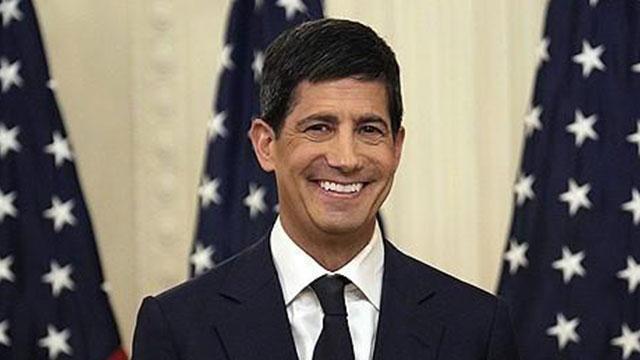
Kevin Wash, Chair of the U.S. Federal Reserve, recently assessed that the risks of inflation in the United States have decreased. However, he noted that "price levels remain high" and refrained from commenting on the Federal Open Market Committee's (FOMC) interest rate decision later this month.
Speaking at the European Central Bank (ECB) Central Bank Forum in Sintra, Portugal, on July 1, Wash stated, "In the past four weeks, expected inflation has decreased, and the risks of inflation have also diminished." This is interpreted as a reflection of lower price forecasts due to stabilizing international oil prices amid a ceasefire atmosphere between the U.S. and Iran.
He emphasized the need to determine whether fluctuations in energy prices are temporary or if they will spread to the prices of goods and services overall.
Despite the easing of inflation risks, Wash reiterated the Fed's commitment to price stability. He remarked, "Looking around, it is clear that prices are still too high, and if anyone thought the central bank would be satisfied with inflation above 2%, they will be disappointed."
Market attention is focused on whether the Fed will raise interest rates during the FOMC meeting scheduled for July 28-29. When asked if his comments signaled a rate hike, Wash responded, "I am trying to break the principles, but that will not happen," avoiding a direct answer.
Regarding pressure from President Donald Trump to lower interest rates, he clarified, "We are an independent central bank," indicating that future monetary policy decisions will be based on indicators presented during meetings and discussions among committee members rather than pre-announced directions.
Wash also stated that the Fed should gradually reduce its expanded balance sheet, emphasizing the need to bring the asset size, which has increased due to quantitative easing, back to a reasonable level, with interest rates remaining the core tool of monetary policy.
On the topic of artificial intelligence (AI), he assessed it as a significant factor that could bring substantial changes to the economy and policy operations. Wash noted, "The AI revolution is still in its early stages," mentioning the potential for increased productivity and the creation of new jobs.
* This article has been translated by AI.
Copyright ⓒ Aju Press All rights reserved.