

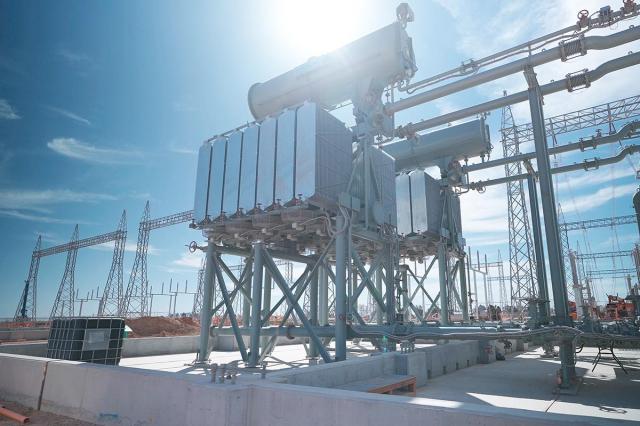
On July 1, Hyosung announced that it had signed a long-term supply agreement with AusNet, the sole transmission network operator in Victoria, for high-voltage transformers and reactors. This follows a significant contract for an energy storage system (ESS) project worth approximately 142.5 billion won secured in Queensland in March.
The new contract is valued at around 310 billion won, granting Hyosung exclusive rights to supply high-voltage power equipment to Victoria's transmission network for the next five years.
With this agreement, Hyosung expands its supply chain across major Australian power markets, including Victoria, Queensland, New South Wales, and South Australia, further establishing its position as a top-tier supplier in the region. Over the past decade, Hyosung has achieved the highest market share in high-voltage transformers in the Australian transmission market through a customer-centric strategy based on VOC (Voice of Customer).
This long-term supply agreement is seen as a result of Chairman Cho Hyun-jun's emphasis on global partnership management. He has noted that Australia is rapidly advancing its energy transition, leveraging abundant renewable energy resources such as solar, wind, and hydro, and has committed to investing in this market.
Notably, the contract with AusNet lays the groundwork for future collaboration beyond high-voltage transformer supply, potentially expanding into next-generation power grid solutions such as HVDC (high-voltage direct current) and STATCOM (static synchronous compensator).
Cho stated, "Australia is one of the most dynamic markets in the world in terms of the speed and scale of energy transition. We will continue to expand our collaboration into next-generation power grid solutions like HVDC and STATCOM, becoming a partner in Australia's energy transition."
According to market research firms, the global HVDC market is projected to grow from approximately 70 trillion won in 2020 to around 159 trillion won by 2030, more than doubling in size. This growth is attributed to the surge in data centers, the expansion of renewable energy, and increasing demand for interconnections between national power grids.
* This article has been translated by AI.
Copyright ⓒ Aju Press All rights reserved.