

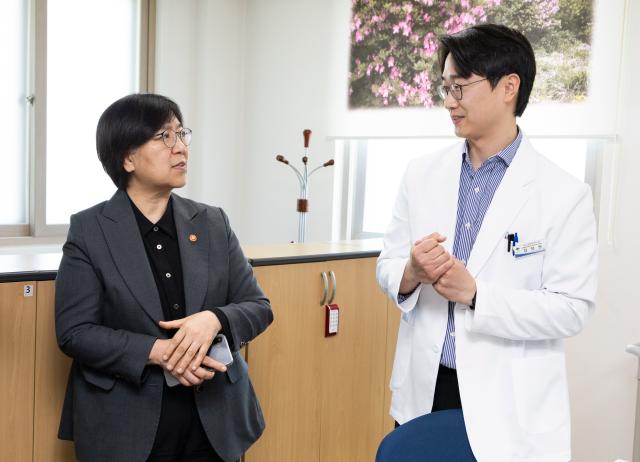
The South Korean government is investing approximately 95 billion won to enhance the residency training environment, ensuring that residents receive high-quality training and develop into competent specialists. The initiative will significantly strengthen the role of supervising physicians at 56 selected training hospitals across the country, chosen through a rigorous qualitative evaluation process.
On July 1, the Ministry of Health and Welfare announced that it had selected 56 training hospitals from 92 applicants for the "2026 Residency Training Environment Innovation Support Project." The total funding for this year is expected to reach 95.3 billion won.
The project focuses on providing financial support for supervising physicians' salaries and operational costs for training residents in eight essential specialties: internal medicine, surgery, obstetrics and gynecology, pediatrics, emergency medicine, cardiovascular thoracic surgery, neurology, and neurosurgery.
To ensure intensive education for residents, each hospital will designate a 'responsible supervising physician' and an 'educational supervising physician.' These physicians will be tasked with regular meetings, clinical practice guidance, competency evaluations, and feedback for residents. By enhancing the educational role of supervising physicians and establishing a clear compensation system, the initiative aims to create an environment where residents can develop practical clinical skills.
Unlike last year, when all applicant hospitals received support, this year's project selected participants based on a stringent qualitative assessment of training outcomes to maximize the effectiveness of financial aid. Since March, an evaluation team of over 70 experts conducted on-site and document assessments, resulting in the selection of 24 hospitals in the capital region and 32 in non-capital areas. To foster regional training hospitals, the budget was evenly distributed between the capital (49 billion won) and non-capital areas (46.3 billion won).
The government expects this initiative to fundamentally improve the educational framework in residency training. Kwon Soon-hyun, Director of Health Policy at the Ministry of Health and Welfare, stated, "This year's project goes beyond previous evaluations by qualitatively assessing and improving the capabilities and outcomes of training hospitals. I hope supervising physicians at these hospitals take pride in their responsibility for nurturing future medical professionals and dedicate themselves to guiding and educating residents."
Additionally, the ministry plans to actively identify and promote exemplary cases of effective training from the project's outset. It will also provide educational and consulting support to hospitals not selected in this round, and consider reward measures for improvements during next year's evaluation.
On July 1, the Ministry of Health and Welfare announced that it had selected 56 training hospitals from 92 applicants for the "2026 Residency Training Environment Innovation Support Project." The total funding for this year is expected to reach 95.3 billion won.
The project focuses on providing financial support for supervising physicians' salaries and operational costs for training residents in eight essential specialties: internal medicine, surgery, obstetrics and gynecology, pediatrics, emergency medicine, cardiovascular thoracic surgery, neurology, and neurosurgery.
To ensure intensive education for residents, each hospital will designate a 'responsible supervising physician' and an 'educational supervising physician.' These physicians will be tasked with regular meetings, clinical practice guidance, competency evaluations, and feedback for residents. By enhancing the educational role of supervising physicians and establishing a clear compensation system, the initiative aims to create an environment where residents can develop practical clinical skills.
Unlike last year, when all applicant hospitals received support, this year's project selected participants based on a stringent qualitative assessment of training outcomes to maximize the effectiveness of financial aid. Since March, an evaluation team of over 70 experts conducted on-site and document assessments, resulting in the selection of 24 hospitals in the capital region and 32 in non-capital areas. To foster regional training hospitals, the budget was evenly distributed between the capital (49 billion won) and non-capital areas (46.3 billion won).
The government expects this initiative to fundamentally improve the educational framework in residency training. Kwon Soon-hyun, Director of Health Policy at the Ministry of Health and Welfare, stated, "This year's project goes beyond previous evaluations by qualitatively assessing and improving the capabilities and outcomes of training hospitals. I hope supervising physicians at these hospitals take pride in their responsibility for nurturing future medical professionals and dedicate themselves to guiding and educating residents."
Additionally, the ministry plans to actively identify and promote exemplary cases of effective training from the project's outset. It will also provide educational and consulting support to hospitals not selected in this round, and consider reward measures for improvements during next year's evaluation.
* This article has been translated by AI.
Copyright ⓒ Aju Press All rights reserved.