

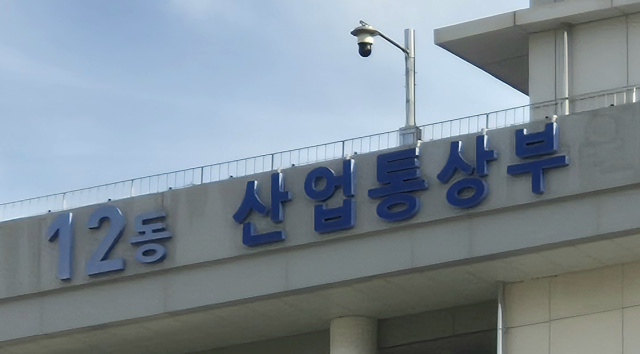
The Ministry of Trade, Industry and Energy announced on July 3 that the cumulative FDI reported for the first half of 2026 reached $14.28 billion, a 9.1% increase compared to the same period last year. During the same timeframe, the actual inflow of FDI surged by 42.6% to $10.73 billion.
Despite ongoing downward pressures on global FDI due to recent geopolitical tensions in the Middle East, both reported and actual investment figures have increased compared to the first half of last year. The United Nations Conference on Trade and Development (UNCTAD) had predicted in January that FDI projects could face significant contraction this year due to geopolitical tensions, regional conflicts, and ongoing policy uncertainties and economic fragmentation.
However, in South Korea, reported investment projects are being implemented. Additionally, new investments continue to flow into promising sectors such as semiconductors and displays, bolstered by confidence in advanced industry supply chains and innovation ecosystems.
In terms of investment types, greenfield investments, which refer to the establishment of new factories or business facilities, totaled $10.82 billion, a 1.5% decrease. This decline is notably less severe compared to a 19.8% drop in greenfield investment reported in the first quarter. Meanwhile, mergers and acquisitions (M&A) reported investments surged by 64.3% to $3.46 billion.
By sector, manufacturing investments reported $3.81 billion, reflecting a 28.4% decrease, largely due to significant declines in the chemical and electrical/electronic sectors, which fell by 17.0% and 26.5%, respectively. Conversely, investments in promising industries such as autonomous robots and healthcare led to a remarkable 243.1% increase in the machinery and precision medical equipment sector, which reached $870 million. Non-metal mineral products, including displays, also saw a 34.2% rise to $330 million.
Service sector investments reported $9.07 billion, a 27.9% increase. The finance and insurance sectors grew by 47.9% to $3.74 billion, while real estate investments nearly doubled, rising by 98.8% to $1.64 billion. Research and development, as well as professional and scientific technology sectors, improved by 24.3% to $470 million.
While manufacturing investments have slowed, the overall growth has been supported by the service sector and M&A investments. This suggests that in an uncertain global trade environment, equity investments and leveraging existing business foundations have been relatively more active than new factory investments.
By country, reported investments from the United States totaled $3.05 billion, the European Union (EU) $2.05 billion, Japan $1.49 billion, and China $1.48 billion, all showing declines. In contrast, investments from other countries, including Singapore and the United Kingdom, increased by 65.4% to $6.2 billion.
The actual inflow figures showed even larger increases. Greenfield inflows decreased by 5.6% to $4.45 billion, while M&A inflows skyrocketed by 123.3% to $6.28 billion. This indicates that previously secured investment projects are moving into the execution phase.
Sector-wise, manufacturing inflows reached $5 billion, a staggering 205.2% increase. Stable funding for large-scale chemical projects contributed to a 916.3% rise in the chemical sector, which saw inflows of $4.09 billion. Non-metal mineral products also experienced a 223.2% increase, reaching $330 million.
Service sector inflows amounted to $5.6 billion, a 1.4% increase. Both finance and insurance, and real estate sectors saw growth, with inflows of $3.41 billion and $630 million, respectively, although retail and information communication sectors experienced declines.
By country, the EU accounted for the largest share of inflows at $4.34 billion, a 106.1% increase. Japan saw inflows of $610 million, up 56.5%, while China increased to $170 million, a 36.0% rise. The United States, however, saw a 13.3% decrease, totaling $1.28 billion.
The government aims to continue the trend of record FDI performance from last year by strengthening foreign investment incentives linked to national industrial policy. The Ministry stated, "We will conduct strategic domestic and international investor relations activities and support the creation of a stable investment environment by directly addressing corporate difficulties through FDI field caravans and roundtables with relevant ministries."
* This article has been translated by AI.
Copyright ⓒ Aju Press All rights reserved.