

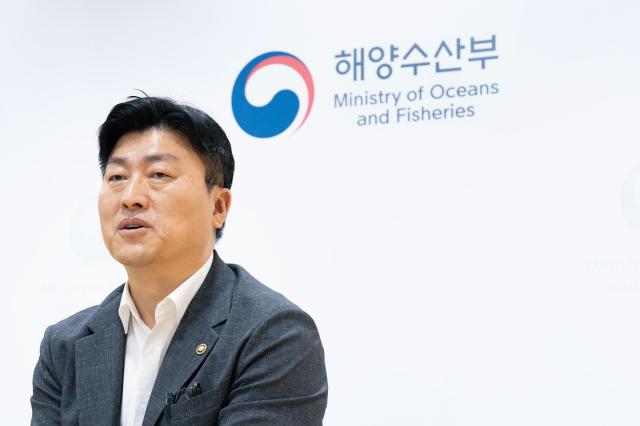
Nam Jae-heon, the new Vice Minister of Oceans and Fisheries, is committed to ensuring the safe return of two remaining Korean vessels in the Strait of Hormuz while also advancing the government's key initiative to develop the Arctic shipping route. Following his appointment, he is addressing significant issues including the Middle East situation, the Arctic route, the development of marine metropolitan areas, and fisheries policy, with a focus on results-oriented, field-based responses.
During his first press conference on July 2 at the ministry's headquarters in Busan, Nam provided an update on the safety management of Korean vessels amid rising tensions in the Middle East. He stated, "Out of the 26 Korean vessels in the Strait of Hormuz, 24 have safely exited. The two remaining vessels are not currently in a critical situation, but we will ensure their safety and support their return."
According to the ministry, the return of ships transporting energy resources from the Middle East is proceeding normally. Nam noted, "Of the 11 energy transport vessels, 7 have already returned, and the remaining 4 are en route to Korea," adding that there are no significant disruptions to domestic energy supply.
However, the ministry maintains that due to ongoing instability in the Hormuz region, domestic shipping companies should refrain from re-entering the area for the time being. Nam remarked that while negotiations are ongoing between the U.S. and Iran, uncertainties remain. He advised shipping companies to avoid sending vessels back until stability is assured.
He also emphasized ongoing safety management for Korean crew members aboard foreign vessels. "We are monitoring crew members one-on-one through agents and relevant associations, and we have established a separate emergency communication channel," he said. "If any crew members wish to disembark or face adverse conditions, we will respond proactively to ensure their safety."
Nam addressed concerns regarding war insurance premiums, stating that they have stabilized. "In crisis situations, premiums rose to about 1%, but they have now decreased to around 0.4%. Since there is a refund structure for vessels that leave danger zones, we do not see this as a major concern at present," he explained.
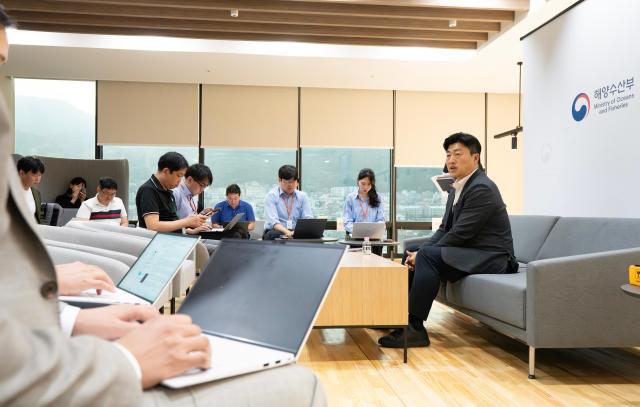
Nam also affirmed that the government will continue to push forward with the Arctic route development as planned. Having previously served as the inaugural head of the Arctic Route Promotion Headquarters, he aims to accelerate preparations for trial operations within the year.
He reported that key preparations for the trial operations are nearing completion. "We are in the final stages of securing vessels and completing diplomatic procedures," he said, adding that significant cargo has already been secured through shippers and logistics companies. "We have secured approximately 1,300 TEU of cargo, and we plan to acquire additional cargo once the sailing schedule is confirmed," he noted.
Nam assessed that the success of the Arctic route hinges on gaining the trust of shippers. He explained that, similar to the Suez Canal route, demonstrating punctuality and safety is essential for attracting more cargo. "Shippers prioritize whether their goods can arrive safely and on time," he said, emphasizing that while the minimum cargo has been secured, additional cargo will be obtained to ensure smooth trial operations once the schedule is finalized.
He also mentioned that the ministry is continuously monitoring changes in Arctic sea ice due to climate change. "Recent data indicates that Arctic sea ice has melted more than at any time since 2015," he said. However, he cautioned that increased melting does not guarantee a safe route, as the risk of icebergs breaking off must also be considered.
In response to concerns about his limited experience in the fisheries sector, Nam promised to seek solutions through direct engagement in the field. Recognized as an expert in maritime and port sectors, he acknowledged, "I cannot claim to be well-versed in fisheries and aquaculture, but as Vice Minister, I will work diligently to identify issues and develop improvement strategies."
He added, "The Ministry of Oceans and Fisheries is based in Busan, but it is not solely responsible for that region; it oversees the entire coastline and seas of our country. We will implement policies to ensure balanced development of marine economic zones across the country, including the southeastern marine metropolitan area and the Honam and west coast regions."
Nam also highlighted investments in the Honam region, stating, "Over 200 billion won is being invested in the Gwangyang Port AI testbed, and we are actively supporting the expansion of offshore wind power facilities at Mokpo Port and utilizing wind power facilities at Gunsan Port to ensure a balanced marine policy that leaves no region behind."
* This article has been translated by AI.
Copyright ⓒ Aju Press All rights reserved.