

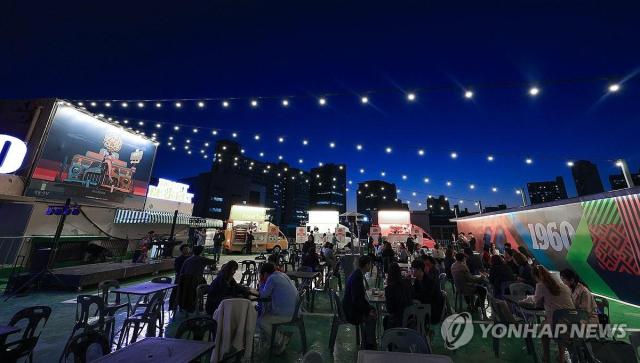
Seoul's nightlife is coming back to life.
On the evening of July 3, at 8 p.m., office workers began to gather at outdoor tables in the alleys of Euljiro. Yellow lights illuminated the narrow streets, and the sound of meat sizzling on grills filled the air. Foreign tourists strolled through the alleys with beer in hand, capturing photos as young buskers filled the night with music.
A little further away, hundreds of drones lit up the night sky over the Han River. Citizens enjoyed leisurely walks along the riverside, while the Seoul Sky offered panoramic views of the city’s nightscape. The exterior of the Dongdaemun Design Plaza (DDP) was aglow with massive media art installations, and Gwanghwamun Square transformed into a picturesque urban scene under soft lighting. This is the vision for Seoul's nightlife under Mayor Oh Se-hoon.
Oh, who has made revitalizing the night economy a key growth strategy for his administration, aims to recover the nighttime consumption that has declined since the COVID-19 pandemic. His strategy focuses on encouraging tourists to stay longer in Seoul, leading to increased spending in local businesses.
"I will make Seoul's nights another reason for people around the world to stay here,"
Oh reiterated his vision during his inauguration on July 1, emphasizing the development of the night economy as a new growth engine for the city.
He stated, "We will create night economy coexistence zones in areas like Hongdae, Euljiro, Gangnam, and Yeouido, allowing citizens to enjoy richer nights and revitalizing local businesses."
He further stressed, "I will ensure that Seoul's nights become another reason for people worldwide to stay in the city."
At the recent 2026 Seoul International Tourism Forum, Oh noted, "Seoul's greatest potential lies in nighttime tourism," proposing to develop night performances along the Han River, outdoor libraries for summer nights, and a globally safe nightlife as key attractions. This initiative builds on his campaign promise from the June 3 local elections to create a '365-day vibrant dopamine city.'
As Seoul prepares for an influx of 30 million foreign tourists, the city is focusing on becoming a destination where visitors stay not just for a day but for several days.
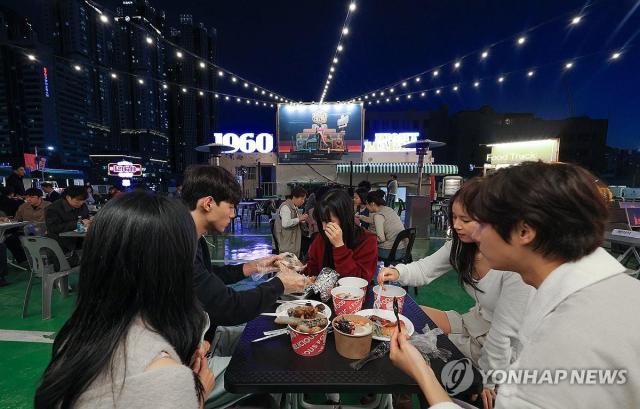
Seoul's Nightlife Once Captivated CNN
Seoul's nightlife was once renowned globally. Around 2010, CNN highlighted Seoul as one of the 'cities that never sleep,' showcasing the after-work dining culture, bustling restaurant districts, and vibrant nightlife that continued into the early hours.
At that time, the price of a bottle of soju was cheaper than bottled water, drawing interest from foreigners. However, following the pandemic and economic downturn, Seoul's nightlife lost much of its vibrancy.
Now, the city aims to transform its nightlife from a focus on entertainment to a sophisticated night economy that integrates culture, tourism, gastronomy, and the arts.
Outdoor Dining to Be Formalized
One significant change is the formalization of outdoor dining, known as 'Yajang.'
Seoul will conduct a public selection process across 25 districts to designate representative outdoor dining hubs and establish 'Night Economy Coexistence Zones.' This initiative aims to bring outdoor dining, which has often operated informally due to regulations, into a structured framework.
In these zones, regulations on road occupancy and outdoor dining will be gradually relaxed. However, businesses will be required to sign coexistence agreements, manage noise, maintain cleanliness, and adhere to operating hours. Failure to comply could result in penalties, including the revocation or reduction of zone designations.
Seoul aims to establish an orderly and sophisticated street culture, akin to that found in European cities, rather than chaotic outdoor dining.
Han River as the Center of Night Tourism
Another focal point of the night economy will be the Han River.
Seoul plans to enhance nighttime scenery in areas like Ttukseom, Jamwon, Oksoo, and Hannam, and is considering nighttime tourism programs utilizing Han River buses. With the addition of drone light shows, Seoul Sky, outdoor performances dubbed 'Stage Seoul,' and nighttime sports facility access, the Han River could become the largest nighttime tourism belt in the city.
Tourists will be able to enjoy a new nighttime itinerary, watching drone shows in Yeouido, visiting Seoul Sky, and taking Han River buses to Jamwon and Ttukseom.
From DDP to Gwanghwamun... the City Becomes a Stage
The city center is also set for transformation.
Seoul Light DDP recorded 1.92 million visitors last year, establishing itself as a premier nighttime attraction. The city plans to connect this with the Dongdaemun area to extend visitor stays and boost nighttime spending.
Gwanghwamun Square's 'Light of Gratitude 23' is emerging as a new nighttime photo hotspot, attracting urban tourists.
With nighttime openings of historical sites like Gyeongbokgung and Changdeokgung, the Seoul Lantern Festival, and seasonal festivals, the entire city is expected to form a vast nighttime tourism network.
"A Thriving Night Economy Revives Local Businesses"
Seoul's emphasis on the night economy is clear. If tourists return to their hotels by 6 p.m., their spending ends. However, if they stay until 10 p.m. or midnight, their consumption continues through dinner, cafes, performances, shopping, and transportation, ultimately benefiting local businesses.
According to the Seoul Research Institute, the contribution of the tourism industry to Seoul's GRDP (Gross Regional Domestic Product) is projected to rise steadily from 2.1% in 2022 to 3.3% in 2024.
Last year, 12.83 million foreign tourists visited Seoul, generating 45.6 trillion won in tourism revenue and 18.8 trillion won in added value. Notably, 91% of tourism spending comes from foreigners, solidifying Seoul's status as a high-value industry.
"Nightlife is Seoul's Competitive Edge"
Major global tourist cities are already cultivating their night economies as a core industry. New York thrives on Broadway and Times Square, Paris on Seine River nighttime tourism, and London on West End performances.
Seoul is now aiming to become a global nighttime tourism city through 'Nonstop Play Seoul,' connecting the Han River, DDP, Gwanghwamun, Hongdae, Euljiro, Seongsu, and Yeouido.
A city official stated, "The key to revitalizing the night economy is to extend tourists' stay and connect their spending to local businesses. We plan to make Seoul's nights a tourism product and a competitive advantage for the city."
* This article has been translated by AI.
Copyright ⓒ Aju Press All rights reserved.