

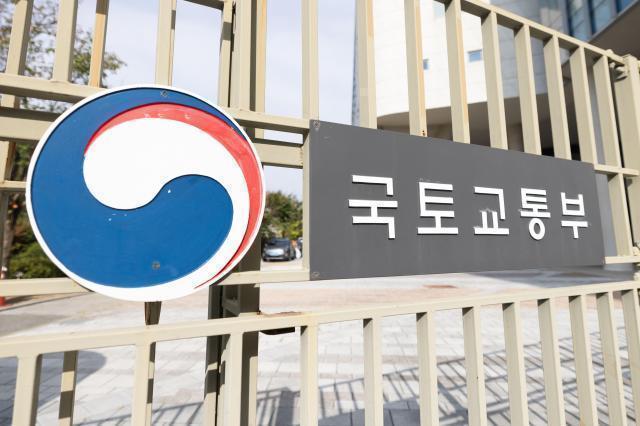
The South Korean government has unveiled a five-year plan to transform the overseas construction industry from a focus on simple construction to a high-value industry based on technology and global finance.
The Ministry of Land, Infrastructure and Transport announced on July 5 that it has established the "5th Basic Plan for Promoting Overseas Construction" covering the mid- to long-term policy direction and initiatives for the industry from 2026 to 2030.
This plan is a statutory framework established under the Overseas Construction Promotion Act. It was finalized after consultations with industry stakeholders, public institutions, and expert advisory meetings, followed by a review from the Overseas Construction Promotion Committee.
The ministry noted that leading construction firms in the overseas market maintain their positions by leveraging technology and financial strength, while emerging countries like China and Turkey are rapidly expanding their market share in key regions. Consequently, South Korean companies need to enhance their industry capabilities focusing on technology, global finance, and support infrastructure.
The government plans to foster a bidding model based on technological expertise. It will support domestic companies in entering comprehensive package projects that include design, procurement, construction, as well as operation and maintenance, leveraging their strengths in areas such as suspension bridges, skyscrapers, and immersed tunnels.
New overseas construction models will also be explored, including floating offshore plants, data centers, and small modular reactors. Korean-style infrastructure, such as railways and airports, will be developed as packaged products that encompass signaling, communication, security, and operational systems, while the export of "AI Cities" that integrate artificial intelligence services into urban infrastructure will also be supported.
The plan aims to strengthen bidding competitiveness through global finance. New types of overseas construction infrastructure funds will be created, including corporate matching funds for joint investments between the Korea Overseas Infrastructure and Urban Development Corporation and domestic firms, as well as country-specific strategic funds that involve collaboration with overseas sovereign wealth funds and national policy banks.
Additionally, a network of partnerships with global developers such as Macquarie and Sumitomo will be established, and a dedicated team for cooperation with multilateral development banks will be formed to support domestic companies' participation in overseas infrastructure projects. The ministry aims to develop the Korea Infrastructure and Urban Development Corporation (KIND) into a global developer that leads high-quality projects.
Support for the overseas construction industry will also be expanded. The government, public institutions, businesses, and associations will work together to establish a strategic economic cooperation system, linking high-level economic diplomacy, such as state visits, to support bids for key infrastructure projects in regions like the Middle East.
To facilitate the overseas expansion of small and medium-sized enterprises, public development assistance will be linked with multilateral development bank projects, and new degree programs specializing in infrastructure and finance, as well as training programs for project management professionals, will be implemented to attract talent.
As competition in the overseas construction market shifts from price-based to technology, finance, and operational capabilities, domestic construction companies must rapidly transition their bidding strategies from contract-based projects to investment and development projects.
The ministry will dispatch a U.S.-Korea cooperation bidding support team to Washington, D.C. The team, led by First Vice Minister Kim Yi-tak, will visit the U.S. from July 5 to 9 to promote infrastructure cooperation and support domestic companies in securing contracts.
Vice Minister Kim will attend a signing ceremony for a memorandum of understanding regarding the "Nevada Lithium-Boron Plant Construction Project," proposed by the U.S. Department of Energy, to support domestic companies in securing contracts. This project involves equity investment from KIND and participation from Hyundai Engineering in engineering, procurement, and construction (EPC).
The ministry explained that this project is significant as it has been agreed upon for policy financing loans from the U.S. Department of Energy, showcasing a model of global finance and joint investment. It also highlighted KIND's proactive role in structuring negotiations as a global developer.
Vice Minister Kim is also scheduled to meet with officials from the U.S. Department of Agriculture, the Department of Housing and Urban Development, and the World Bank to discuss expanding cooperation in infrastructure areas such as urban development, transportation, and energy.
Kim Yi-tak, First Vice Minister of Land, Infrastructure and Transport, stated, "The dispatch of this U.S.-Korea cooperation bidding support team is the first global finance cooperation project following the establishment of the 5th Basic Plan for Promoting Overseas Construction. It will be an important opportunity to translate the cooperation foundation laid during the ministerial-level talks in January into concrete bidding results."
* This article has been translated by AI.
Copyright ⓒ Aju Press All rights reserved.