

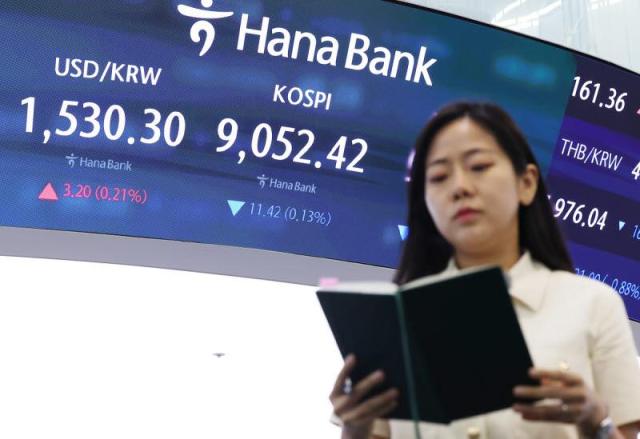
As of July 6, South Korea has expanded the trading hours for won-dollar transactions to 24 hours during the week. The new schedule allows trading from 6 a.m. on Monday to 6 a.m. on Saturday.
The Wall Street Journal reported that this measure aims to enhance accessibility for foreign investors in the South Korean market. Reuters also noted that this change is part of efforts to include South Korea in the MSCI developed markets index.
Recently, MSCI maintained South Korea's status as an emerging market in its annual market classification. Reuters highlighted that the conditions for utilizing the South Korean foreign exchange market have been cited as a limiting factor for inclusion in the developed markets index.
The timing of the implementation is critical. The Wall Street Journal pointed out that the won has been depreciating against the dollar for several months. Since the beginning of this year, the won has fallen about 6% against the dollar, showing a weak performance compared to other major currencies. On the first day of the new trading system, the won-dollar exchange rate continued to decline, starting at 1,527.41 won and rising to 1,534.15 won.
Factors contributing to the won's weakness include foreign capital outflows and increased demand for dollars. The Wall Street Journal cited foreign exchange strategists from OCBC, who analyzed that selling of won-denominated assets by foreigners, increased overseas investments by domestic investors, and a strong dollar are putting pressure on the won.
There are also forecasts that the won's depreciation may continue. It was explained that the downward pressure on the won could ease only if foreign selling of domestic stocks decreases or if the dollar strengthens and U.S. Treasury yields decline.
Bloomberg and Reuters have reported on the potential for exchange rate instability due to the expanded trading hours. The 24-hour system allows foreign investors to buy and sell won even after the South Korean market closes, helping to mitigate exchange rate risk.
However, during late-night hours when trading volume is low, even small orders can cause significant price fluctuations. This change also places a burden on bank dealing rooms and foreign exchange authorities, who will need to monitor the market overnight.
Foreign exchange authorities have stated their commitment to respond to rapid exchange rate fluctuations. The domestic government believes that the current value of the won is undervalued compared to the fundamental strength of the South Korean economy. They have also indicated readiness to respond if prices fluctuate sharply due to a lack of liquidity.
Major international media outlets view the 24-hour system as a turning point for the opening of South Korea's foreign exchange market. However, they emphasize that for this system to serve as a practical stepping stone for inclusion in the MSCI developed markets index, sufficient trading volume and stable market operations during nighttime hours must be ensured.
* This article has been translated by AI.
Copyright ⓒ Aju Press All rights reserved.